

Research & Nutrition
Food & Recipes
Innovation
Activism & Animals
Law & Policy
Wins & Culture
June 19, 2026
Heura Foods wins appeal against Spain's meat lobby

Vegan Brief June 19, 2026

Heura beats Spain's meat lobby in court; Solar Foods lands $89M

Barcelona's appeals court clears Heura Foods of nearly all unfair competition charges filed by Spain's €31B meat lobby, ruling its science-backed marketing was protected speech

5 top stories 8 sources read 19 articles scanned 6 sides of vegan life
Lead story Heura Foods wins appeal against Spain's meat lobby Read the story

The Quick List

Barcelona's appeals court clears Heura Foods of nearly all unfair competition charges filed by Spain's €31B meat lobby, ruling its science-backed marketing was protected speech [10]
Solar Foods locks up €77.8M ($89.2M) in grants and loans from Business Finland for its first commercial air-protein factory, with the final investment decision still ahead [2]
Döhler acquires UK fava-bean chocolate startup Nukoko; commercial B2B samples due in August [8]
Danone's Silk Protein range expands into dairy-free yoghurts (13g plant protein) and 30g RTD shakes, targeting the two plant-based segments that actually grew in 2025 [9]
Oregon roadside zoo owner pleads guilty to 47 charges after 322-animal seizure; five rescued monkeys are now thriving at a Texas sanctuary [11]

The Rundown

The day's defining development is institutional: Barcelona's Provincial Court overturned a first-instance ruling and cleared Heura Foods of nearly all unfair competition claims brought by six Spanish meat industry groups collectively worth more than €31 billion. The court found Heura's social media posts were grounded in sources including the WHO, FAO, and researchers at Harvard and Oxford, and declared that a blanket censorship order would have been "an unacceptable restriction" on freedom of expression [10]. That ruling arrived one day after the European Parliament voted to ban 31 meat-related terms from plant-based labels, a decision now awaiting final member-state approval. Both events concern the same underlying question: who gets to say what about the food system in Europe. The court gave plant-based companies an answer that the Parliament, separately, complicated. On the innovation front, Solar Foods confirmed €77.8M in Finnish government grants and loans for Factory 02, its first commercial-scale Solein plant, though binding customer agreements and debt financing remain outstanding before construction begins [2].

01InnovationStory

Heura Foods wins appeal against Spain's meat lobby

The provincial court of Barcelona just told six meat trade groups, collectively worth €31 billion, that a startup generating €17 million a year was right about the science.

What happened: the record

Spain's Provincial Court of Barcelona ruled on appeal in favor of Heura Foods, overturning a commercial court's first-instance decision in a case initiated in 2022 by six meat industry interprofessional organizations: Interporc, Provacuno, Interovic, Asici, Avianza, and Intercun. The appeals court cleared Heura of the vast majority of unfair competition claims, finding that the company's social media posts between 2020 and 2022, which criticized the livestock industry and cited its public and planetary health impacts, could not be considered misleading, denigrating, or unlawfully comparative. The court noted that Heura ordinarily cited its sources, drawing on the WHO, FAO, the International Agency for Research on Cancer, Spain's AESAN food safety agency, and researchers at Harvard and Oxford, and stated "Heura ordinarily cites its source, with nothing to suggest the citation is mistaken." The court invoked Article 20 of the Spanish Constitution on freedom of expression: "Imposing the requested blanket sentence would have constituted an unacceptable restriction." The meat lobby was ordered to pay court costs, though it can still appeal to the Supreme Court. The only claim upheld concerned a 2020 campaign, since withdrawn, stating "a beef burger pollutes more than your car," which the court found needed more precise framing given its broad public reach. The court also upheld Heura's use of terms like "burger," "chorizo," and "sausage" on plant-based products provided the plant-based nature is clearly communicated, while ruling against animal-related imagery. Heura turned profitable for the first time in Q1 2026 and now holds twice the market share of its nearest competitor in Spain, according to Green Queen [10].

Why it matters

A court ruling doesn't change any label, product, or regulation on its own. What this one establishes is that citing WHO, FAO, and peer-reviewed science to describe what the livestock industry does to public and planetary health is not unfair competition. That's a meaningful backstop, and the timing is pointed: one day before this ruling, the European Parliament voted to ban 31 meat-related terms from plant-based labels. The ban narrows how plant-based companies can describe their products; the Heura ruling broadens how they can describe the industry those products are designed to replace. Heura's announced next step is converting the decision into a policy proposal, citing Systemiq and Good Food Institute Europe research projecting that a protein transition with moderate policy support could add €111 billion and 400,000 jobs to Europe's economy by 2040. Whether that argument lands with the same member states now voting on the labeling ban is the honest open question [10].

02InnovationStory

Solar Foods secures €77.8M for air-protein factory, final investment decision pending

The money is real. The factory is not yet. The distinction matters.

What happened: the record

Finnish startup Solar Foods confirmed €77.8 million ($89.2 million) in grants and loans from Business Finland toward Factory 02, its first commercial-scale facility for Solein, a protein made via gas fermentation using hydrogen, CO2, and microbes rather than sugar or agricultural land. The funding is contingent on a final investment decision, which Solar Foods aims to make during 2026, and on securing additional debt financing. The company currently operates a pilot facility (Factory 01) scaling toward 230 tonnes per year. Phase one of Factory 02 targets 3,200 tonnes per year, with operations targeted for late 2028. Solein holds novel food approval in Singapore (September 2022) and self-GRAS status in the United States; an EFSA decision on its European novel food application remains pending. The first US consumer product containing Solein, a protein powder from Ambrosia Collective under its Planta brand, has launched on Ambrosia's website and on Amazon. AgFunderNews reports that converting memoranda of understanding and letters of intent from customers into binding offtake commitments is the current bottleneck, not regulatory approvals [2].

Why it matters

Solar Foods is making real protein from genuine science: Solein is approved in Singapore, in a US consumer product, and awaiting what looks like a straightforward EFSA decision. The fermentation technology is not press-release vaporware. What is genuinely uncertain is the commercial path. Equity and grants are secured, but debt financing and binding customer agreements still need to close before construction starts on a factory that won't hit commercial scale until late 2028. The whey protein price spike that Solar Foods cites as a tailwind is real, and a protein ingredient with stable quality, no land use, and no price volatility would fill a gap the food industry has been searching for. Three years and a lot of contract negotiations stand between here and that factory. Worth tracking, not yet worth calling [2].

03InnovationStory

Döhler acquires Nukoko, betting on fava-bean chocolate at commercial scale

Fava beans replacing cocoa: a climate fix dressed as a confectionery ingredient.

What happened: the record

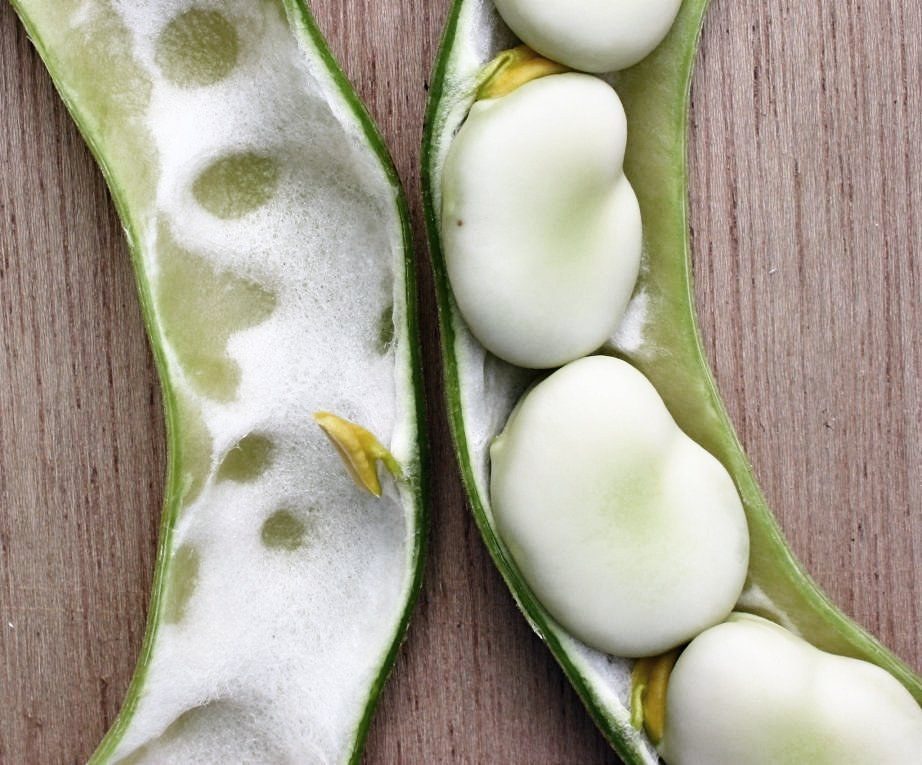
German manufacturing giant Döhler Group has acquired UK startup Nukoko, which produces cocoa-free chocolate from fava beans via fermentation and biotech processing, two years after an initial investment. Nukoko, founded in 2022, subjects fava beans to what it describes as a "unique biotransformation" and controlled fermentation that mimics traditional cocoa processing, producing a powder with chocolatey flavor from a protein called vicilin found in both fava beans and cocoa. Green Queen reports that Nukoko claims its alternative generates 90% fewer greenhouse gas emissions than conventional chocolate, with 40% lower sugar content; these figures are Nukoko's own company claims and no independent published life cycle assessment was identified. Fava beans are a nitrogen-fixing cover crop grown domestically in the UK and EU. Döhler says the acquisition expands its plant-based ingredients portfolio; Nukoko gains access to Döhler's global R&D and application network while retaining its technology. B2B samples across confectionery, baked goods, ice cream, and cereal-based formats are due in August 2026. Döhler's current fermentation capacity takes Nukoko from 500kg batches to 10,000-litre batches [8].

Why it matters

The acquisition timing is not complicated to explain. Cocoa prices hit a record $12,565 per tonne in December 2024, global cocoa stocks fell to a decade low, and scientists estimate a third of all cocoa trees could die by 2050. Every major chocolate company, from Nestlé to Lindt to Cargill, is now funding alternatives. Döhler converting its investment stake into outright ownership signals a shift from exploration to production planning. The 90% emissions reduction claim needs an independent LCA before it belongs in the factual record, but the structural case for fava beans as a cocoa substitute doesn't rest on it. Domestic UK and EU supply, soil health benefits, no deforestation footprint, and a finished taste profile that doesn't require customers to adjust their expectations are already a strong ingredient brief. August's B2B sampling is the next real proof point. If major CPG customers sign on after tasting the product at scale, Nukoko starts to look like infrastructure rather than an interesting experiment [8].

04InnovationStory

Danone launches Silk Protein yoghurts and 30g RTD shakes in the US

Danone chose the two plant-based segments that are actually growing.

What happened: the record

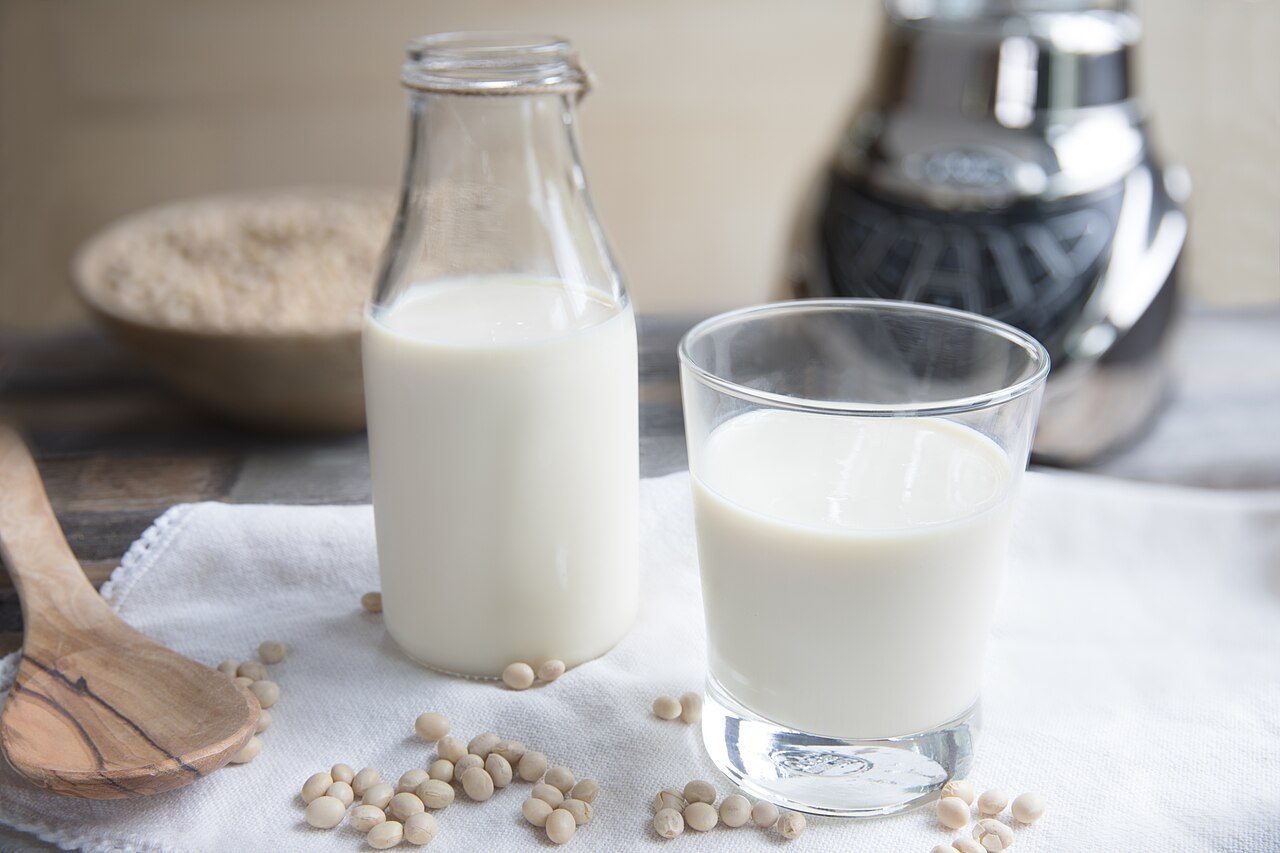
Danone has extended its Silk Protein range into dairy-free protein yoghurts and ready-to-drink shakes, seven months after launching a soy milk with 13g of protein per cup. The yoghurts contain 13g of plant protein per 6oz serving from soybeans, a complete protein with all essential amino acids. Danone says the new yoghurts contain twice the average protein content of the dairy-free yoghurt segment. Each serving includes 4g of fibre, calcium, vitamins B12 and D, iodine, and phosphorus, with no artificial colors, flavors, or sweeteners. Vanilla, strawberry, peach, and mixed berry flavors in 24oz tub and 5.3oz cup formats roll out to US retailers this month. The RTD shakes deliver 30g of complete plant protein, 5g of fibre, 2g of sugar, and 180 calories per 11.15oz bottle, launching in chocolate and vanilla next month. Green Queen reports that US plant-based yoghurts grew 7% and plant-based RTD beverages grew 12% in 2025, while the overall non-dairy milk segment declined 2%. The brand also launched Silk Protein soy milk in Canada last month, and an Alpro meal replacement shake range in Europe earlier this year [9].

Why it matters

Danone picked the two plant-based formats where sales are rising, not the one where they aren't. That's not accident; it's a brand doing the market analysis and acting on it. The protein angle is legitimate: soy is one of a small number of complete plant proteins, the 30g shake competes on macros with whey-based sports nutrition products, and rising GLP-1 drug use is driving measurable demand for protein-dense foods that protect muscle mass. A dairy giant betting its highest-profile plant-based line on protein rather than taste or nostalgia tells you where it thinks the growth is. That's a narrower win for veganism than culture-war headlines suggest, but it is a durable one: once a consumer switches to a plant protein shake that meets their nutrition goals, the reason to switch back shrinks [9].

05Activism & AnimalsStory

Five monkeys rescued from Oregon roadside zoo now thriving in Texas

322 animals removed. 47 charges filed. Bear and Blue are out climbing trees.

What happened: the record

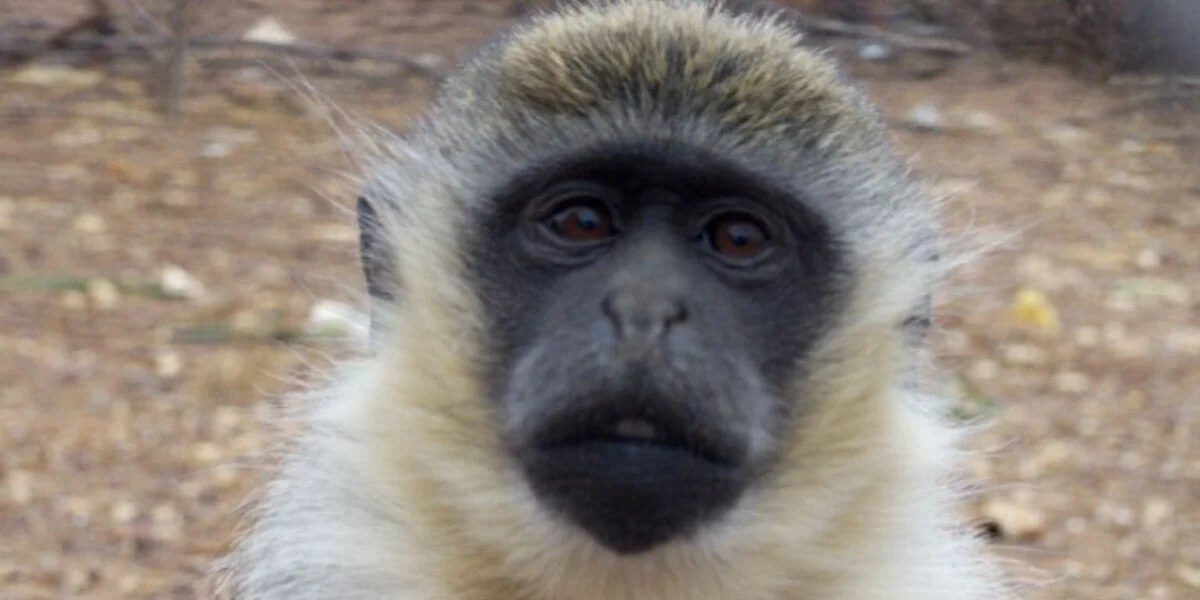
PETA reports that five primates, three baboons (Zeus, Calliope, and Monet) and two vervets (Bear and Blue), previously held at the now-shuttered West Coast Game Park Safari in Oregon, have been living at Born Free USA Primate Sanctuary in Texas since May 2025. In May of that year, after PETA alerted Oregon authorities to conditions at the zoo, law enforcement executed multiple search warrants and removed 322 animals from the property. In April 2026, the zoo's owner pleaded guilty to 47 criminal charges, including 43 counts of animal neglect. The prosecutor has recommended 7.5 years in prison plus full restitution for the cost of caring for all 322 animals from the date of seizure until formal surrender. Born Free USA, accredited by the Global Federation of Animal Sanctuaries, reports the animals now have naturalistic habitats, social groupings with previously rescued primates, and enrichment appropriate to their species. Zeus is described as the calm leader of a baboon group that includes rescues from a closed Iowa zoo. Bear joined a large vervet group immediately; Blue, initially shy, has become social [11].

Why it matters

The number worth holding is 322 animals removed from a single neglect case following a single complaint, leading to a guilty plea on 47 charges. Roadside zoo enforcement is notoriously inconsistent, which makes this outcome worth examining as a template: document the conditions, alert authorities, arrange transfers to accredited sanctuaries, and push for the fullest possible legal accountability. All four steps worked here. The 43 animal neglect counts suggest the court treated the animals' welfare as a serious factual matter, not an afterthought. Whether the recommended sentence holds when the judge rules is the remaining question. For Bear and Blue, it is already beside the point [11].

Food & Recipes

  • Cereals launched between 2010 and 2023 are nutritionally worse than earlier versions, with higher fat, sugar, and sodium and less fiber and protein; a single serving often exceeds 45% of children's daily added-sugar limit, per a JAMA Network analysis led by researchers at the University of Kentucky and Louisiana State University [1]

Innovation

  • The European Parliament voted to ban 31 meat-related terms from plant-based labels, including "steak" and "liver," with the measure now awaiting final member-state approval; "burger," "chorizo," "sausage," "nuggets," and "ham" are not included in the ban [10]
  • Cascale's Manufacturer Climate Action Program now covers 85 manufacturer groups across 446 facilities in 19 countries, with 52 validated science-aligned targets representing over 1.6 million tonnes of potential CO2e reductions; sponsor brands include Gap Inc., New Balance, and Puma [3]
  • Burberry pushed its net zero target back by a decade while simultaneously launching a documentary series co-produced with Chinese National Geography magazine, a state-linked publication; the juxtaposition is its own editorial [6]
  • Shein faces tightening EU trade regulations and environmental compliance pressure as it expands its Xcelerator supplier program, framing ultra-fast fashion growth in the language of "resilience and responsibility" [7]
  • LVMH's Bernard Arnault faces criticism from French journalists' unions for accumulating control of nearly all French business and economic press, raising transparency questions for fashion sustainability coverage [4]

Wins & Culture

  • Actor Kristin Bauer, of True Blood and Star Trek: Deep Space Nine, described to Plant Based News how a two-decade journey from vegetarianism to veganism was partly catalyzed by a conversation with Alicia Silverstone, and the realization that "the same way to eat that is best for your body is best for the body of Earth" [19]

Law & Policy

  • First Steps Nutrition Trust called on UK regulators to overhaul infant formula safety oversight after a cereulide contamination incident that may have left products on the market from May 2025 until the first FSA alert in January 2026 [12]
  • Power Plate Meals LLC is recalling 5,795 pounds of frozen meatloaf with garlic mashed potatoes distributed to Minnesota, North Dakota, and South Dakota after a state inspector found undeclared soy in the label; produced between June 2025 and June 2026 [17]
  • FDA import alerts updated with flagged Salmonella contamination, illegal artificial colors, and misbranding violations in recently imported foods [14]
  • Fry Pie Factory recalled pepperoni rolls distributed across Ohio and West Virginia for undeclared milk and refrigeration deviations [16]
  • The Humane Herald marked Juneteenth with a piece drawing a direct line from delayed emancipation to ongoing systems of domination, connecting the logic to animal rights advocacy and the Humane Party's reparations and abolitionist framework [18]

A year ago, two vervet monkeys named Bear and Blue sat in small concrete-floored cages at a roadside zoo in Oregon that had run out of nourishment, veterinary care, and any remaining sense of obligation to the animals it held. Today, Bear spends her days exploring and playing with a large group of rescued vervets at Born Free USA Primate Sanctuary in Texas. Blue, who arrived shy, has become what sanctuary staff describe as a social butterfly. The baboons in their group, Zeus, Calliope, and Monet, are climbing trees in a naturalistic habitat with other rescued primates; Calliope is regularly photographed with her cheeks full of food. The owner who kept 322 animals in those conditions pleaded guilty to 47 criminal charges. The outcome is not a perfect ending. Bear and Blue didn't wait for it [11].

Today in vegan history Henry Spira Is Born June 19, 1927 A high school English teacher with no money and no staff talked Revlon into funding an end to blinding rabbits, and proved a single determined person could out-negotiate a cosmetics giant. Read the day in vegan history →