


Research & Nutrition
Food & Recipes
Innovation
Activism & Animals
Law & Policy
Wins & Culture
July 2, 2026
First criminal conviction for killing pigs in transport

Vegan Brief July 2, 2026

First pig-hauler conviction, cultivated meat scales, Veganz files insolvency

A Wisconsin court found pig hauler Jerith Dville Kane Ellis guilty after 15 pigs froze to death during a 432-mile haul in –27°F wind chills, what PETA describes as the first U.S. criminal conviction under state law for transporting farmed animals in conditions that caused their deaths.

5 top stories 28 sources read 118 articles scanned 6 sides of vegan life
Lead story First criminal conviction for killing pigs in transport Read the story

The Quick List

A Wisconsin court found pig hauler Jerith Dville Kane Ellis guilty after 15 pigs froze to death during a 432-mile haul in –27°F wind chills, what PETA describes as the first U.S. criminal conviction under state law for transporting farmed animals in conditions that caused their deaths. [84]
France's Parima and Australia's Vow claim tonne-scale cultivated duck production on a 22,000-liter bioreactor at "99% lower cost than earlier runs," saying the "final barrier" to commercial cultivated meat has been removed, though the figures come from a company press release, not an independent audit. [57]
Germany's Planethic Group (formerly Veganz) filed for insolvency self-administration on June 25; subsidiaries Mililk, Happy Cheeze, and the Veganz brand continue operating while the holding company restructures under court oversight. [21][59][64]
The Save Our Bacon Act, which would overturn California's and Massachusetts's bans on pork from gestation-crated pigs, is stalling in the Senate after a Republican cosponsor withdrew support and a 2025 poll found 84% of Americans oppose caging pigs regardless of party. [82]
A peer-reviewed observational study of 2,044 older adults in Japan links lower blood vitamin C to reduced gray matter and weaker default-mode-network connectivity, a real finding from a real study, though it cannot establish cause. [14]

The Rundown

The most significant development for animals today arrived from a Wisconsin courtroom, where pig hauler Jerith Dville Kane Ellis was convicted after driving 432 miles through –27°F wind chills until 15 pigs froze to death, what PETA calls the first criminal conviction in U.S. history under state law for killing farmed animals during transport [84]. The ruling lands in the same week that the pork lobby's Save Our Bacon Act is wobbling in Congress, as legislators who learn what gestation crates look like find themselves unwilling to defend them publicly, with 84% of Americans in opposition [82]. In plant-based business news, Germany's Planethic Group, formerly Veganz, Europe's pioneering fully vegan supermarket chain, entered insolvency self-administration, the latest in a cascade of European alt-protein restructurings, though its subsidiaries including the 2D-printed oat-milk brand Mililk continue to operate [21][59]. On the science side, a large Japanese observational study published in PLOS One on June 10, 2026 confirmed an association between blood vitamin C levels and brain structure in people over 64, a finding consistent with prior work that still cannot tell us whether vitamin C protects the brain or simply tracks healthier diets [14].

01Activism & AnimalsStory

First criminal conviction for killing pigs in transport

A driver hauled pigs 432 miles through –27°F wind chills until 15 froze to death. A Wisconsin court ruled that is a crime.

What happened: the record

Clark County Circuit Court in Wisconsin found Jerith Dville Kane Ellis guilty in what PETA describes as the first conviction in U.S. history under state law for transporting farmed animals in conditions that caused their deaths [84]. The case originated from a PETA tip. Ellis hauled pigs roughly 432 miles from Lynch Livestock in South Dakota to a Wisconsin slaughterhouse through wind chills that reached –27°F; the truck arrived when outside temperatures were still –4°F. A USDA inspector documented the outcome: 7 pigs died during transport, 5 were in such poor condition they required immediate euthanasia on arrival, and 3 more died shortly after unloading. Several surviving pigs had extensive frostbite [84]. The "first in U.S. history" characterization comes from PETA, the advocacy group whose tip initiated the case; it refers specifically to a state-law conviction for transport conditions causing animal deaths. Industry data cited by PETA puts U.S. pig transport deaths at more than 1 million annually [84].

Why it matters

A guilty verdict for preventable transport deaths creates precedent: transporting farmed animals in conditions that kill them can, in at least one U.S. jurisdiction, constitute a crime. That matters because prosecution of such cases is virtually absent despite the scale of harm, over a million pigs per year dying in transit, documented by industry's own reporting [84]. The ruling arrives in the same week that congressional opposition to the Save Our Bacon Act is fracturing along the same line: lawmakers who are forced to reckon with what factory-farming conditions actually look like tend to find them indefensible [82]. Visibility and legal accountability are reinforcing each other right now. Whether other states treat similar incidents as criminal depends entirely on whether prosecutors decide to bring cases. Wisconsin just showed that when they do, juries convict.

---

02InnovationSpans multiple topics

Planethic Group (formerly Veganz) enters insolvency self-administration

Europe's first fully vegan supermarket chain, now a plant-based ingredients holding company, is restructuring under court oversight, and the asset worth watching is an oat-milk-sheet subsidiary that claims 90% lower emissions per serving.

Across these topics Food Innovation
What each source noticed: source by source
Food “German vegan firm Planethic files for self-administration” Just Food

“Business operations will continue without interruption.”

"Business operations will continue without interruption." Just Food focused on the commercial and bondholder implications, reporting the self-administration as a straightforward restructuring mechanism under German law and noting that customers, suppliers, and business partners can continue to work with the company as usual. It flagged the bond cancellation as the immediate concrete consequence [21].

Read the original ›
Innovation “German Plant-Based Pioneer Planethic Group Files for Self-Administration” Green Queen

“Mililk FoodTech”

"Mililk FoodTech" and its 2D-printed oat-milk sheets got the most sustained attention from Green Queen, which framed the filing as a story about which assets might survive. Green Queen reported that Mililk claims a 90% reduction in emissions per serving versus conventional liquid oat milk, had signed a North America and Australasia distribution deal with Milkadamia (whose US oat and almond milks are already being produced under the Mililk technology), and had secured SAFE financing in March 2026 for a Chicago production facility targeting 100 million litres annual capacity, a summer 2026 launch that now faces uncertainty [59].

Read the original ›
Innovation “Planethic Group AG Initiates Restructuring Through a Self-Administration Process” vegconomist

“the arrangement that offers the best prospects for a successful restructuring.”

vegconomist reported the procedural details cleanly: the executive board retains management authority under court supervision, employee wages are secured through statutory insolvency protections, and the company views self-administration as "the arrangement that offers the best prospects for a successful restructuring." It noted the original 2025 restructuring was designed so potential investors could target specific subsidiaries rather than the whole group [64].

Read the original ›
What happened: the record

On June 25, 2026, Planethic Group AG, the Berlin-listed holding company formerly known as Veganz Group AG, filed for insolvency proceedings under self-administration in Germany [21][59][64]. Under German insolvency law, the management team continues running operations under a court-appointed trustee. The filing covers only the holding company; subsidiaries Mililk, Happy Cheeze, Peas on Earth, and the Veganz consumer brand continue trading normally [64]. A bondholder meeting scheduled for July 21 to address the company's outstanding €10M corporate bond at 7.5% interest has been cancelled [21]. The restructuring follows three consecutive years of declining revenue: year-on-year sales fell 34% in 2024 to €10.8M, and the first half of 2025 generated just €2M [59]. The company went through three CEOs in eight weeks in 2025 before stabilizing under Sascha Voigt [59].

Why it matters

Planethic joins more than 80 alternative-protein companies that have been acquired, restructured, or shut down since September 2024 [58]. The holding company's collapse is a genuine setback, but holding-company insolvency is also the mechanism by which individual subsidiaries can find new investors without the parent's liabilities attached. Mililk is the asset to watch: 2D-printed oat-milk sheets that reconstitute in water, potentially reducing packaging weight and emissions in cold-chain logistics, are a genuinely different approach than any other oat-milk product on the market. Whether the emissions claim holds up under independent lifecycle assessment, and whether the Chicago facility can be financed through restructuring, will determine if that technology survives. The rest of Europe's plant-based consolidation is moving fast, LIVEKINDLY acquired Greenforce the same week [63], and the assets with clear technical differentiation are the ones getting absorbed rather than liquidated.

---

03InnovationStory

Parima and Vow claim cultivated meat has crossed the commercial-viability threshold

The claim is from the companies themselves, not a third party. The underlying biology is coherent. The benchmark for "99% lower cost" is their own earlier runs, not a supermarket shelf.

What happened: the record

France's Parima, parent of cultivated-meat brands Gourmey (duck) and Vital Meat (chicken), reported producing cultivated duck at tonne-scale volume in a single run on Vow's 22,000-liter bioreactor at Vow's Sydney facility, achieving what the company describes as a 99% reduction in cost compared to its own earlier production runs [57]. Parima and Vow identify the Vow facility as the largest food-grade cell culture bioreactor globally; Vow's Sydney capacity has previously been reported at 20,000-plus liters, consistent with that description. Parima's cost reduction is attributed to successive improvements in cell-culture yield, removal of expensive inputs (growth factors, albumin, insulin), and volume efficiencies at scale [57]. The process uses non-GMO cells grown as undifferentiated biomass in suspension, without scaffolding or genetic modification. Vow co-founder George Peppou confirmed the run "delivered results on the first attempt." Neither the unit cost figure nor the total production volume has been independently audited: this is a joint announcement reported by Green Queen [57]. Parima awaits regulatory approval in Australia (an August 2026 target has reportedly slipped), the EU, UK, Switzerland, the U.S., and one undisclosed market [57].

Why it matters

The cost-reduction pathway Parima describes, eliminating growth factors and albumin from cell culture media while scaling to a 22,000-liter vessel, is scientifically coherent. Removing those two inputs is widely understood as the central challenge in scaling cultivated meat economics, and success at that scale on the first attempt is not trivial (earlier AgFunderNews analysis on cultivated meat economics). What the announcement does not say: what the current cost per kilogram is, what the benchmark was before the 99% reduction, or when Parima expects to price competitively with conventional duck. Cultivated meat at pilot scale costs orders of magnitude more than conventional meat, so a 99% reduction from pilot economics is not automatically retail parity. Investment in the sector halved in 2025, and the industry needs a credible economics story badly [57]. This is a genuine step forward on the biology and the scale. Whether it is the last step requires independent verification the companies have not yet provided.

---

04Activism & AnimalsStory

The Save Our Bacon Act and the most unlikely opposition to the pork lobby

84% of Americans oppose caging pigs. That number includes enough Republicans that the pork industry's congressional strategy is now visibly cracking.

What happened: the record

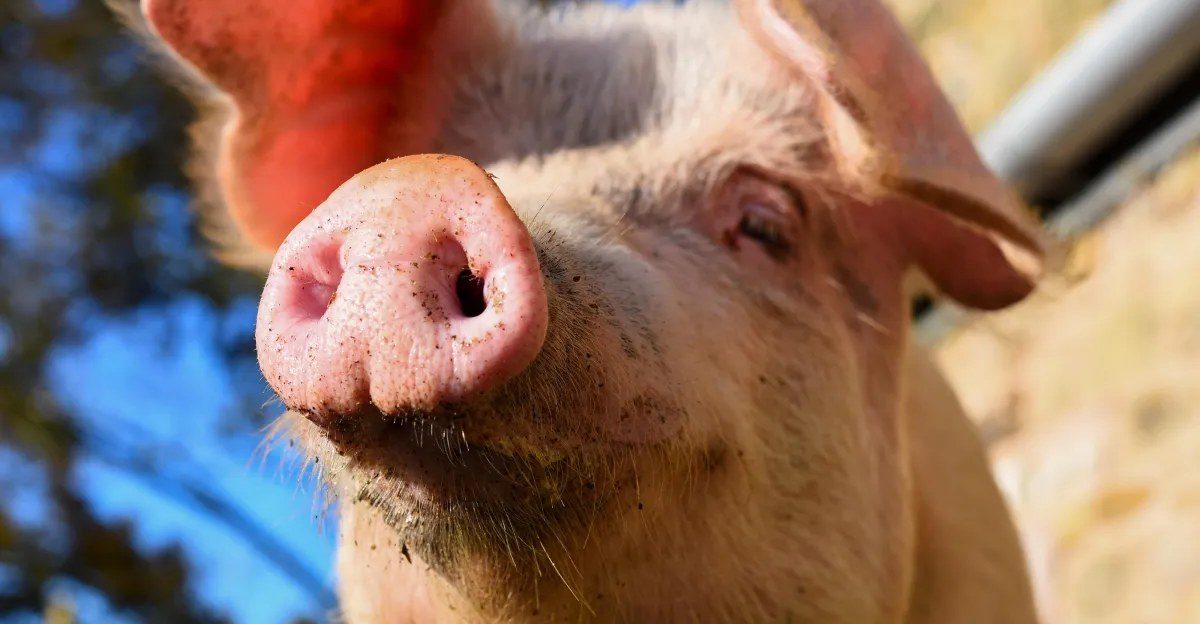
The Save Our Bacon Act, a provision inserted into the House Farm Bill that would overturn California's and Massachusetts's laws banning in-state sales of pork from gestation-crated pigs, is stalling before reaching the Senate [82]. Gestation crates are enclosures so small that pregnant sows cannot turn around; millions of U.S. pigs are confined in them throughout their reproductive lives [82]. After voters in Florida, Arizona, Massachusetts, and California approved bans over two decades, the National Pork Producers Council sought a federal legislative override. The legislation passed the House Farm Bill but is absent from the Senate draft. Republican senator Roger Marshall (R-KS), a prior cosponsor, withdrew support. Vox's Future Perfect reports that commentators and politicians across the political spectrum, including Fox News host Tomi Lahren, far-right commentator Mike Cernovich, and bipartisan pairs of House members, have publicly condemned gestation crates after seeing them [82]. A 2025 poll found 84% of Americans oppose caging pigs, with Democrats only marginally more opposed than Republicans [82].

Why it matters

The pork lobby has relied for decades on congressional Republicans voting with industry regardless of public opinion. The Save Our Bacon Act fight is the clearest evidence yet that this alignment is fraying at the edges. When a Republican senator withdraws his name from a bill because he does not want to be associated with it publicly, the industry's coalition problem becomes structural rather than tactical [82]. The 84% opposition figure shows that gestation crates have never been a partisan issue among voters, they have been a lobbying issue with a public-opinion deficit. The Farm Bill conference process still needs to reconcile the House and Senate versions, and the Save Our Bacon Act could still be inserted in that negotiation. Whether it is will indicate whether the industry has enough remaining leverage to override a number that large.

---

05Activism & AnimalsStory

EU moves to exempt leather from its anti-deforestation law despite its own evidence

The Commission's consultants linked leather to deforestation. Palm oil in mascara will face scrutiny under the same law. Cowhide from cattle that cleared the Amazon will not.

What happened: the record

A leaked draft document, first reported by Euractiv and reviewed by Mongabay, shows the European Commission intends to formally remove leather from the EU Deforestation Regulation (EUDR), the law requiring companies to prove their supply chains are not driving forest destruction [78]. The EUDR currently covers cattle, soy, palm oil, timber, cocoa, rubber, and coffee, and takes effect in December 2026. The Commission's stated justification in the draft is "supply chain considerations and load on the information system" [78]. Mongabay had previously reported that the Commission's own consultants explicitly tied leather to widespread forest destruction and that the compliance cost of including leather was relatively low; the Commission acknowledged that but chose exemption anyway [78]. Since 2021, leather industry groups led by COTANCE and Italy's UNIC have met EU lawmakers at least 22 times, with more than a third of those meetings occurring in the past year [78]. The same leaked draft extends EUDR coverage to palm-derived oleochemicals used in cosmetics, detergents, and food emulsifiers. The formal adoption of the delegated act is expected within weeks; the European Parliament and Council then have two months to object [78].

Why it matters

The EU has applied different logic to palm-derived chemicals in soap (include, because downstream risk must be addressed) than to cattle-derived hides from the same supply chain that also drives deforestation (exclude, citing operational complexity). The inconsistency is not subtle: the cowhide and the beef come from the same animal [78]. For anyone watching the intersection of animal agriculture and environmental law, the exemption signals that industry lobbying can still neutralize evidence-based regulation at the EU level when organized early and persistently. The EUDR was one of the few regulatory levers that would have forced luxury-fashion and automotive supply chains to audit their leather sourcing for deforestation links, exactly the kind of institutional pressure that makes plant-based and recycled alternatives more attractive to procurement teams. The two-month parliamentary review window is now the last realistic opportunity to reinstate leather, and environmental groups including Mighty Earth and Earthsight are mobilizing to use it [78].

---

Food & Recipes

  • Make Sam Turnbull's Creamy Chipotle Bean Salad this month: no-cook, protein-packed, ready in minutes, and the July Cook With Sam community challenge recipe, she's been making it every summer since 2017. [16]
  • NYC's horse carriage industry faces its strongest-ever ban push: a tourist died when a horse bolted in Central Park, Mayor Zohran Mamdani backs Ryder's Law, which would phase out carriages by 2028, and a bill hearing is scheduled for July. [33]

Innovation

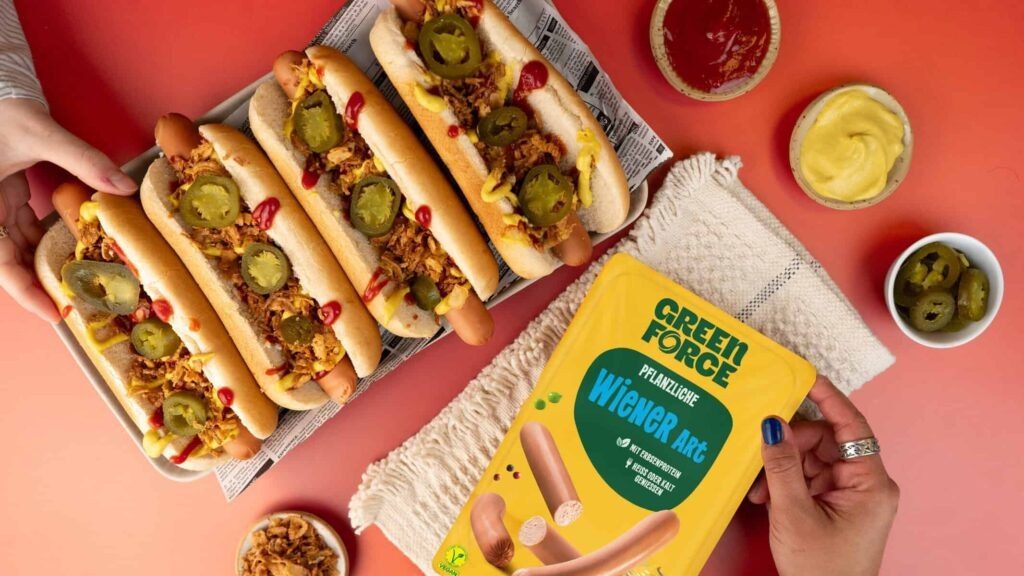
  • LIVEKINDLY Collective acquired Munich's Greenforce on July 1, adding plant-based meat, egg, and cheese alternatives to a portfolio that includes Oumph!, Fry's, and LIKE, which is already the second-largest refrigerated meat-alternative brand in Germany. [63]
  • US startup Bayou Best Foods acquired Berlin's BettaF!sh, combining plant-based shrimp with vegan canned tuna and salmon across the Atlantic; US vegan seafood sales total just $10M, less than 1% of alt-protein revenues, and over 80 alt-seafood startups have folded or merged since 2024. [58]
  • Heura's new legume-based veggie burgers (spinach/Thai curry and roasted pepper/chimichurgi) hit Spanish retail with 15g protein and Nutri-Score A, the company's first product not designed to replace conventional meat, launched after posting positive EBITDA in Q1 2026 while Spain's meat-alternative market contracted 6.3%. [56]
  • Sanygran absorbed the Natursoy brand (organic tofu, seitan, fresh vegetable products) and its Castellterçol factory near Barcelona from Nutrition & Santé Iberia on July 1, adding 60 employees and a specialist BIO retail distribution network. [68]
  • Cal-Maine Foods will pay $1.5M and donate 30 million eggs to settle a DOJ investigation into alleged price-fixing during June 2022 to March 2025, when egg prices hit record highs; Cal-Maine says the settlement is not an admission of guilt. [52]
  • ZBiotics, maker of genetically engineered probiotics, has sold 15 million pre-alcohol shots since 2019 at $7–9 each, is now profitable, and launched a second product that converts dietary sugar into prebiotic fiber inside the gut. [42]

Wins & Culture

  • A Viva! poll of 2,000 British shoppers found 74% do not know enriched colony cages still exist in the UK; 7.3 million hens are currently held in spaces smaller than an A4 sheet of paper, producing 17% of UK eggs. [110]

Activism & Animals

  • Alpha-gal syndrome, the tick-borne meat allergy, is rising because climate change expands tick ranges, not because of Bill Gates or deliberate release conspiracies; tick-bite ER visits hit their highest April level since 2017 in 2026. [99]

Research & Nutrition

  • A large PLOS One observational study (published June 10, 2026) found lower blood vitamin C correlated with less gray matter and weaker brain-network connectivity in adults over 64; the design cannot establish cause, and two co-authors were funded by KAGOME, a Japanese vegetable-beverage company. [14]
  • A low-carb plant-based "Eco-Atkins" approach outperformed a high-carb lacto-ovo vegetarian diet on triglycerides and LDL cholesterol in two small randomized trials; both were short-term with high dropout rates, so the finding is real but the evidence base is thin. [15]

VegNews turns 26 today. In 2000, Colleen Holland was a five-year vegan who looked around and could not believe a vegan publication did not exist, so she and a co-founder started one, sharing a single computer and a single email address, with no social media, no outside funding, and very little idea how publishing worked. Twenty-six years later it is the world's largest vegan media brand: award-winning magazine, around-the-clock digital content, a global social community, and an archive full of stories that helped specific people go vegan. Holland writes in today's anniversary note that she has "heard from countless people whose lives have been changed because of a story they read in VegNews." That is a specific, verifiable kind of impact, and it compounds. The publication has survived every boom and bust the vegan movement has gone through, and it is still independent, still women-owned, still fact-checking. It is still here. [38]

Wholemeal Vegan Beetroot Cake

Recipe of the day · Vegan Food & Living

Wholemeal Vegan Beetroot Cake

This rich and earthy wholemeal vegan beetroot cake is sandwiched with a creamy almond and coconut filling to make a wholesome, nourishing bake for any occasion.

120 min 10 servings 11 ingredients
See the ingredients
  • 175 ml soya milk
  • 300 ml aquafaba
  • 300 g brown sugar
  • 600 g grated beetroot
  • 400 g wholemeal flour
  • 4 tsp baking powder
  • 1 Tbsp cinnamon
  • 200 ml tinned coconut milk
  • 200 g blanched almonds
  • 1 Tbsp lemon juice
  • 2 Tbsp agave syrup
Get the full recipe at Vegan Food & Living →
This week in vegan history The world's oldest vegetarian restaurant opens 1898 Haus Hiltl opened in Zurich under the trade name Vegetarierheim, the 'vegetarians' home.' Guinness World Records certifies it as the oldest vegetarian restaurant in the world, and the fourth generation of the Hiltl family still runs it. Twenty-five centuries of the idea →