




Manning Beef permanent closure
The lawyers argued the commission lacked authority to act. The commission voted unanimously anyway. LA County's last cow slaughterhouse is done.
What happened: the record
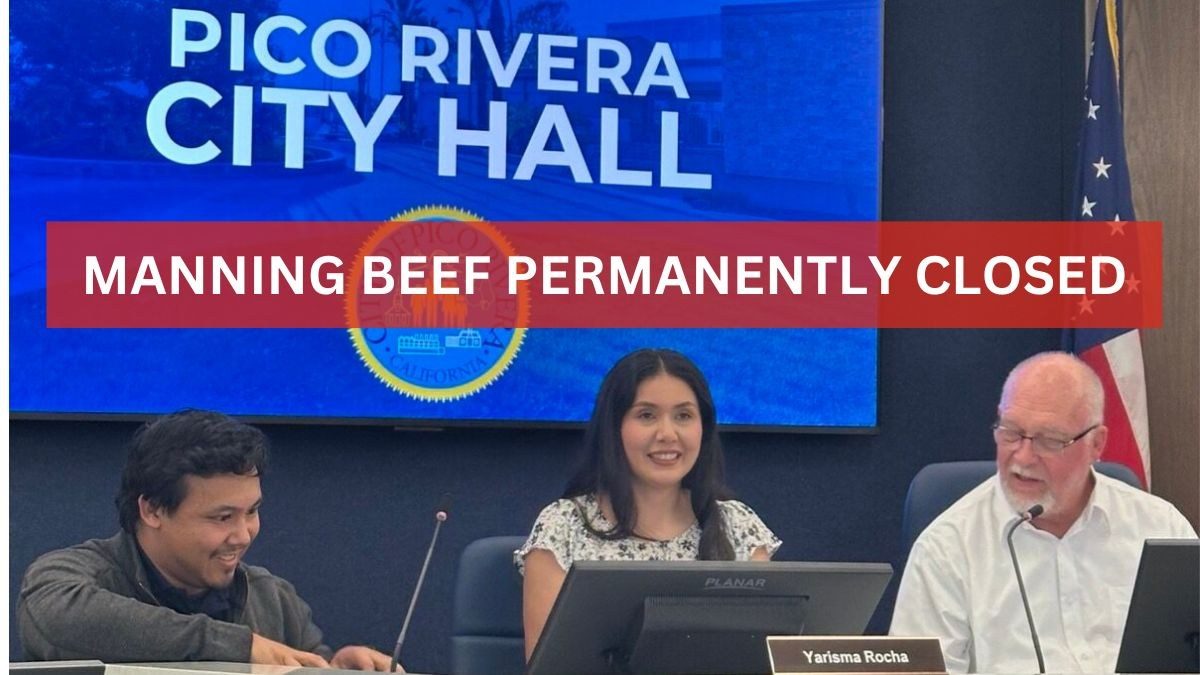
The Pico Rivera Planning Commission voted unanimously to permanently revoke Manning Beef's planning permission, ending nearly a century of operation [42]. Animal Outlook's Director of Investigations, Scott David, delivered public testimony citing the facility's documented record: 61 USDA Non-compliance Records between 2018 and 2025 for violations of the Humane Methods of Slaughter Act, including starving animals, excessive electric shocking, and striking them in the face [42]. The USDA suspended inspections twice, in 2020 for "an egregious act of inhumane handling" and again in 2022 for "a trend of repetitive noncompliance" [42]. Animal Outlook's late-2024 undercover investigation documented a downed cow shocked more than 20 times with an electric prod, cows dropped head-first onto concrete floors, and multiple animals butchered while showing signs of sensibility to pain [42]. FOIA records obtained by the organization also revealed cockroach infestations and E. coli in ground beef bound for the National School Lunch Program [42]. Manning Beef's owner pleaded with the commission; three lawyers argued it lacked the authority to revoke the permit. Local residents testified about noise and odor. The commission held [42].
This closure documents how sustained advocacy actually moves an institution: undercover footage, federal records obtained through FOIA, community organizing, and a planning body that withstood a legal challenge [42]. The permit revocation matters beyond the earlier operational pause due to bankruptcy proceedings; it prevents the facility from reopening under any owner. Animal Outlook cites the earlier closure of Farmer John in Vernon as a precedent, and two LA-area slaughterhouses shuttered in part through sustained advocacy pressure is a pattern worth naming. What the Pico Rivera site becomes next will matter as much as the closure itself. The 61 USDA records and two federal suspensions give the movement an unusually clean factual record, one that is harder to argue with than an ethics claim alone.