UK plant protein shift saves retailers money; Roundup escapes cancer suits
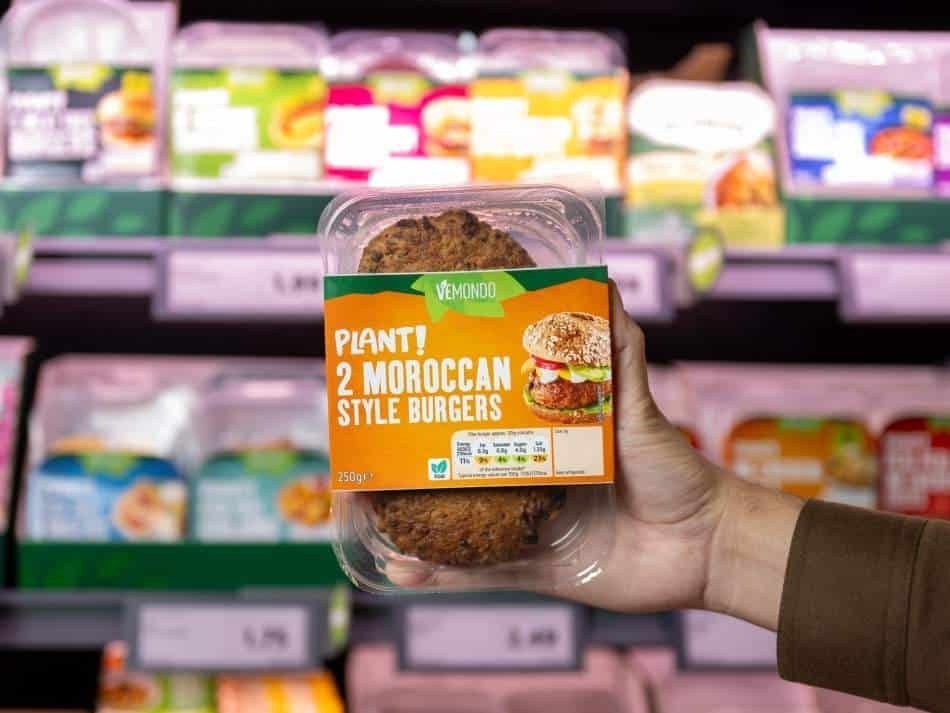
A new Eunomia analysis finds a moderate shift toward plant proteins delivers 64% of UK retailers' 2030 climate targets while increasing their profit margins
5 top stories30 sources read125 articles scanned6 sides of vegan life
A new Eunomia analysis finds a moderate shift toward plant proteins delivers 64% of UK retailers' 2030 climate targets while increasing their profit margins [65]
02
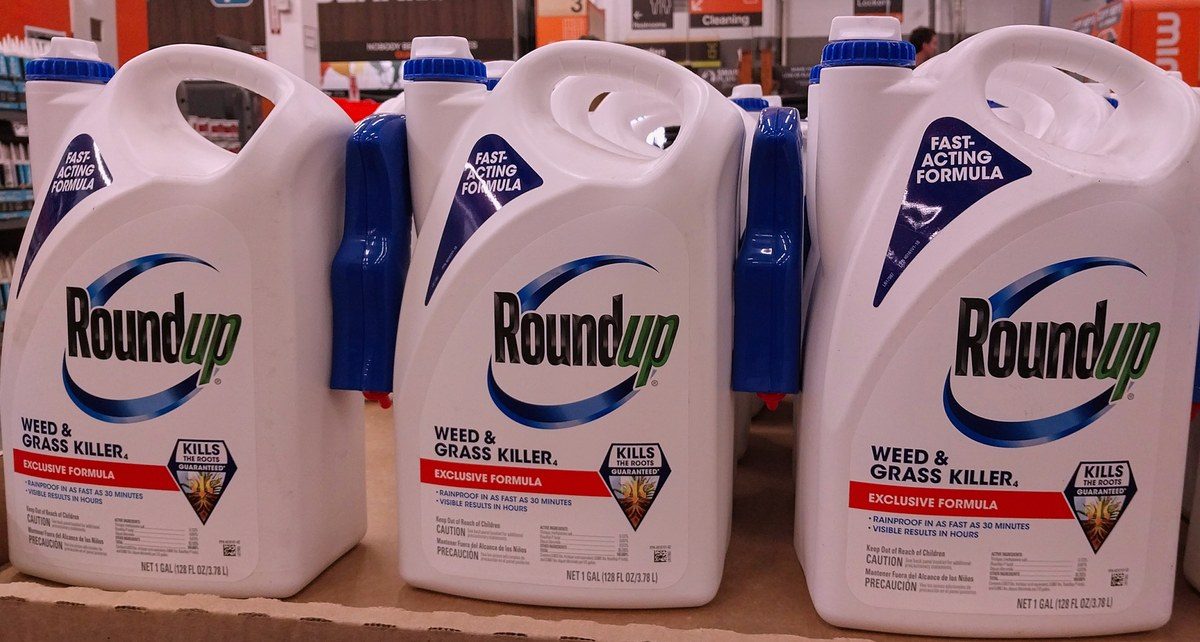
The U.S. Supreme Court ruled 7-2 that federal pesticide law preempts state failure-to-warn cancer lawsuits against Roundup, wiping Bayer's litigation exposure [90]
03
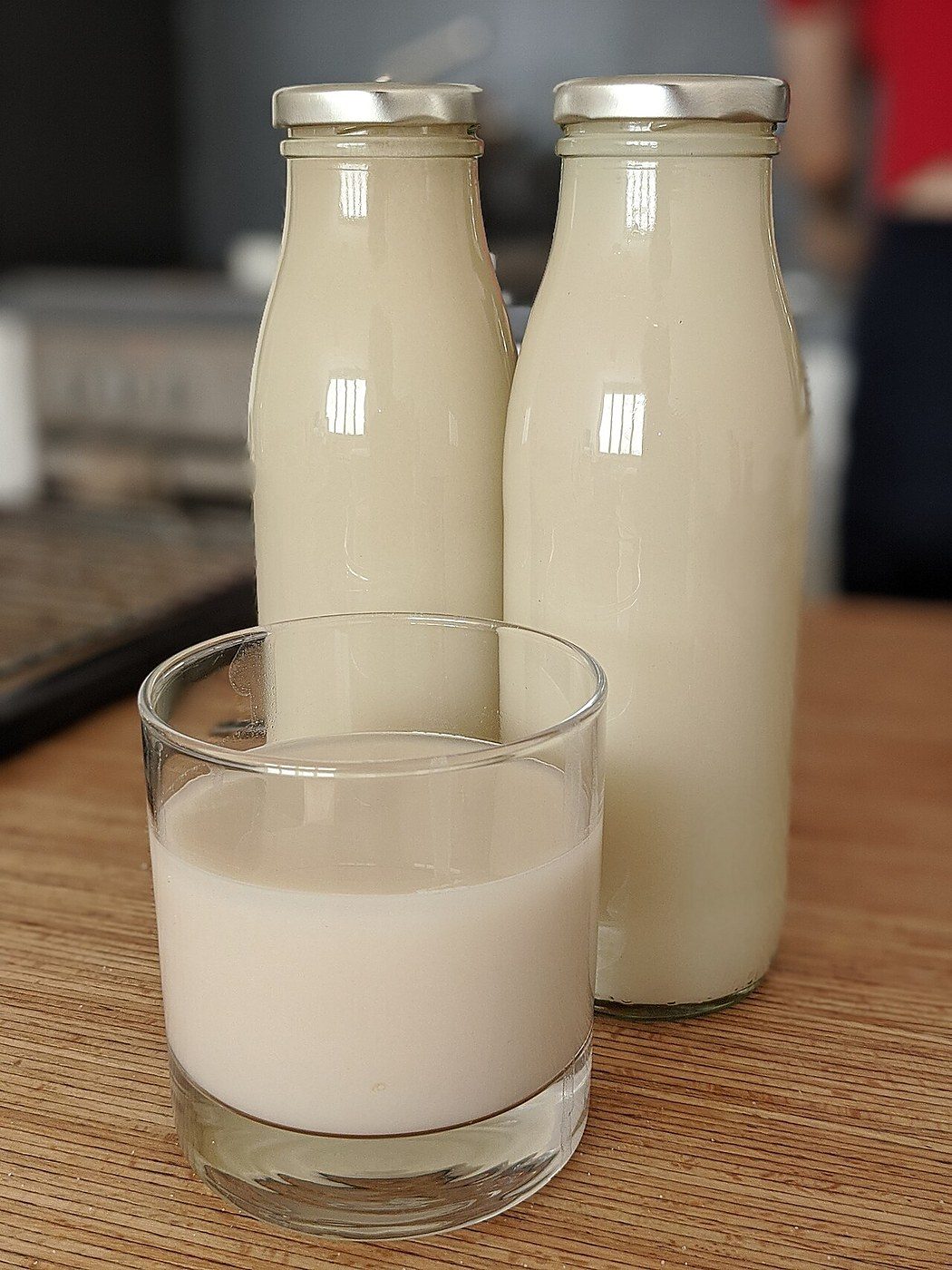
Plant-based milk grew 16% in US foodservice in 2025, now at 13% pound share of all milk sales; plant-protein sales fell 7% for the third consecutive year [61]
04
England and Wales legally recognized ethical veganism under equality law in February 2026, requiring nutritionally adequate vegan meals across all prisons [105]
05
Canada's egg supply is just 21% cage-free after a decade of corporate pledges, against 82% in the UK and 47% in the US [85]
The Rundown
The day's most consequential business news for veganism came out of London: sustainability consultancy Eunomia, commissioned by advocacy group Madre Brava, found that a moderate dietary shift toward plant proteins delivers 64% of UK food retailers' Scope 3 emissions obligations by 2030 while increasing profitability through higher margins on plant products, far outrunning agricultural efficiency improvements that would cost retailers £150 million and cover just 13% of the required reduction [65]. Lidl GB, the only UK retailer to set a quantified plant protein target, reported a near-700% rise in its own-brand plant-based sales, giving the projection a real-world proof point. In Washington the same day, the Supreme Court ruled 7-2 in Monsanto v. Durnell that federal pesticide law preempts state cancer lawsuits against Roundup, eliminating the litigation lever that had produced $11 billion in Bayer settlements since 2018 [90]. For vegans tracking their own health: two 2026 peer-reviewed studies confirm B12 deficiency interferes with mitochondrial DNA in skeletal muscle cells and that supplementation improved mitochondrial structure in aged female mice, peer-reviewed evidence that the supplement most vegans already take matters beyond anemia alone [12][14].
The Stories: one event, across the categories that covered it
01InnovationStory
UK Eunomia report finds plant protein shift is the cheapest path to retailer climate goals
The business case for selling more plants just arrived in spreadsheet form, and the math lands on veganism's side.
What happened: the record
Sustainability consultancy Eunomia modeled three routes for UK food retailers to meet their Science Based Targets initiative FLAG (Forest, Land and Agriculture) Scope 3 emissions obligations, releasing the analysis for Madre Brava at London Climate Action Week [65]. Animal proteins account for approximately 79% of UK retailers' Scope 3 FLAG emissions. A "medium" dietary shift, a 35% drop in meat consumption, 50% of protein foods from livestock sources, 32% of dairy from plant sources, would deliver 64% of required reductions alone while increasing retailer profitability through higher margins on plant alternatives. Agricultural improvements alone deliver just 13% of the FLAG target and require an estimated £150 million in capital from retailers. Nine of the UK's ten largest retailers have committed to SBTi FLAG goals, with an average reduction target of around 30% by 2030. Lidl GB, the only UK retailer to set a quantified plant protein target (25% of total protein sales by 2030), reported a near-700% rise in own-brand meat-free and plant-based milk sales, exceeding its prior 400% goal [65]. Tesco holds plant-based at just 9% of protein-rich food sales despite a 39.4% FLAG commitment and recently dropped a target to triple plant-based meat alternative sales against its 2018 baseline.
Why it matters
The Eunomia report does something most advocacy analyses don't: it frames protein shift as the economically rational choice rather than the ethical concession [65]. The finding that a moderate shift saves money while delivering most of the required emissions reduction closes the "affordability" argument retailers have used to justify inaction. Lidl's 700% sales increase is the proof-of-concept. Madre Brava commissioned this research, so treat the specific projections as directional rather than independently audited; Eunomia is a credible sustainability consultancy and the emissions accounting methodology is standard SBTi. The real question is whether the nine other committed retailers follow Lidl's model or continue the pattern Tesco has established: strong public commitments and slow execution.
02Law & PolicyStory
Supreme Court rules federal law shields Monsanto from Roundup cancer suits
Seven justices just handed Bayer the legal protection it had been buying, settlement by settlement, for eight years.
What happened: the record
The U.S. Supreme Court ruled 7-2 on June 25, 2026 in Monsanto Company v. Durnell that the Federal Insecticide, Fungicide, and Rodenticide Act expressly preempts state-level failure-to-warn lawsuits against Roundup [90]. Bayer had paid more than $11 billion settling over 100,000 cancer cases since acquiring Monsanto in 2018. The World Health Organization classified glyphosate, Roundup's active ingredient, as a probable human carcinogen in 2015. Justice Ketanji Brown Jackson, joined by Justice Gorsuch, dissented, writing the majority "misunderstands FIFRA's requirements" and leaves cancer patients "without a remedy for the significant harms" they suffered [90]. Bayer announced a $7.25 billion class settlement, now pending in Missouri state court, to resolve current and future claims. Food & Water Watch, Center for Food Safety, and prominent MAHA advocates including some Trump supporters condemned the ruling [90]. The Pesticide Injury Accountability Act, which would restore state-level recourse, has failed in 11 states this year and was stripped from the House Farm Bill.
Why it matters
Roundup is applied to the majority of US soy, corn, and canola crops, and glyphosate residue turns up in processed food, oat products, and human urine at measurable levels. State failure-to-warn lawsuits had been the only functional accountability mechanism forcing Bayer to take health risk labeling seriously; FIFRA preemption removes that lever entirely [90]. The ruling delegates the adequacy of Roundup's warning label exclusively to EPA, whose pesticide registration process the ruling's critics call structurally compromised. Congress now holds the only remaining card. For a movement that rests partly on the argument that animal agriculture's chemical footprint is one reason to leave it behind, this ruling makes that argument harder to litigate.
03InnovationStory
Plant-based milk up 16% in US foodservice; proteins fell 7% for the third straight year
Remove the surcharge and people order the oat milk. Leave the price gap on proteins, and they don't.
What happened: the record
The Good Food Institute's 2025 US foodservice analysis shows dollar sales of non-dairy milk grew 16% to $288 million, outpacing a 4% rise in conventional milk, with plant-based milk now holding 13% of total milk-pound sales [61]. Plant-based creamers reached $189 million in dollar sales and hold 28% of all creamer-pound sales, the largest category share of any plant alternative in foodservice. GFI credits both gains to coffee chains removing plant-based surcharges and making plant-based the default. Plant-based proteins (meat alternatives, tofu, tempeh, veggie burgers) posted $291 million in dollar sales but saw pound sales fall 5%, against a 2% increase for conventional meat [61]. Eighty-five percent of restaurants don't offer a plant-based dish on the menu, and restaurant purchases of plant proteins fell 15%. Plant-based meat carries a 65% price premium over conventional meat. Tofu and tempeh are 41% cheaper than meat and the only plant proteins cheaper than their animal equivalents. Non-commercial outlets, education, healthcare, government, bucked the restaurant trend, with plant-protein purchases rising.
Why it matters
The split is not mysterious. Coffee chains eliminated surcharges and started offering plant milk as the default; volume followed [61]. Meat alternatives still carry a 65% price premium, and the path of least resistance in a restaurant is the animal protein option. The non-commercial uptick in plant proteins is worth watching: schools, hospitals, and government cafeterias have institutional sustainability mandates different from a restaurant diner making a personal choice, and their buying decisions are less discretionary. The milk result shows the ceiling of what default placement can do. The protein numbers show how far the market still needs to travel.
04Food & RecipesSpans multiple topics
McVitie's Jaffa Cookies roll out in UK supermarkets, accidentally vegan
The longest-running dispute in British biscuit law just accidentally handed vegans a new snack.
Across these topicsFoodWins
McVitie's launched a vegan-accessible cookie building on the Jaffa Cake flavour profile, covered separately by a UK specialist vegan outlet and by a vegan news outlet whose team member tried the product.
What each source noticed: source by source
Food“Vegan Jaffa Cakes are here – but these ones do belong in the biscuit aisle”Vegan Food & Living
“Unlike their cake-based counterpart”
"Unlike their cake-based counterpart," the cookie base allowed animal ingredients to be excluded without reformulating around the egg in the sponge, which the original Jaffa Cake still contains [43]. VFL flags certified sustainable palm oil and cross-contamination risk as reasons some vegans may still avoid the product, and notes that ingredient changes could affect vegan status at any time. The framing is cautious but real: egg-free reformulation at scale is achievable when the business case exists, and this is one example.
Wins“McVitie's Just Dropped Jaffa Cake Cookies, And They're Vegan”Plant Based News
“Delicious”
"Delicious," confirmed a PBN team member after getting hold of a pack [103]. PBN reads accidental-vegan mainstream products as normalization: McVitie's is not marketing to vegans, it's making a product vegans can eat, which historically outsells explicitly labeled vegan alternatives. Community sentiment tracked by PBN was enthusiastic about both the McVitie's and Lidl versions, with no concerns about the absence of a vegan label.
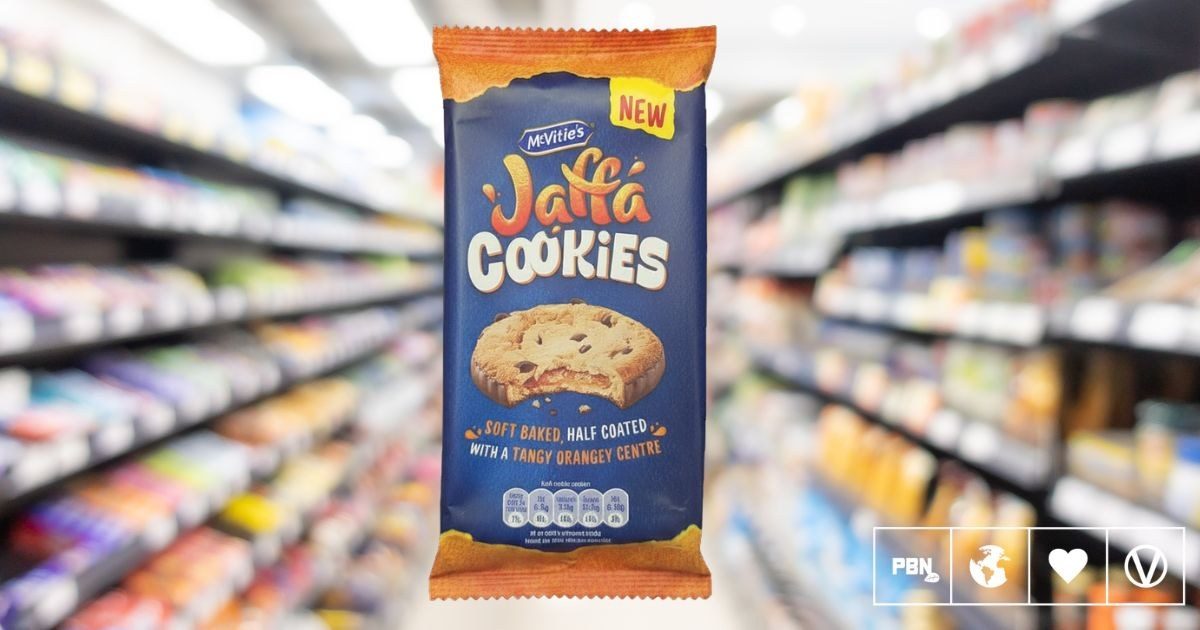
Biscuit maker Pladis launched McVitie's Jaffa Cookies, soft-baked cookies with a tangy orange center half-coated in a dairy-free chocolate flavoring, now in Asda stores nationwide at £2.50 for a pack of six, with wider UK supermarket distribution expected from the week of July 20 [43][103]. The product swaps the original Jaffa Cake's egg-containing sponge for a cookie base, and uses a dairy-free coating, making the cookies accidentally vegan. The packaging carries a "vegetarian" label rather than a vegan one due to cross-contamination risk on shared lines handling milk and eggs [43]. Lidl's Tower Gate brand has separately introduced its own Jaffa Cookies, described in community posts as "soft and a bit chewy, with a definite Jaffa cake taste." No certified vegan Jaffa Cake exists in UK retail. This product, like Oreos and Jammy Dodgers, falls in the accidental-vegan category: no animal ingredients in the recipe, no vegan certification on the label.
Why it matters
Accidentally vegan mainstream products tend to sell into a much broader market than explicitly labeled lines because they carry no positioning baggage [43][103]. McVitie's isn't making a vegan statement; it's making a cookie that happens to exclude eggs and dairy. That pattern, taste-first reformulation that opens the product to vegans without closing it to anyone else, is quieter than a vegan launch and often more durable. The cross-contamination caveat matters for allergy sufferers; for ethical vegans who eat accidentally-vegan products, the Jaffa Cookie joins a useful list.
05Wins & CultureStory
England and Wales legally recognize ethical veganism in prison food policy
The state's most controlled catering environment just put veganism on the same legal footing as religious dietary requirements.
What happened: the record
England and Wales introduced a new Food in Prisons Policy Framework in February 2026, replacing 2010 rules [105]. The 2026 framework explicitly recognizes ethical veganism as a protected characteristic under the Equality Act 2010 and frames vegan food provision within the human right to freedom of belief. Vegan meals are now included in minimum menu requirements for both lunch and the evening meal across all prisons. Prison Catering Managers are directed toward the Public Sector Equality Duty, which requires proactive rather than reactive accommodation: prisons must think ahead about vegan provision rather than waiting for problems to arise [105]. The framework mandates nutritionally adequate vegan meals including supplementation, fortified drinks, and oils where needed, with explicit attention to B12. Prisons must formally consult with prisoners about whether meals meet their ethical dietary needs. The 2010 rules required a technically animal-free meal. The 2026 rules require a nutritionally adequate one.
Why it matters
Prisons are where institutional food policy meets the sharpest version of the access question: what happens when a person cannot opt out of the catering system? The 2026 framework closes the gap where technical compliance (a plate without meat) could substitute for genuine vegan provision [105]. The explicit connection to equality law has reach beyond prison walls: the same protected characteristic argument applies in schools, NHS trusts, and care homes, where plant-based eaters similarly lack the exit option. The explicit B12 supplementation requirement also puts on record, in a binding institutional context, that a well-planned vegan diet requires specific nutritional accommodation, not just ingredient substitution.
Worth Knowing
Food & Recipes
For tonight: silken tofu chocolate mousse from Full of Plants takes seven ingredients, blends in minutes, and sets overnight with no detectable tofu flavor, just deep, creamy chocolate [15]
Research & Nutrition
B12 deficiency can cause fatigue before anemia appears: a 2026 study in The Journal of Nutrition (study00016-7/fulltext)) found low B12 interferes with mitochondrial DNA in skeletal muscle cells; a companion study in GeroScience (study) found supplementation improved mitochondrial structure and count in aged female mice, both peer-reviewed, both relevant for vegans and older adults [12][14]
Activism & Animals
The FAA is considering rules that could let certain "fixed site" facilities, including potentially agricultural ones, apply for drone flight restriction designations; public comment closes July 6 [87]
African grey parrot blood trade has emerged near Cameroon's Lobéké National Park, with trappers extracting blood from endangered birds for spiritual and medicinal use, TRAFFIC describes it as a shift toward harder-to-detect trafficking products [74]
Indonesian conservation officials rescued a Sumatran tiger cub, a sun bear, and an elephant calf from wire snares in a single month; West Sumatra now warns that catching any protected species in a snare triggers criminal liability under a 2024 amendment to Indonesia's conservation law [81]
A Paris court was expected to rule on whether TotalEnergies must cut oil production 37% and gas production 25% by 2030, the first application of France's corporate duty-of-vigilance law to climate change [80]
Innovation
Finnish startup Perfat Technologies launched Perfat Soft, a sunflower-oil oleogel with 34g of fiber per 100g, 75% less saturated fat than butter, and 83% lower CO2 per kg than dairy butter, targeting bakers and plant-based meat manufacturers [60]
US startup FerrinX, producing precision-fermented lactoferrin without cows, struck a North American skincare distribution deal with Palmer Holland; producing 1kg of lactoferrin conventionally requires at least 10,000 liters of bovine milk [59]
The European Environment Agency called for EU protein supply diversification toward plant proteins and fermentation technologies to cut greenhouse gas emissions, water pollution, and dependence on imported animal feed [44]
Cultivated meat company Vow named Alex Andrews as CEO; founder George Peppou spun out to a stealth startup after what he described to Forbes Australia as "by far world-leading" low-cost cell culture breakthroughs with applications in pharmaceuticals, biomedicine, and leather alternatives [67]
A Bezos Earth Fund-backed Food Intelligence Lab improved a vegan Greek yogurt's sensory scores by 29% in 10 formulation iterations over five days, matching the animal-based benchmark on creaminess, consistency, and tanginess [62]
Danone is acquiring Australian coconut water and yogurt brand Cocobella, adding a dairy-free coconut yogurt fermented with live cultures to its portfolio [66]
One Good Thing
George Rodger died on April 27 in Aberdeen at 85, wearing the vegan kilt he had worn to every gathering for decades [104]. He went vegetarian in 1980 and vegan in 1992, and in the early 1990s founded GoVeg, Aberdeen's local vegan group. He served as a Vegan Society Trustee for 19 years, including several as Chair, and created the Vegan Passport, the multilingual guide that has since helped plant-based travelers communicate their needs across dozens of countries and languages. From 2002 until the last months of his life, he organized regular social meals in Aberdeen that grew from a small group into something the community still describes as one of the best parts of being vegan in that city. Friends remembered him as someone who "made everyone feel welcome," and whose conversations were "always thoughtful, often witty, and never forgotten." He was a daily fixture at Bonobo, Aberdeen's first vegan café, right up until he wasn't. He built things that outlasted him. The Vegan Passport is still in people's pockets.
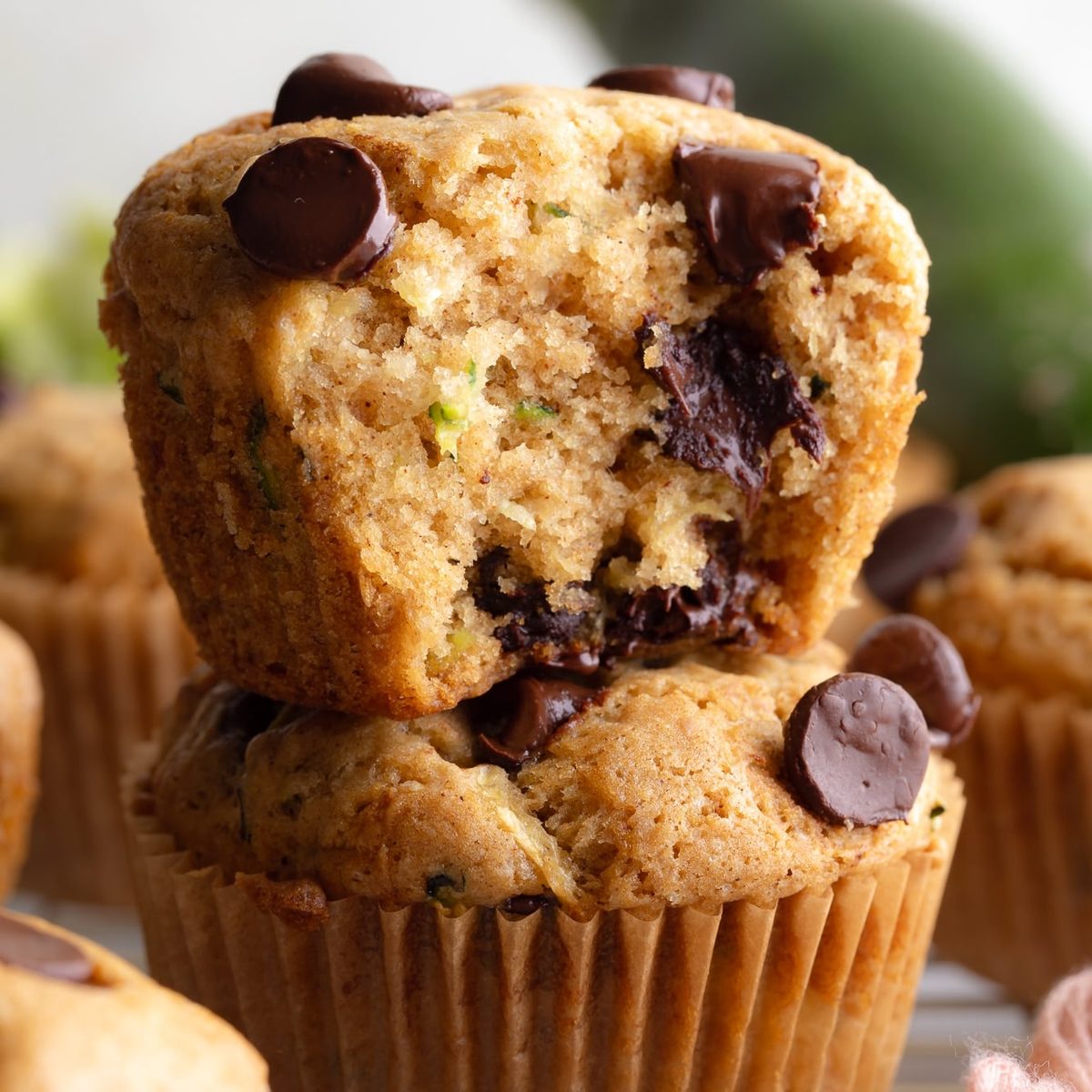
Fluffy, moist, chocolate chip-loaded Vegan Zucchini Muffins! Bake a batch of these easy, one-bowl muffins when you want to use up your fresh summer zucchini.