01Activism & AnimalsStory
Brazil's foie gras ban awaits President Lula's signature
Six years of advocacy, 288,000 petition signatures, and a vote in both chambers. Brazil has done its part.
What happened: the record
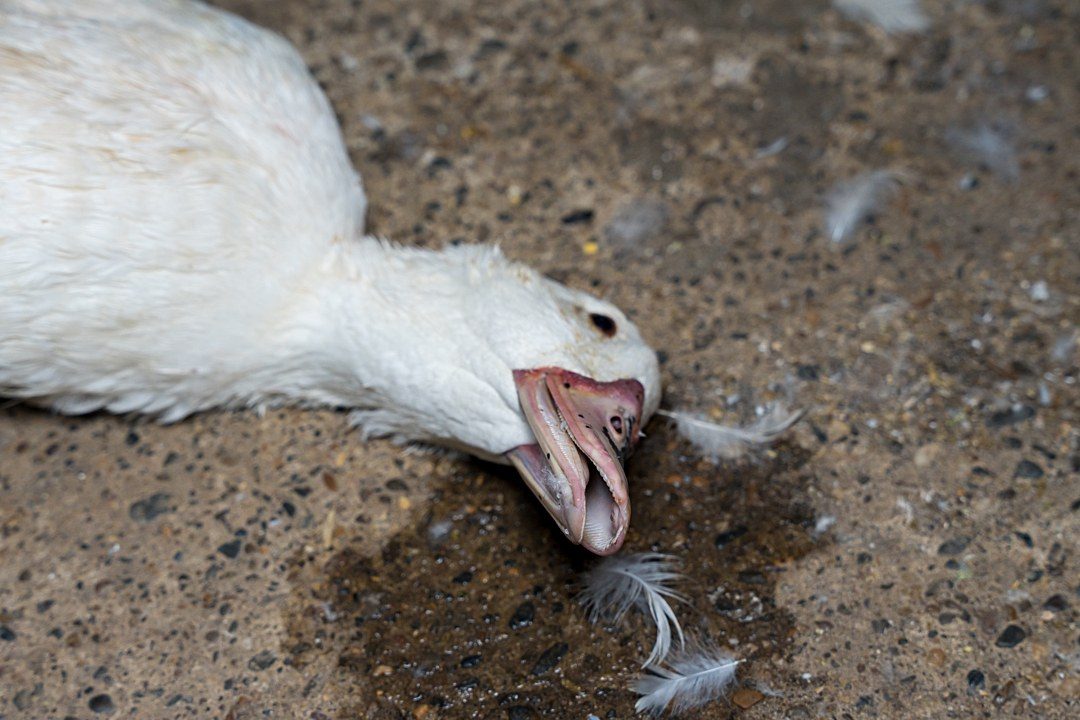
Brazil's National Congress approved Bill 90/2020 on April 28, prohibiting both the production and sale of foie gras throughout the country. The bill has cleared both the Chamber of Deputies and the Senate and now sits with President Luiz Inácio Lula da Silva, who has approximately 15 days from formal transmission to sign or veto. Mercy For Animals Brazil led the six-year campaign, collecting more than 288,000 signatures [64]. If enacted, Brazil would become the first country in Latin America to ban foie gras at the federal level under a law whose scope covers both production and sale, meaning the rule would apply to imported product as well. Foie gras production has been prohibited in the United Kingdom, Germany, Italy, Norway, and Poland; California and Portland, Oregon restrict sale under U.S. state and local law. The practice of gavage, force-feeding ducks and geese via a tube inserted repeatedly into the throat, is the target; the liver grows up to ten times its normal size, causing what Mercy For Animals describes as hepatic lipidosis. [64]
Why it matters
A ban on sale as well as production is structurally different from a production ban: importers cannot route around it by supplying from France or Hungary. Brazil is one of the world's largest food-producing nations, and a law with this scope sets a template that other Latin American countries can follow. The campaign history argues for durability: laws built over six years of documented public support tend to survive legal challenge better than quickly passed measures [64]. The open question is Lula's calculation. French diplomatic pressure is a real factor: France produces most of the world's foie gras and has reportedly lobbied against signature. Whether Lula signs or returns the bill is the story now; the advocacy work is already done, and 288,000 signatures are already on the record.
02Food & RecipesSpans multiple topics
Schouten Europe acquires Bobeldijk Food Group
When a sector matures, the companies with the operational discipline to keep growing quietly start buying the ones around them.
Across these topics
Food
Innovation
Schouten's acquisition of Bobeldijk is a consolidation move in a market both outlets agree is developing fast but unevenly.
What each source noticed: source by source
Food
 “Schouten Europe buys plant-based peer Bobeldijk Food Group”
Just Food
“Schouten Europe buys plant-based peer Bobeldijk Food Group”
Just Food
“The market is developing quickly, and customers are looking for partners that combine innovation, quality, flexibility and reliable supply”
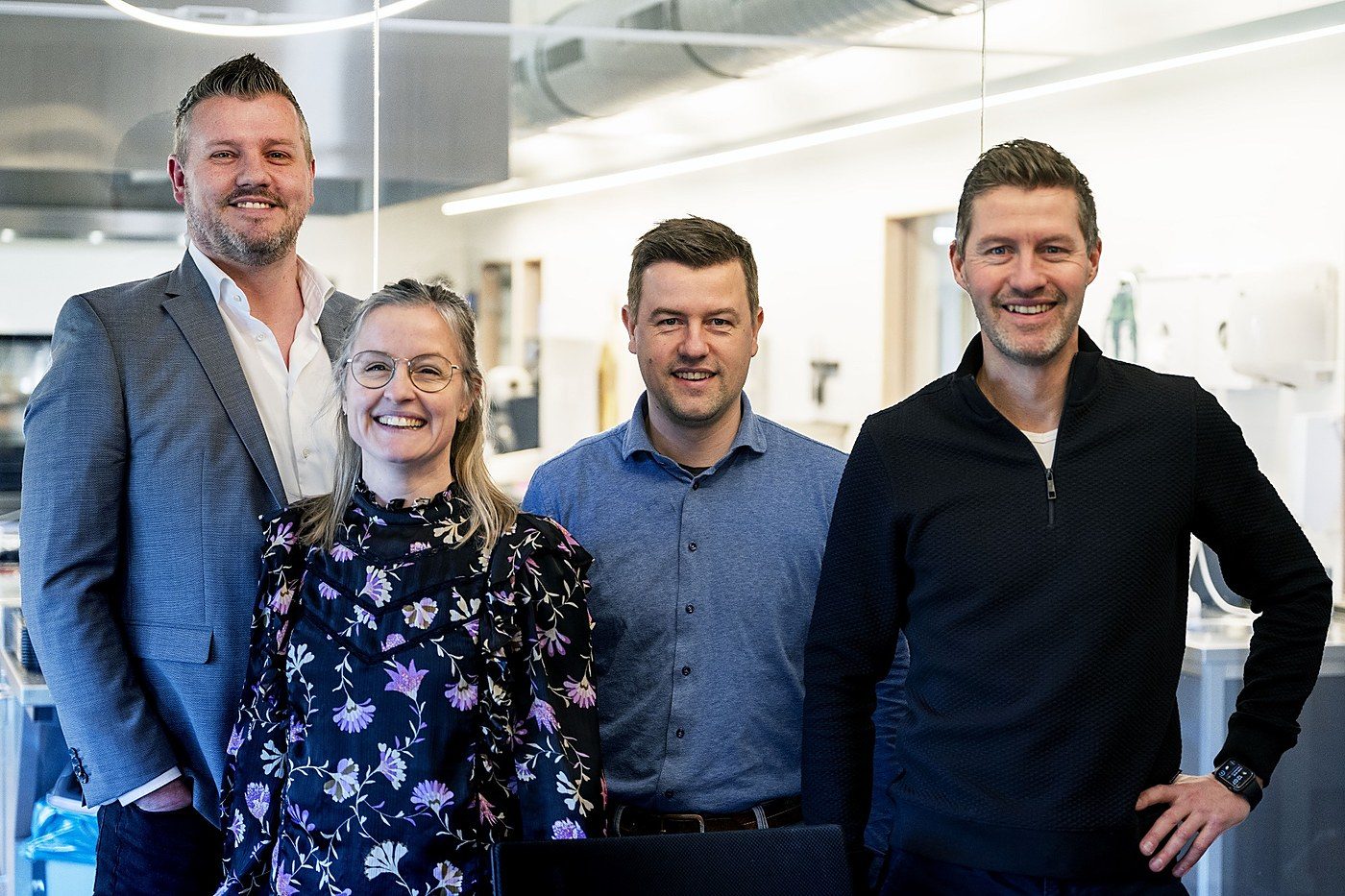
"The market is developing quickly, and customers are looking for partners that combine innovation, quality, flexibility and reliable supply," said CEO Niek-Jan Schouten. Just Food focused on the deal as a capacity and private-label play, reported Bobeldijk's €20m annual sales, and noted the CEO's refusal to name target export markets. The piece did not address the broader market context or Bobeldijk's ownership history. [16]
Read the original ›
Innovation
 “Schouten Becomes 'Europe's Largest' Family-Owned Meat Alternatives Producer After Bobeldijk Deal”
vegconomist
“Schouten Becomes 'Europe's Largest' Family-Owned Meat Alternatives Producer After Bobeldijk Deal”
vegconomist
“Last year, we achieved revenue growth of more than 30%, while many sales markets are stabilizing”
"Last year, we achieved revenue growth of more than 30%, while many sales markets are stabilizing," Schouten said. vegconomist gave the deal considerably more historical framing, tracing Schouten's origins to 1893 and noting that founder Henk Schouten began developing meat alternatives in 1990, making the family among the earliest commercial operators in the global category. It also flagged that this is Bobeldijk's second ownership change in six years, having been acquired by Dutch fish processor Kennemervis Groep in 2020 before this deal. [49]
Read the original ›
What happened: the record
Dutch plant-based protein manufacturer Schouten Europe, headquartered in Giessen, acquired Bobeldijk Food Group of Deventer in a deal whose financial terms were not disclosed. Schouten generates roughly €45m in annual sales and reported revenue growth of more than 30% last year; Bobeldijk generates around €20m ($22.6m), primarily through private-label supply to retail and foodservice customers. The combined entity is, by Schouten's account, the largest family-owned business in the European market for plant-based meat and seafood alternatives. Bobeldijk transitioned from butchery to exclusively plant-based and vegetarian production in 2020. CEO Niek-Jan Schouten told Just Food that the deal adds "extra production capacity, knowledge, experience and craftsmanship in plant-based products," without naming specific international markets the company plans to expand into. Schouten supplies more than 50 countries, predominantly under private-label arrangements. [16][49]
Why it matters
Schouten's 30%-plus growth against a flat European retail market for plant-based meat is the real data point here. The private-label focus matters: supermarkets only stock private-label products that sell, so continued placement is a demand signal less susceptible to brand hype than press releases. Consolidation typically follows when a maturing market creates margin pressure; the fact that Schouten is buying rather than being bought suggests genuine financial footing. The biggest open question is integration: Bobeldijk's two ownership changes in six years indicate the business has moved around, and absorbing it without disrupting existing customer relationships will test Schouten's operational discipline. [16][49]
03InnovationStory
Congress introduces the REAL Butter Act to require "lab-created" labeling on Savor's carbon-derived butter
Bipartisan sounds principled until you notice that five of the seven co-sponsors represent Wisconsin or New York, both major dairy states.
What happened: the record
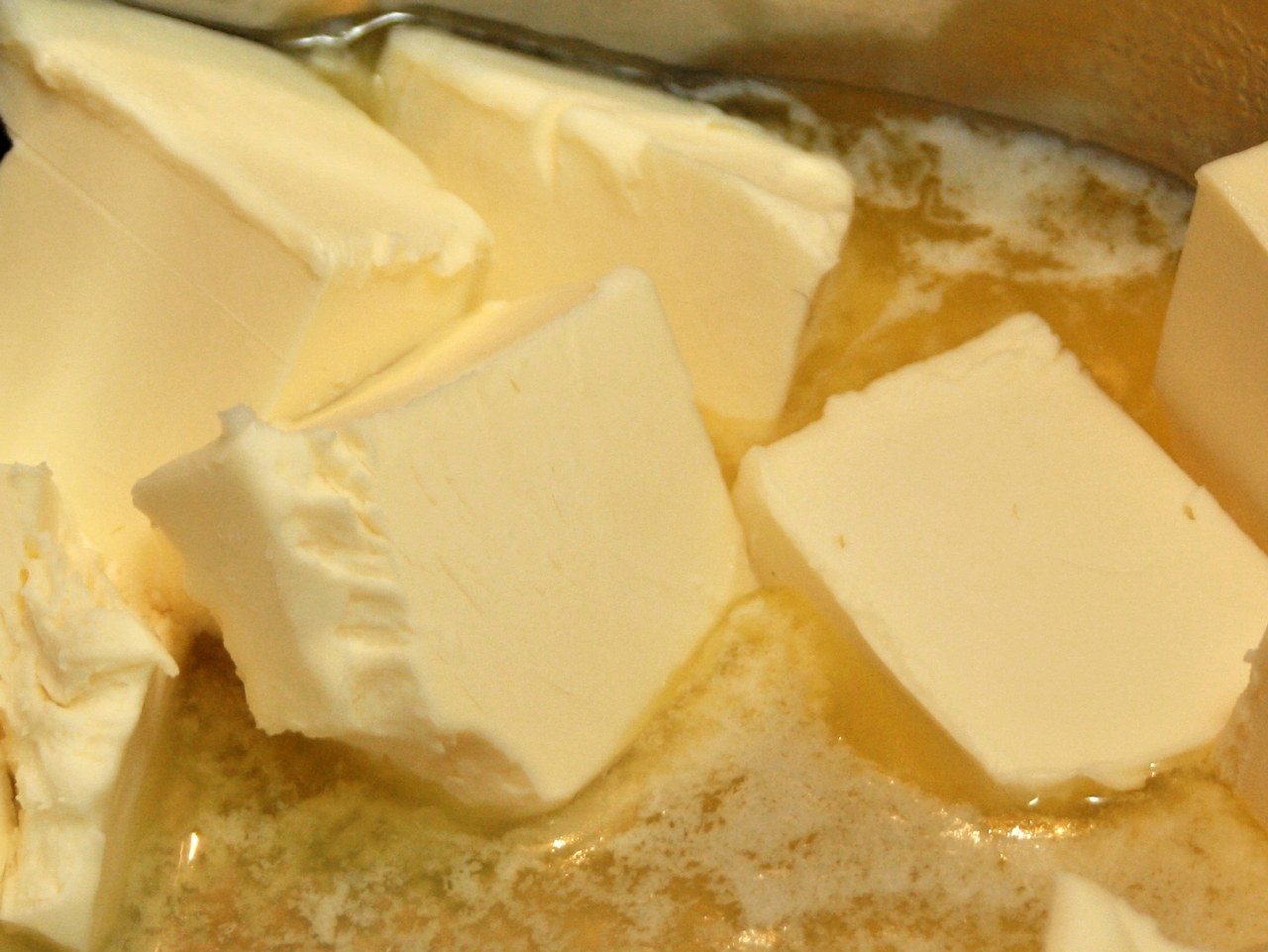
Representatives Tony Wied (R-WI) and Josh Riley (D-NY) introduced the Recognizing Engineered Alternatives as Lab-Created (REAL) Butter Act on June 22, 2026, with five additional co-sponsors, all Republicans: Tom Tiffany (WI), Derrick Van Orden (WI), Claudia Tenney (NY), John Rose (TN), and David Schweikert (AZ). The bill, referred to the House Committee on Energy and Commerce, would amend the Federal Food, Drug, and Cosmetic Act to require products marketed as butter but derived from non-agricultural sources to carry a "lab-created" label. The legislation explicitly targets Savor, a California startup backed by investors including Breakthrough Energy Ventures (in which Bill Gates has been a lead investor; the Congressional press release described Savor as "Bill Gates's company," which Green Queen noted is inaccurate). Savor converts captured carbon dioxide, green hydrogen, and methane into fatty acids it describes as chemically identical to dairy fat; its EcoButter is currently sold in chocolate truffles at one San Francisco restaurant. Savor has self-affirmed its butter as Generally Recognized as Safe (GRAS) and expects a formal FDA "no questions" letter by late 2026 or early 2027. The company told Green Queen its products "will always be labelled in compliance with FDA requirements and all applicable laws," and said the bill may stem from a "misunderstanding" of its technology. (REAL Butter Act, govinfo.gov) [45]
Why it matters
This is a labeling fight, not a ban, and labeling fights have a mixed record in court. Savor's EcoButter is chemically identical to dairy fat by the company's account, which makes a "misleading consumers" argument harder to sustain than it would be for a product that looks or tastes different. The bill's language around products that "fail to conform to the standard of identity for butter", the 1923 Butter Act's definition of fat derived exclusively from milk, is the operative legal hook, and courts will likely have to decide whether a chemically identical product can be excluded from that definition purely because of its production method. What the bill accomplishes regardless of outcome: it forces Savor to navigate a regulatory fight at precisely the moment the company wants to focus on scaling and securing FDA sign-off. The dairy lobby has now written the template it will apply to any fat-replacing ingredient. [45]
04InnovationStory
Andfoods prepares Singapore launch for black gram whipped cream
A fermented lentil platform with a Mars patent cite in its corner is about to find out whether "works in a commercial kitchen" translates into foodservice adoption.
What happened: the record
New Zealand startup Andfoods, spun out of Massey University's Riddet Institute in 2023, is weeks away from launching a dairy-free whipped cream made from fermented black gram (black mung bean) protein in Singapore's professional foodservice market. Initial customers will be bakeries, cafés, and dessert operators that need a cream capable of whipping, piping, and holding structure under commercial kitchen conditions. The timing follows a March 2026 patent application by Mars covering plant-based ice creams made from black gram protein; Green Queen reports the filing referenced black gram milk powder samples from Andfoods and a Massey University patent on the production process. Co-founder and CEO Alex Devereux told Green Queen that the company's fermentation process, developed at the Riddet Institute, eliminates black gram's plant-like flavor notes and improves its functional performance relative to other plant proteins. The product is dairy-free, palm oil-free, and designed for foodservice functionality rather than retail nutrition claims. Andfoods has raised NZ$4M ($2.25M) from New Zealand investors and is targeting a NZ$6M ($3.4M) Series A later in 2026. [43]
Why it matters
A Mars patent citation is an unusual form of early-stage validation: Mars has large R&D operations and tests many ingredients before committing one to a filing, so citing Andfoods' supplier and the Massey University patent suggests the ingredient cleared at least an internal technical bar. Black gram's advantages over pea protein in texture stability, if they hold at commercial scale, address a persistent complaint about plant-based dairy substitutes: the gap between lab performance and what a professional kitchen actually demands at volume. Singapore is the right proving ground, the city's food tech ecosystem is unusually receptive to novel ingredients, and the foodservice channel lets Andfoods document real performance before any retail push. Whether the Series A closes on favorable terms will be the cleaner signal of investor confidence in the fermentation platform than the launch itself. [43]
05Wins & CultureStory
Lewis Hamilton wins his 106th grand prix, eight years into a plant-based diet
He was told going vegan would hurt his performance. He has 53 wins since that prediction to prove otherwise.
What happened: the record
Lewis Hamilton won his 106th Formula 1 grand prix at the Circuit de Catalunya in Barcelona. Hamilton has followed a vegan diet since approximately 2017, adopted after learning about animal agriculture from a friend; he told the BBC at the time, "The cruelty is horrible and I don't necessarily want to support that and I want to live a healthier life." He told Vanity Fair that doctors and others raised concerns about protein intake and performance after the transition, and that his energy smoothed out and his skin cleared. "I mean, I've won five world titles since then," Hamilton said. He has 53 race wins since going public about his plant-based lifestyle. Plant Based News reported that Hamilton and Kim Kardashian have been attending events together since February and are reportedly exploring a relationship. Kardashian has described herself as a flexitarian, fronted advertising for Beyond Meat, and in 2022 launched a nine-piece vegan skincare line; she is not vegan. [83]
Why it matters
The 106th win is not a news event for veganism in any narrow sense. It is a 53-race, multi-year rebuke to the protein-deficiency narrative that follows plant-based athletes wherever they compete. Hamilton wins the most technically demanding motorsport on the planet, at 41, on a diet his medical team initially questioned, and he keeps winning. The Kardashian angle is celebrity by definition, but culture is where dietary defaults actually shift, and a sustained, publicly documented relationship between the world's most decorated active F1 driver and one of the most-followed people on earth lands plant-forward eating in feeds that no campaign can reach by design. [83]