Manning Beef closed for good; Philadelphia bans horse carriages
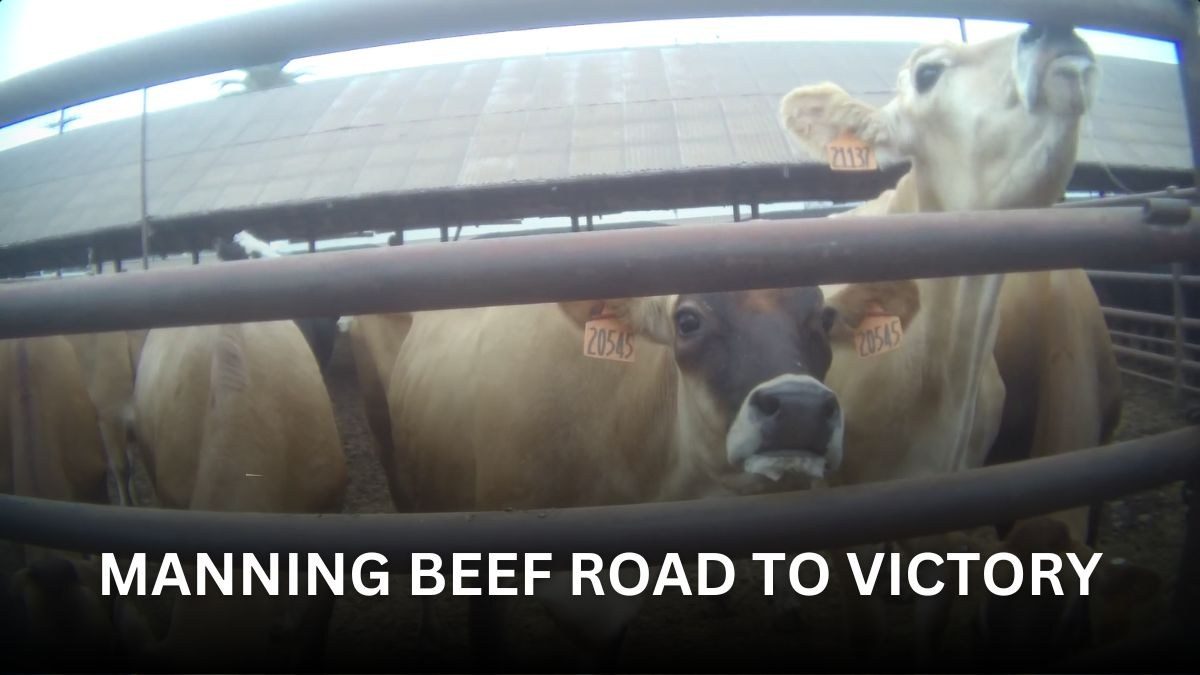
The Pico Rivera Planning Commission permanently revoked Manning Beef's operating permit on June 22, closing LA County's last cow slaughterhouse after a century of operation and blocking an attempt to reopen under a new name
5 top stories31 sources read114 articles scanned6 sides of vegan life
The Pico Rivera Planning Commission permanently revoked Manning Beef's operating permit on June 22, closing LA County's last cow slaughterhouse after a century of operation and blocking an attempt to reopen under a new name [80]
02
Philadelphia City Council banned horse-drawn carriages effective June 26, with $1,000-per-day fines covering both commercial and noncommercial operators, as calls for a similar ban accelerated in New York City after a carriage horse death in Central Park and a tourist fatality in June [46]
03
The UK government announced supply chain rules requiring businesses to verify soy, palm oil, cocoa, and coffee purchases do not contribute to illegal deforestation, with rules designed to align with the EU's EUDR [24][108]
04
A federal judge threw out the Trump administration's SNAP pilot to restrict soda and candy purchases in five states, ruling the USDA failed to follow its own 30-day notice requirement [25]
05
Wildtype launched the first Kickstarter for a direct-to-consumer cultivated seafood product, offering salmon lox for home delivery after receiving an FDA "no questions" letter in May 2025 [71]
The Rundown
The Pico Rivera Planning Commission voted June 22 to permanently revoke Manning Beef's conditional use permit, according to Animal Outlook, whose 2024 undercover investigation documented apparent federal humane slaughter violations at the facility [80]. The vote blocks the owner's attempt to reopen as "Palermo Meats LLC" and leaves LA County, population ten million, without an operating cow slaughterhouse. One day later, Philadelphia City Council passed a horse-drawn carriage ban taking effect Friday, with $1,000-per-day fines, just as pressure for a similar ban accelerated in New York City after a horse death in Central Park and a tourist fatality from a carriage fall in June [46]. On the regulatory front, the UK government announced plans to require supply chain checks on rainforest commodities aligned with the EU Deforestation Regulation, while a federal judge in Washington blocked the Trump administration's attempt to restrict SNAP purchases of soda and candy on procedural grounds [24][108][25].
The Stories: one event, across the categories that covered it
01Activism & AnimalsStory
Manning Beef Permanently Closed After Century of Operation
One undercover investigation, one New York Times front page, and one zoning vote: LA County has no more operating cow slaughterhouses.
What happened: the record
Animal Outlook reports that the Pico Rivera Planning Commission voted June 22 to permanently revoke Manning Beef's conditional use permit, following a public hearing attended by more than a dozen advocates and community members [80]. Manning Beef had operated as a slaughterhouse in Southern California since the 1920s, filed Chapter 11 bankruptcy in August 2024, and shut operations in October 2025. The closure followed a documented campaign: an Animal Outlook undercover investigator worked inside the facility from October to December 2024, recording cows reportedly being butchered while showing signs of sensibility to pain, in apparent violation of the federal Humane Methods of Slaughter Act [80]. The New York Times published an exposé based on the footage in April 2025. The USDA subsequently cited Manning Beef for excessive use of electric prods. Animal Outlook then launched a supply chain pressure campaign targeting the company's business partners. After the facility closed, the owner incorporated "Palermo Meats LLC" in April 2026, signaling an intent to reopen. The planning commission's June 22 vote shuts that path [80].
Why it matters
The decisive campaign ran less than two years from first undercover footage to permanent revocation [80]. What closed Manning Beef was accumulation, not longevity: investigation, federal citation, media exposure, business partner pressure, financial collapse, and finally a zoning vote. No single step was sufficient on its own. The repeatability question matters: Manning Beef was already financially fragile before Animal Outlook arrived, in bankruptcy while pursuing restructuring. A financially healthier facility might withstand several of those levers without folding. What is settled is the outcome. A county of ten million people now has no cow slaughterhouse. That is a concrete change, documented in a planning record.
02Food & RecipesStory
Philadelphia Bans Horse-Drawn Carriages Before America's 250th Birthday
Carriage bans have been spreading city by city. Now one is coming through a tourist's death.
What happened: the record
Philadelphia City Council voted to ban horse-drawn carriage operations, covering both commercial and noncommercial operators [46]. The ban takes effect June 26 and carries a $1,000-per-day fine for violations. The last commercial carriage horse company had already closed in 2023, but noncommercial carriages had returned to city streets, prompting the council to expand the original bill to cover all operators. The measure goes to Mayor Cherelle Parker for signature. Carriage Horse Freedom, the advocacy group that drove the ban, noted the timing: "Now, for America 250, horse-drawn carriages can finally be removed from the streets," said founder and CEO Janet White [46]. The organization offers an e-carriage alternative that operates in Philadelphia. The city joins Chicago (2020) and San Antonio (2024) in banning the practice. In New York City, Mayor Zohran Mamdani said he supports removing carriages from Central Park after a horse died there in early June and a tourist fell fatally from a carriage on June 17 [46].
Why it matters
Philadelphia's ban was built on years of advocacy, with a final trigger from noncommercial carriages reappearing after the last commercial company closed [46]. New York's version is moving faster and for a harder reason. When the public has seen footage of a horse collapse in Central Park and read about a tourist's death, the political calculation on a carriage ban changes quickly. The two cities arrived at the same destination through different routes: sustained activist pressure in Philadelphia, accident-driven urgency in New York. Carriage horses in major American cities are running out of jurisdictions willing to license them. Chicago in 2020, San Antonio in 2024, Philadelphia in 2026, and New York likely next.
03Food & RecipesSpans multiple topics
UK Announces Anti-Deforestation Supply Chain Rules Mirroring EU Regulation
British supermarkets called for the regulation. That is not how these things usually go.
Across these topicsFoodLaw
The UK government announced plans for supply chain checks on rainforest commodities, designed to mirror the EU's deforestation framework and reduce compliance duplication for businesses operating in both markets.
What each source noticed: source by source
Food“UK lines up new sourcing rules to 'tackle deforestation'”Just Food
"Eliminating products linked to illegal deforestation not only helps to protect precious ecosystems but is good for our collective resilience and long-term prosperity." Just Food led with the industry coalition response, noting that the British Retail Consortium had explicitly called for the rules and the British Meat Processors Association welcomed alignment with EUDR in principle, while flagging unresolved questions about how cattle and beef movements between Great Britain, Northern Ireland, and Ireland will be handled in practice [24]. WWF's Gavin Crowden framed the announcement as overdue: "with new rules finally coming into force in Northern Ireland at the end of the year, there is no excuse for further delay that would leave shoppers in the rest of the UK still unwittingly driving the destruction of the rainforest."
"Tackling global deforestation is one of the most effective ways we can address climate change and protect some of the world's most unique and precious wildlife." FoodNavigator placed the announcement in context of the EUDR's troubled history, repeated delays and industry pressure, and focused on the alignment mechanism: rules for Great Britain will cover the same commodities and information requirements as EUDR in Northern Ireland, with consultation to determine specifics later in the year [108]. The article also flagged the broader commodity scope, including coffee and rubber alongside the more-scrutinized soy and palm oil.
The UK government announced on June 23 plans to introduce supply chain rules requiring businesses trading in commodities sourced from rainforests to verify those purchases do not contribute to illegal deforestation [24][108]. The rules will cover soy, palm oil, cocoa, coffee, and rubber. Great Britain's rules are designed to mirror the EU Deforestation Regulation, which applies directly in Northern Ireland because of Northern Ireland's dual market access, reducing compliance duplication for businesses trading across both markets. The EUDR itself has been delayed twice under industry and member state pressure and now applies in Northern Ireland from December 2026, with a six-month cushion for smaller operators. The British Retail Consortium said its supermarket members had been calling for the regulation. Nature Minister Mary Creagh cited both ecosystem protection and "collective resilience and long-term prosperity" in announcing the plans [24].
Why it matters
The UK announcement covers the commodity chains that matter most for deforestation-linked supply chains: soy, a significant proportion of which feeds livestock rather than humans, and palm oil, present in a large share of packaged food [24][108]. The critical word is "illegal." These rules target illegal deforestation, not all deforestation, meaning forest clearing with government permits remains outside their scope. That limit reflects the EUDR's own design. Enforcement will determine whether the rules function as a real supply chain filter or another voluntary standard with a new name. The WWF linked tropical forest collapse to UK national security, a framing that tends to outlast corporate sustainability pledges [24]. Whether it outlasts the consultation process is the next question.
04Food & RecipesStory
Federal Judge Throws Out SNAP Junk Food Pilot on Procedural Grounds
The government could not ban soda for SNAP recipients because it did not file the right paperwork.
What happened: the record
US District Court Judge Amy Berman Jackson ruled June 22 that the Trump administration's pilot programs in five states, Colorado, Iowa, Nebraska, Tennessee, and West Virginia, barring SNAP recipients from purchasing soft drinks and confectionery, were unlawful [25]. The ruling found the USDA failed to comply with its own regulation requiring 30-day advance notice in the Federal Register for pilot projects with significant public impact. Judge Jackson wrote that "the agency's terse statement that the pilot projects would not have a significant impact on the public is entitled to little deference" and was "directly contrary to the facts in the administrative record" [25]. The court declined to rule on whether the USDA had statutory authority to approve such programs at all, having already found the procedural violation sufficient to void the pilots. According to Just Food, 23 states are currently seeking waivers to impose similar restrictions [25].
Why it matters
Judge Jackson made explicit that she was not commenting on whether restricting SNAP purchases of junk food is a good idea, calling it "a question of policy that is not before the court" [25]. The USDA and 23 states still seeking waivers can try again through lawful channels. For food advocates the outcome is genuinely ambiguous: well-designed restrictions on SNAP purchases of ultra-processed beverages could shift some low-income households toward less-processed options, including plant proteins, and the evidence on ultra-processed food harm is real [21]. Poorly designed restrictions could simply reduce food access for families with few options. What the ruling establishes is a procedural floor: the government cannot bypass its own administrative requirements when restricting food access for millions of low-income households. For now, it failed on paperwork.
05InnovationStory
Wildtype Launches First Direct-to-Consumer Cultivated Salmon via Kickstarter
Cultivated salmon has been on restaurant menus for a year. Now it is trying the front door.
What happened: the record
San Francisco startup Wildtype launched a Kickstarter campaign on June 24 for its cultivated salmon lox, structured as a rewards-based campaign to ship the product directly to backers' homes, reported by The Spoon as the first such campaign for a cultivated animal product [71]. Wildtype received an FDA "no questions" letter for its cell-cultured salmon in May 2025, the same pre-market consultation pathway completed by GOOD Meat and Upside Foods for cultivated chicken, indicating the agency had no further questions regarding safety. The lox is made from Pacific salmon cells and plant-based ingredients, grown in tanks without ocean parasite exposure, with no pin bones, and third-party tested for heavy metals [71]. The campaign raised more than $25,000 from 88 backers within hours of launch, against a $75,000 goal. The product cannot ship to states where governors and legislatures have banned cultivated meat. Alongside the lox, Wildtype launched a skincare line called "marine cellular complex," derived from the same salmon cells, which ships to all 50 states [71].
Why it matters
The Kickstarter format removes the restaurant reservation from the equation [71]. Most people who have not tried cultivated meat are not going to book a table at a fine-dining restaurant specifically for the experience. Salmon lox arriving by mail is a different path to a first taste. The skincare line signals something about the economics of the category: cosmetics face fewer political bans than cultivated food, and the margin on a skin serum is substantially better than on a food product. The FDA "no questions" letter is real and meaningful, a voluntary pre-market consultation with a positive outcome, though it is not a formal food approval. The Kickstarter goal of $75,000 looks achievable given early momentum. Whether this translates to a lasting direct-to-consumer business or a one-time campaign is the open question for Wildtype.
Worth Knowing
Food & Recipes
Make a batch of this: Vegan Food & Living's vegan umami paste blends miso, nutritional yeast, black olives, tomato paste, soy sauce, garlic, and balsamic vinegar into a two-week fridge staple that reportedly sharpens stir-fries, pasta, and soups without adding anything a label reader can't recognize [53]
Activism & Animals
Canada's cage-free egg rate sits at 21%, against 82% in the UK and 47% in the US; Mercy For Animals' 2026 Canada scorecard found Walmart Canada at 9% cage-free and Sobeys stalled at 17% for five consecutive years, while eleven restaurant chains have reached 100% [95]
The Senate Farm Bill draft released this week excludes the Save Our Bacon Act provisions that would have federally overridden state animal welfare laws including California's Proposition 12; Mercy For Animals warns the pork industry will attempt to reinsert them during committee markup and Senate floor consideration [96]
Peru's Congress advanced two farmed animal welfare bills in May and June: one requiring disclosure of hen housing systems on egg cartons, another requiring anesthesia or pain relief during castration, tail docking, and teeth clipping of piglets; neither has passed the full Congress yet [99]
The Social Media Animal Cruelty Coalition held its first international summit in Bali in June, with Indonesia identified as the largest source of online animal cruelty content; 37% of UK children aged 7-15 saw animal cruelty content on social media in 2025, up from 34% in 2024 [92]
Innovation
Schouten Europe acquired Bobeldijk Food Group, making it Europe's largest family-owned plant-based meat business; Schouten's revenue grew more than 30% in 2025 while volume sales fell in four of Europe's six largest plant-based meat markets [66]
Israeli molecular farming startup Finally Foods completed its final open-field trial ahead of commercialization, confirming potatoes can express all four casein subunits in a single plant, the protein structure responsible for cheese melt and yogurt texture; commercial launch is targeted for 2027 or 2028 pending regulatory clearance in Israel and other markets [73]
Pulmuone's US tofu sales grew 17% year-on-year to $70.2M through May 2026, driven in part by anti-ultra-processed food sentiment and demand from GLP-1 drug users seeking high-protein, minimally processed options; the company has held the top US tofu market share for 11 consecutive years [68]
The APAC Society for Cellular Agriculture was granted observer status at the Codex Alimentarius Commission, giving cultivated meat and precision fermentation producers a formal channel to submit technical input on international food safety standards; Singapore remains the only jurisdiction with commercial approval for cultivated meat [76]
Believer Meats, formerly Future Meat Technologies, is in insolvency proceedings in Israel; its court-appointed trustee is soliciting buyers for the company's IP, cell lines, bioreactor expertise, and production data from scale-up activities following hundreds of millions raised from investors [74]
French plant-based brand HappyVore is attempting a Guinness World Record for the largest plant-based barbecue gathering on June 29 in Paris at Ground Control; entry is free with registration and includes chipolatas and merguez-style sausages from its top-selling range [78]
Research & Nutrition
The first randomized controlled trial on ultra-processed food found participants ate 508 more calories per day on a nutrient-matched ultra-processed diet and gained roughly two pounds in two weeks, versus losing two pounds on the unprocessed diet; the NIH study by Kevin Hall, published in Cell Metabolism in 2019, specifically tested whether reformulation fixes the problem and found it does not (study30248-7)) [21]
One Good Thing
At Turkey's Lake Tuz, roughly 5,000 greater flamingo chicks hatched this season, five years after a climate-driven catastrophe nearly erased the colony [29]. In 2021, prolonged drought dried the salt lake's shallow waters and thousands of hatchlings died on the exposed lakebed. After that season, Turkey's directorate for the protection of natural assets launched a targeted intervention: pumping water directly into the nesting zones where chicks are most vulnerable during their first weeks. The results have compounded. No mass die-offs in 2024. This year's chick count more than doubled the previous year, which had itself more than doubled the year before. Drone footage from early June shows the chicks sheltered beneath their parents on the shimmering flats. The lake that satellite images showed nearly bone dry in 2021 is producing 5,000 new flamingos in 2026. The right intervention, reaching the right ecosystem at the right moment, and the animals come back fast [29].
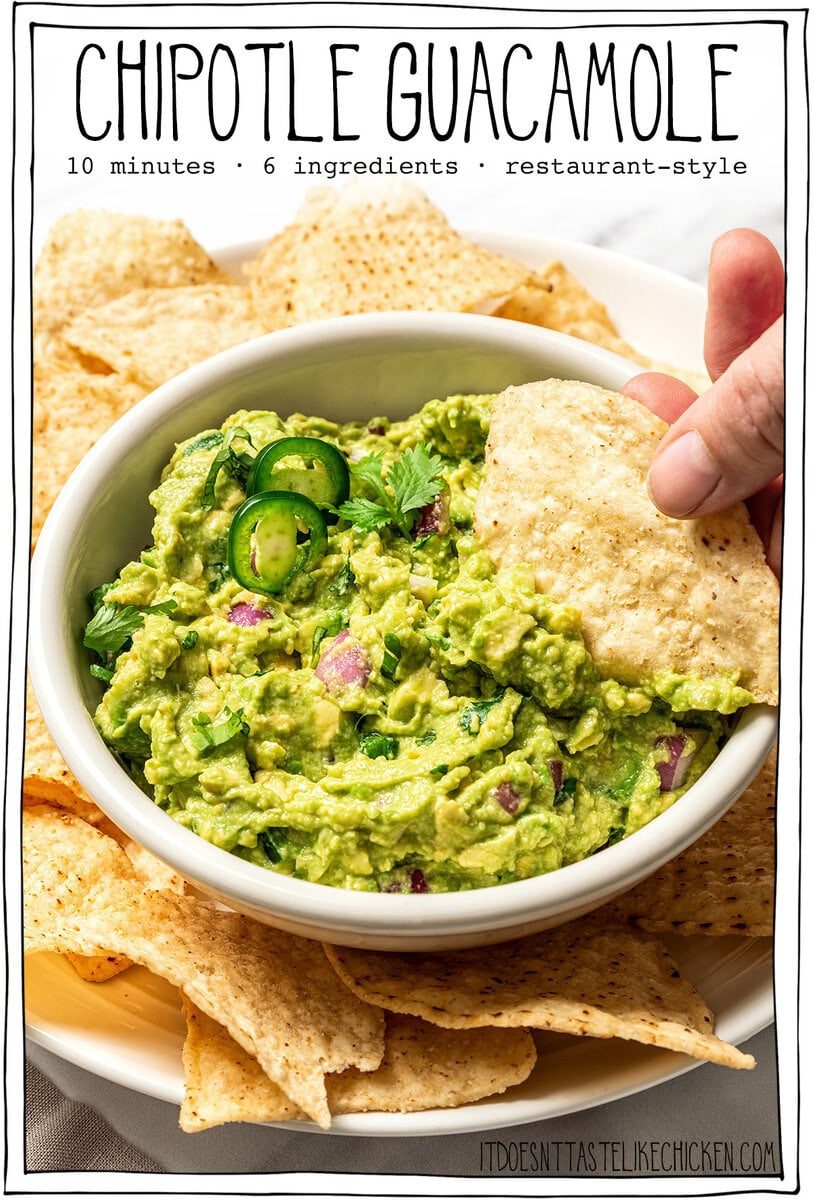
This Chipotle guacamole recipe is creamy, bright, and packed with fresh flavor, just like the restaurant version. Made with ripe avocados, lime juice, red onion, cilantro…