EU Parliament bans 'steak' and 30 more terms; mycelium clears Europe
EU Parliament voted 560-75 to ban 31 meat-related terms including "steak," "chicken," and "bacon" from plant-based and cultivated food labels, starting a three-year transition clock across Europe.
5 top stories27 sources read107 articles scanned6 sides of vegan life
EU Parliament voted 560-75 to ban 31 meat-related terms including "steak," "chicken," and "bacon" from plant-based and cultivated food labels, starting a three-year transition clock across Europe. [99]
02
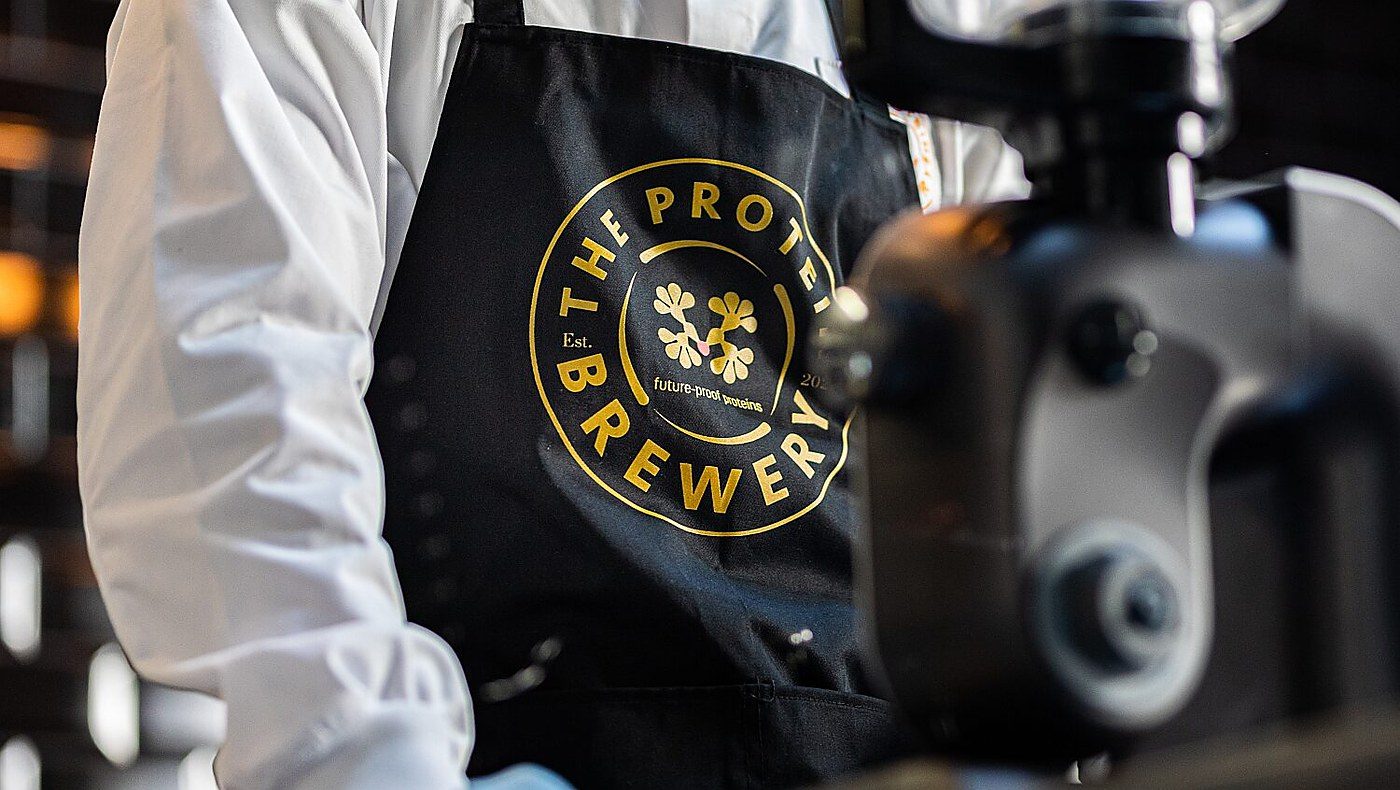
The Protein Brewery's Fermotein became the first EU-grown mycelium ingredient authorized under the EU Novel Food Regulation, followed within days by an €18M funding round. [44][60][91]
03
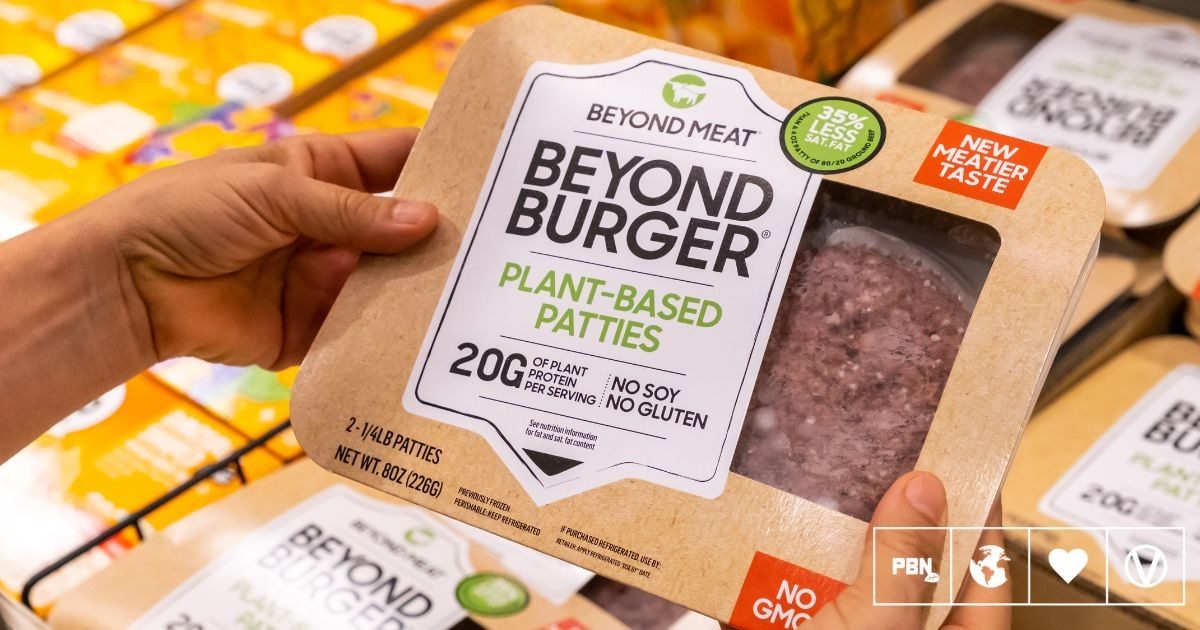
Beyond Meat's mycelium steak filet launched at Wegmans and H-E-B, the first whole-cut plant-based steak to reach major US supermarkets. [55][59]
04
A peer-reviewed PLOS Climate study found 98% of 1,233 environmental claims by the 33 largest meat and dairy companies qualify as greenwashing. [73]
05
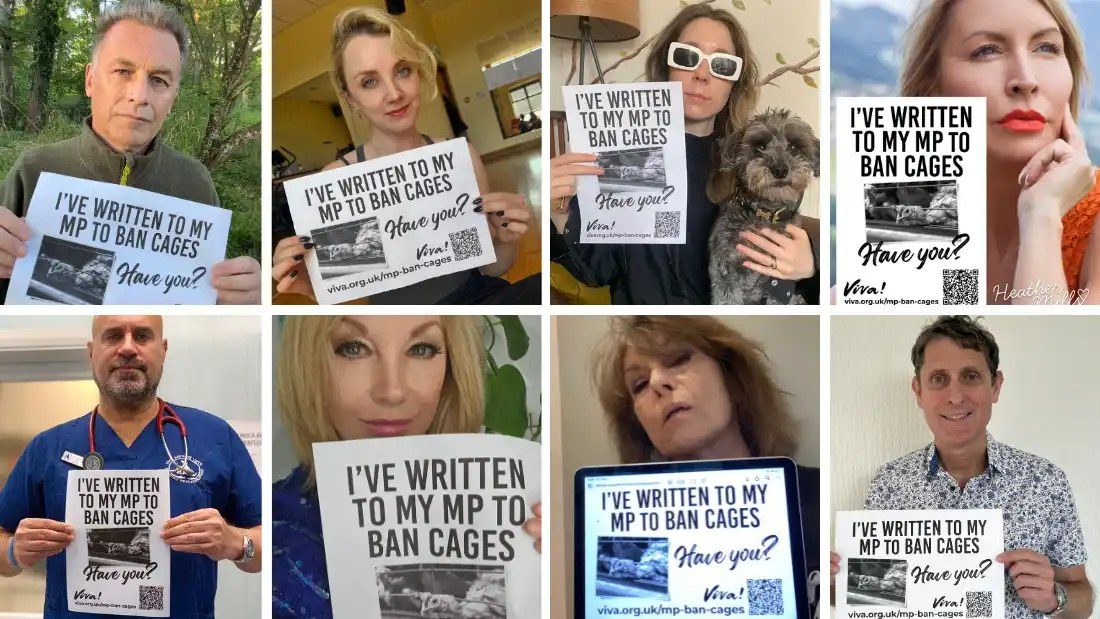
UK celebrities including Chris Packham, Evanna Lynch, and Heather Mills wrote to MPs backing Viva!'s campaign to ban enriched colony cages from Britain's 7.3 million laying hens. [82]
The Rundown
The European Parliament voted 560-75 to ban 31 meat-related terms from plant-based and cultivated food labels, including "steak," "chicken," "T-bone," and "bacon," starting a three-year relabeling clock for producers across Europe. [99] Format-based names like "burger" and "sausage" survived the March 2026 trilogue compromise, which limits the damage since these are the terms consumers actually search for. Two counterweights landed alongside that setback: the European Commission formally authorized Fermotein on June 17 as the first EU-grown mycelium ingredient to clear the Novel Food Regulation, six years after The Protein Brewery's initial filing, and the €18M funding round that closed within days showed investors had been waiting on regulatory certainty, not better science. [44][91] Physicians in the Philippines and the Caribbean also reported this week that whole-food plant-based diets resolved chronic conditions, from lifelong urticaria to metabolic disruption, that years of conventional treatment had not managed to touch. [1][2]
The Stories: one event, across the categories that covered it
01Wins & CultureStory
EU Parliament Bans 31 Meat Terms From Plant-Based Labels
The European Parliament handed plant-based food producers their most significant relabeling headache in years, and "veggie burger" somehow survived.
What happened: the record
In a June 2026 plenary vote, the European Parliament passed new farm-marketing rules 560 to 75 with 25 abstentions, banning plant-based and cultivated-meat products from using 31 species and cut names on packaging and marketing: chicken, beef, pork, veal, turkey, duck, goose, lamb, mutton, goat, steak, drumstick, tenderloin, sirloin, flank, loin, ribs, shoulder, shank, thigh, brisket, ribeye, T-bone, rump, bacon, and others. [99] The vote ratified a trilogue agreement reached in March 2026 between Parliament and the Council of the EU; the Council still needs to give formal final adoption, but no further political barriers remain. Plant-based and cultivated producers get a three-year transition period to clear stock and update all labeling and marketing. [99] The central compromise spared format-based names: "burger," "sausage," and "nuggets" remain permitted, so a company can still sell a "plant-based burger" but not a "chicken burger." The Vegan Society's public affairs manager Alistair Currie said the decision "will remove consumer choice, stifle innovation in the vegan food sector, increasing costs to businesses that will need to re-label and re-market products." [99] Parliament framed the measure as "new measures to support farmers." No peer-reviewed consumer research was cited to demonstrate that current plant-based labeling confuses shoppers.
Why it matters
The restricted list is long enough to catch dozens of established products, and the relabeling cost across hundreds of SKUs is real. Three years gives incumbent brands reason to delay reformulation investment while watching how enforcement takes shape. The survival of format names limits the damage: "burger" and "sausage" are the category's most commercially important terms, and they remain on the table. [99] What the 560-75 vote most clearly shows is that EU food politics still treats plant-based innovation as a threat to animal-agriculture incumbents before it treats it as a benefit to consumers or the climate. ProVeg's CEO told Euronews Green earlier this year that "the climate transition requires making more sustainable food choices easier, not harder." [99] That argument did not win this round. Whether producers invent new terminology that resonates with consumers, or simply absorb the cost and keep growing, is the question the next three years will answer.
02InnovationSpans multiple topics
Fermotein Clears the EU, Raises €18M, and Has a US Filing to Fix
Getting the first mycelium ingredient through Europe's Novel Food process took six years and a positive EFSA opinion. The American application had a typo in the rat strain name.
Across these topicsInnovationLaw
The same event, the EU authorization and the €18M round, landed in three distinct framings depending on each outlet's angle.
What each source noticed: source by source
Innovation“The Protein Brewery says FDA GRAS setback won't derail US plans as it raises $20.5m Series B extension”AgFunderNews
“Significant design flaws in animal studies that compromise data interpretation”
"Significant design flaws in animal studies that compromise data interpretation" was the FDA's own language, and AgFunderNews led with it, giving the fullest account of what the US situation actually means. [44] The outlet established clearly that this is a filing deficiency rather than a safety ruling, and it provided the most granular detail on the non-sterile fermentation process that gives Fermotein a structural cost advantage: the strain thrives at high temperatures and low pH, making it cheaper to scale than competitors including Quorn's Fusarium-based process.
Innovation“The Protein Brewery Secures €18M to Enter the European Market”vegconomist
“Fermotein meets the challenge of feeding a growing and aging population with fewer environmental resources”
"Fermotein meets the challenge of feeding a growing and aging population with fewer environmental resources," said CEO Bosch, and vegconomist led on commercial momentum rather than regulatory process. [60] Its reporting emphasized that 2026 US capacity is already sold out, that EU and UK customer pipelines are building fast, and that ABN AMRO's investment team specifically cited the company's "robust industrial-scale production process and a growing commercial business" as the attraction.
Law“EU clearance unlocks €18m boost for novel mycoprotein”FoodNavigator
“Capital follows certainty”
"Capital follows certainty," said Chris Bryant of Bryant Research in FoodNavigator's piece, and this was the outlet that put the regulatory timeline in sharpest focus. [91] Bryant's point, that "regulatory approval, not technology, has been the binding constraint for fermentation in Europe," is made more concrete by the six years between filing and authorization, and FoodNavigator was the only source to frame the approval explicitly as a sector-wide signal rather than one company's milestone.
The European Commission formally adopted the Implementing Regulation on June 17, 2026, authorizing Rhizomucor pusillus mycelium (Fermotein) as the first EU-grown mycelium ingredient under the EU Novel Food Regulation, six years after The Protein Brewery's initial filing and following a positive EFSA opinion in December 2025. [44][91] Within days, the Dutch startup closed an €18 million Series B extension led by ABN AMRO Sustainable Impact Fund, bringing total funding to more than €70 million; the capital is directed at expanding production at its Breda facility to 2,000-plus metric tons by 2029, launching EU active-nutrition products in Q3 2026, and pursuing regulatory approvals in Canada, Australia, New Zealand, and India. [44][60] Per the company, Fermotein contains 50% protein with a complete amino acid profile and 30% dietary fiber. [60]
In the US, the filing is in repair. The FDA advised The Protein Brewery to withdraw its GRAS notice in February 2026, citing, per the FDA's March 2026 letter, "significant design flaws in animal studies that compromise data interpretation," insufficient safety data at proposed exposure levels, and inadequate characterization of antinutrient properties. [44] CEO Thijs Bosch told AgFunderNews the deficiencies do not require new studies; AgFunderNews reports he cited a typo in the rat strain named in a tox study as one example of the flagged issues. A pre-submission meeting with the FDA is planned imminently, with resubmission targeting a "no further questions" letter in Q1 2027 and first US products in late 2026. [44] The company's entire 2026 US production capacity is already committed to customers under its self-affirmed GRAS status. [44]
Why it matters
The Protein Brewery's parallel stories, an EU green light and a US GRAS withdrawal in the same window, map precisely where mycoprotein stands in 2026. The EU authorization is real: it is the first mycelium ingredient through the EU's Novel Food framework, it confirms the pathway works even at a six-year pace, and the €18M that followed within days shows investors treat regulatory clarity as the rate-limiting variable, not the underlying science. [91] The US resubmission is recoverable; a GRAS withdrawal is not a safety finding, and the company is addressing the FDA's specific objections. [44] What remains open is whether the clinical evidence The Protein Brewery is now collecting, including a Wageningen University aging biomarker study planned for Q1 2027, will give Fermotein the human health data to build consumer pull alongside its regulatory wins. An ingredient with 50% complete protein and 30% fiber, cleared for the EU market and self-affirmed for US use, is a legitimate proof point for the fermentation sector. Six years to authorization is the cautionary note for every company watching from the queue.
03InnovationStory
Beyond Meat's Mycelium Steak Reaches US Supermarkets
Beyond Meat is posting its worst sales quarter in seven years and its most interesting product launch simultaneously. The steak is the interesting part.
What happened: the record
Beyond Meat began selling its Beyond Steak Filet at Wegmans and H-E-B in June 2026, the product's first appearance on US supermarket shelves. [55][59] Each frozen 127g filet, sold as a two-pack, is made from wheat gluten and fava bean protein, with avocado oil, mycelium, oat bran, brown rice powder, a starter culture, and other ingredients; each serving delivers 28g of protein, 3g of fiber, and 1g of saturated fat. [55][59] The filet was the top-selling item on Beyond's direct-to-consumer Beyond Test Kitchen platform after launching there in October 2025, and has earned Clean Label Project Certification, per the company. [55] Founder and CEO Ethan Brown called it "our most compelling centre-of-the-plate innovation since the Beyond Burger." [55][59] Q1 2026 revenues fell nearly 30% year over year, the worst quarter in seven years for a company that has posted losses in every period since its 2019 IPO. [59]
Why it matters
The whole-cut format is where plant-based alternatives have consistently come up short. Ground beef is straightforward to replicate; a steak that holds its texture under heat and satisfies the bite is a harder engineering problem. The mycelium here is not a primary protein source, it's a textural and umami co-ingredient alongside wheat gluten and fava bean, a materially different use from what The Protein Brewery is building with Fermotein. Whether the filet is good enough to move depends on how it actually tastes at Wegmans, and on how long Beyond Meat's cash position survives long enough to find out. The company's worst sales stretch in seven years and its most interesting product reaching shelves in the same week is either irony or desperation. Possibly both.
---
04Activism & AnimalsStory
FAIRR Finds Big Food's Regenerative Agriculture Commitments Are Hollow
The pledges are in the annual reports. The outcomes are not in the supply chains.
Across these topics
- Just Food (Food & Recipes): The consumer-facing gap, sustainability credentials appearing on product labels trace back to supplier programs with no verified outcomes - FoodNavigator (Law & Policy): The fiduciary dimension, sustainability claims made to investors carry legal weight that marketing copy does not, and ESG disclosure rules are tightening on both sides of the Atlantic
The takes: source by source
What happened: the record
The FAIRR investor network published its annual assessment of regenerative agriculture commitments across the world's largest meat and dairy companies, finding that most are announcing programs with "regenerative" branding that set no measurable environmental targets, use no consistent definition of what regenerative agriculture means, and rely on third-party certifications that lack uniform standards. [18][95] Companies are characterizing supplier enrollment in loosely defined programs as sustainability progress, regardless of whether those programs require any specific land or emissions outcome. These commitments appear in shareholder communications and annual reports, not only on packaging.
Why it matters
FAIRR is read by institutional investors holding real positions in these companies. When it characterizes commitments as unsubstantiated, that assessment has consequences for how funds categorize stocks under ESG screens. A Faunalytics analysis published the same week found the same pattern at broader scale: most meat and dairy producers make climate and sustainability claims that independent auditors cannot verify, and larger companies are more likely to greenwash than smaller ones. [73] The EU's Sustainable Finance Disclosure Regulation and pending SEC climate disclosure rules are both moving toward mandatory third-party verification. Companies that announced targets without building the supply-chain systems to back them are running short on time.
---
05Activism & AnimalsStory
UK Celebrities Back Push to Ban Enriched Colony Cages
Britain phased out battery cages in 2012. The "enriched" replacement has been the standard for over a decade. Viva! wants that to change.
What happened: the record
The UK animal charity Viva! launched a campaign calling for a ban on enriched colony cages in Britain, backed by musicians and activists including Chrissie Hynde, Heather Mills, and other UK public figures. [82] Enriched colony cages were the EU reform that followed the battery cage ban: they provide slightly more space and a nesting area, but hens remain confined in large industrial stacked units. Britain adopted the enriched cage standard under EU harmonization; post-Brexit, Parliament can tighten it on its own timeline. Millions of hens across the UK are still housed in enriched cages today.
Why it matters
The enriched colony cage was introduced in the 1990s as a meaningful welfare step, and the industry has treated that framing as the end of the conversation ever since. What has changed is the scientific record on hen cognition and stress, decades of research have made "enriched" look progressively thin as a welfare claim. The politics are genuinely hard: any ban creates real short-term disruption for producers who invested in enriched systems assuming they were permanent. Visible campaigners give the push public weight at a moment when Parliament has been slow on animal welfare since leaving the EU. For the birds, the distinction between any cage and none is not abstract.
---
Worth Knowing
Food & Recipes
This week's plate pick: a 30-minute chana masala built on chickpeas, canned tomatoes, and a bloomed spice base, easy, high-protein, and genuinely better than most restaurant versions. [43]
Innovation
Green Queen pushes back on the ultra-processed case against plant-based foods: yes, they list more ingredients than meat, and no, that doesn't make them worse for you, the ultra-processed argument needs more precision than it usually gets. [54]
Canada's government is funding an AI-optimized fermentation project to convert food manufacturing waste into high-protein ingredients, extracting nutrition from inputs that currently go to landfill. [56]
Wildtype, which secured the first US GRAS authorization for cultivated seafood, launched a Kickstarter for home delivery of cultivated salmon lox and a salmon-derived skincare line, a direct-to-consumer bet while restaurant and retail approvals lag. [57]
UPSIDE Foods placed a $50M stalking-horse bid on Believer Meats' shuttered North Carolina cultivated chicken facility, buying a fallen competitor's production assets at a discount as the sector consolidates. [61]
Faunalytics found that half of young Indians say they would consider going vegan but don't have enough information to do it, the top barrier in the survey was not cost, taste, or culture, but knowledge. [58]
Research & Nutrition
A meta-analysis of 48 observational studies in Frontiers in Nutrition finds that high dietary inflammatory index scores are associated with significantly higher odds of being overweight or obese across multiple populations. [10]
A large cross-sectional study in Chinese adults found higher fruit and vegetable consumption correlated with lower rates of metabolic syndrome across age groups, adjusting for major confounders. [9]
Activism & Animals
Giraffes track and combine discrete quantities the way humans do basic addition, consistently choosing larger amounts across repeated trials, another animal to add to the growing list of species that reason quantitatively without formal training. [78]
The FAO reports that the global aquatic animal trade is now approaching parity with terrestrial meat in volume, meaning the scale of suffering in fishing and aquaculture is catching up to what we track on land. [65]
A study tracking a single mountain lion in a Southern California suburb found her presence alone restructured the local food web over years: deer changed movement patterns, vegetation recovered, songbird populations returned. One predator, cascading effects. [68]
Law & Policy
The US Supreme Court ruled that FIFRA, the federal pesticide law, preempts state failure-to-warn claims, closing the legal pathway that produced most Roundup/glyphosate jury verdicts in state courts. A major procedural win for the pesticide industry. [97]
A Eurogroup for Animals report found that millions of farmed animals are transported annually on vessels averaging more than 20 years old, with many exceeding 40 years and lacking basic mechanical redundancy. [83]
One Good Thing
São Tomé and Príncipe, an island nation of about 200,000 people in the Gulf of Guinea, declared its first two marine protected areas this week, with six more planned. [70] The Gulf of Guinea holds some of the Atlantic's most biodiverse reef and breeding habitat, and faces real pressure from industrial fishing. A small government making a specific, enforceable commitment to protection rather than extraction, with international conservation support to make it credible, is not symbolic. These are actual places that will be managed. For the reef systems and the populations living in them, the distinction between protection and extraction is the difference between being there and not.
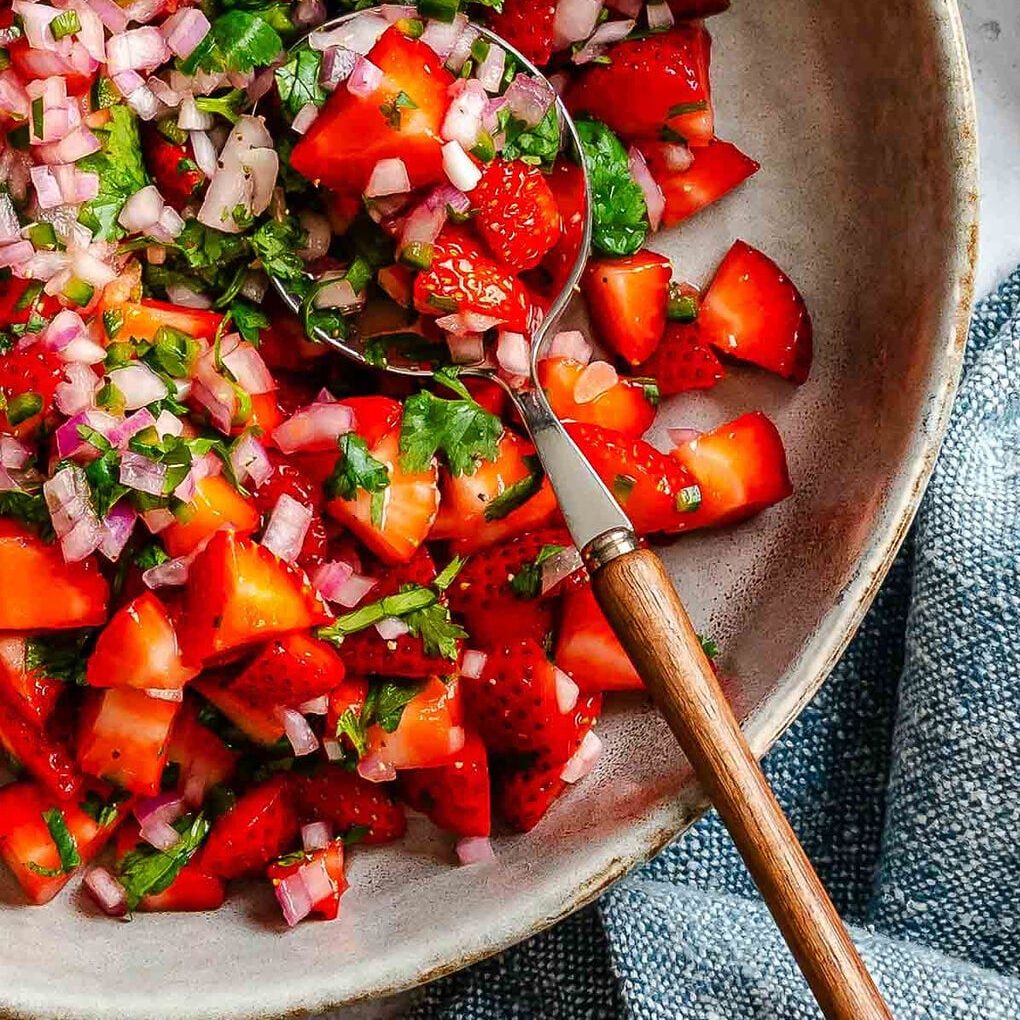
This strawberry salsa is the perfect combination of sweet and spicy flavors. Made with juicy strawberries, crisp red onion, fresh cilantro, jalapeño, and lime juice, it's a simple…