Colombia's Beef Traceability Law Lands; Vegan Dog Food Raises £11M
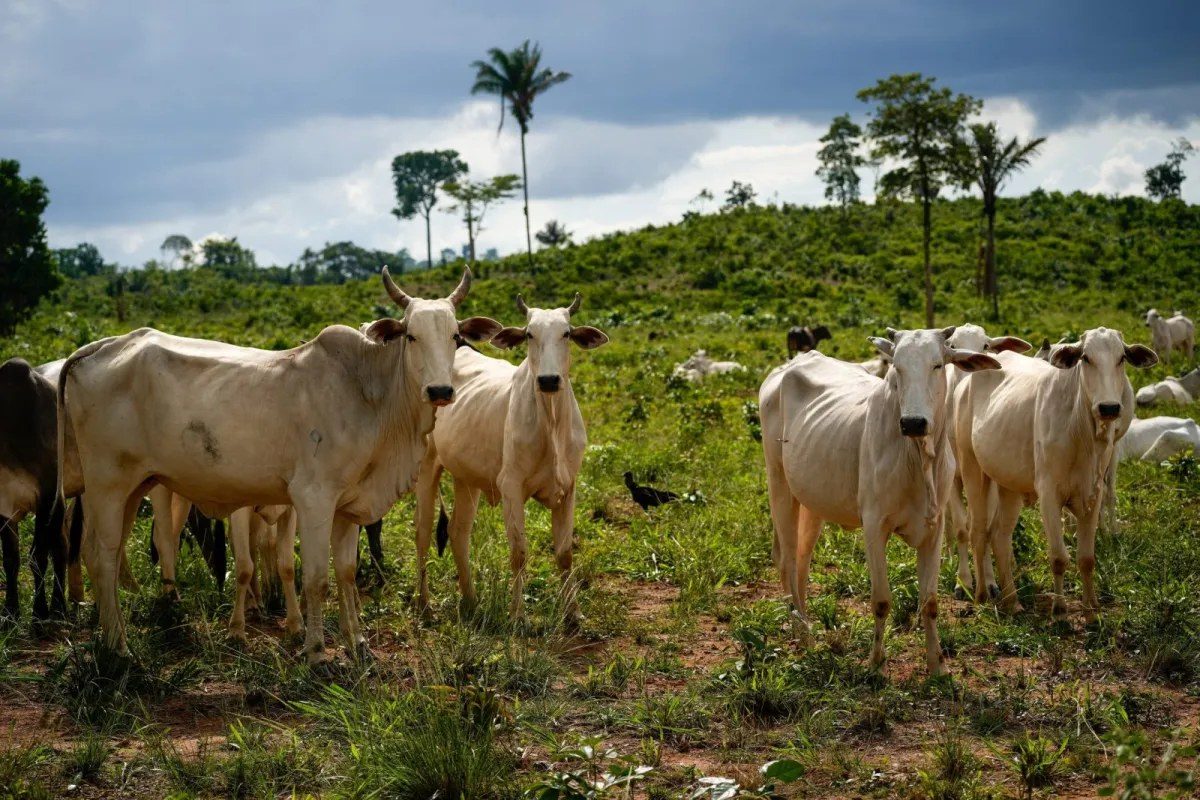
Colombia signed the world's first national beef traceability law on June 4, requiring every animal to be tracked from birthplace to slaughterhouse, targeting a supply chain the Environmental Investigation Agency says sourced 200,000+ cattle from protected Amazon areas between 2020 and 2024
6 top stories30 sources read99 articles scanned6 sides of vegan life
Colombia signed the world's first national beef traceability law on June 4, requiring every animal to be tracked from birthplace to slaughterhouse, targeting a supply chain the Environmental Investigation Agency says sourced 200,000+ cattle from protected Amazon areas between 2020 and 2024 [36]
02
Omni Pet closed an £11M Series A for plant-based dog food, plans US expansion and the launch of LeanPaws, a fiber-based supplement its placebo-controlled trial found helped 77% of overweight dogs shed weight [49][60][64]
03
170+ activists staged four days of Brussels protests demanding the EU set a firm cage-ban timeline before its livestock strategy drops July 7, backed by 1.4 million petition signatures and a Commission consultation in which 99% of respondents called for ending cages [61]
04
A Cambridge review published June 22 argues current protein guidelines prevent deficiency but don't target optimal health; it explicitly states plant-based diets can meet higher targets [16][20]
05
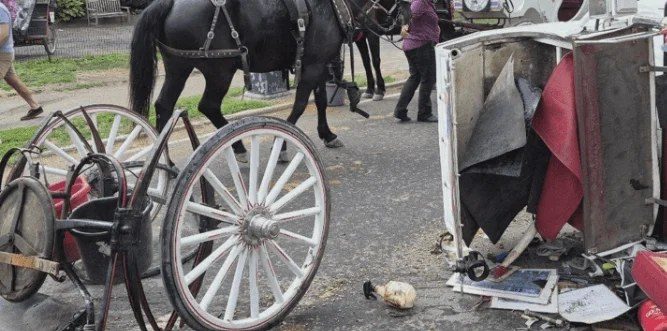
Teenager Romanch Mahajan died Wednesday after a carriage horse bolted in Central Park; his family is demanding New York City ban horse-drawn rides immediately [82]
The Rundown
Colombia's beef traceability law, signed June 4 by President Gustavo Petro, is the single most consequential development for veganism this week: the first mandatory national framework in a tropical forest country requiring cattle to be tracked from birthplace to slaughterhouse. [36] More than 200,000 cattle reached Colombian shelves from protected Amazon areas between 2020 and 2024, per the Environmental Investigation Agency; voluntary pledges failed, and this is the first legal attempt to close that gap. Also from the objective tier: a June 22 review in Frontiers in Nutrition from Cambridge's Lucy Cavendish College argues that current protein recommendations were written to prevent deficiency in sedentary adults, not to optimize health across the lifespan, and explicitly confirms that plant-based diets can meet higher targets [16][20]. In Brussels, 170+ Animal Equality activists opened four days of protest outside the European Commission, timed to a livestock strategy due July 7 that advocates say must carry a firm cage-ban timeline or it amounts to more delay [61].
The Stories: one event, across the categories that covered it
01Food & RecipesStory
Colombia Signs the World's First National Beef Traceability Law
The Amazonian cattle industry runs on a simple trick: no one can prove which cow came from which field. Colombia just made that trick illegal.
What happened: the record
President Gustavo Petro signed Colombia's beef traceability law on June 4, 2026, according to reporting by Inside Climate News and wire services, confirmed independently of the source article. (Inside Climate News coverage) The law requires cattle to be tracked from birthplace through every link in the supply chain to the slaughterhouse, integrating cattle-tracking data with land ownership records and satellite deforestation-monitoring systems. The trigger was an investigation by environmental groups that found Colombian grocery chains were stocking beef from cattle raised on illegally cleared land inside national parks. The Environmental Investigation Agency documented more than 200,000 cattle sourced from protected areas between 2020 and 2024 alone. Colombia carries an additional complication: armed groups tied to drug trafficking charge ranchers per-cow "protection" fees and frequently direct illegal forest clearing, so the tracing system directly threatens those revenue streams. The law phases in over two years. Implementation requires the government to define "deforestation-free producer," establish surveillance in high-risk zones, and assign legal responsibility across auction houses, transporters, and slaughterhouses [36].
Why it matters
This is the first law of its kind in a tropical forest nation. [36] Every previous attempt to clean up Amazonian beef supply chains ran on voluntary pledges, and those pledges repeatedly collapsed when they conflicted with profit. A mandatory traceability law changes the risk calculation for ranchers, buyers, and processors alike. The two-year implementation window is the weak point: two years of continued deforestation before the legal teeth exist. Environmental advocates are pressing Brazil and Bolivia, the two largest beef exporters tied to Amazon clearing, to follow. Whether they do depends entirely on whether Colombia's model holds, and that question will not be answered this year.
02InnovationSpans multiple topics
Danone Buys Cocobella's Parent Company
A dairy giant is now in the dairy-free yoghurt business. That wasn't an accident.
“To further enhance our operational flexibility, we are also acquiring the remaining stake in our Australian fresh dairy joint venture”
"To further enhance our operational flexibility, we are also acquiring the remaining stake in our Australian fresh dairy joint venture," CEO Antoine de Saint-Affrique said. [21] Just Food focused on the deal structure, the undisclosed pricing, the parallel Saputo acquisition, and the projected operating margin accretion. It framed Cocobella alongside conventional Activia and YoPro brands without distinguishing between dairy and dairy-free.
Food“Danone to acquire Made Group”FoodNavigator.com
“Together we will access new infrastructure, capabilities and R&D expertise to accelerate our growth across the region”
"Together we will access new infrastructure, capabilities and R&D expertise to accelerate our growth across the region," Made Group CEO Amanda Butler said. [94] FoodNavigator emphasized gut health and protein as the strategic rationale, connecting the Made deal to Danone's Huel acquisition and the broader GLP-1 and fibermaxxing consumer moment. It treated the portfolio as functional nutrition rather than centering the plant-based lines.
Innovation“Danone to Acquire Made Group, the Multi-Brand Owner of Cocobella Vegan Yoghurt”Green Queen
“There's a clear thread running across these deals: they're all centred around gut health”
"There's a clear thread running across these deals: they're all centred around gut health," Green Queen observed. [59] It was the only outlet to lead with Cocobella's vegan status, to note Danone already owns Alpro (Europe) and Silk (US), and to situate this as part of a deliberate plant-based platform strategy. Green Queen also flagged that high-protein product launches in APAC have grown 47% over five years, which helps explain why Danone is moving there now.
Danone announced June 22 that it will acquire Made Group, the Australian company whose brands include Cocobella dairy-free coconut yoghurt, Rokeby protein smoothies, The Collective, and NutrientWater. Made recorded sales of over €300M ($343M) for the fiscal year ending June 2026. Danone simultaneously agreed to buy the remaining 49% of its fresh dairy joint venture with Saputo in Australia, taking full control. Both deals close in H2 2026 pending regulatory approval; financial terms were not disclosed. The Made acquisition is Danone's fourth in roughly 14 months, following Kate Farms (plant-based clinical nutrition), The Akkermansia Company (gut health supplements), and Huel (plant-based meal replacement, acquired earlier in 2026).
Why it matters
The Food & Recipes sources covered a corporate deal. Green Queen covered a strategy. Both are right. [59] Danone is the world's largest fresh dairy company, and it has spent 14 months acquiring gut health, plant-based protein, and meal replacement businesses across three continents. Made's portfolio includes dairy products alongside Cocobella, so this is not a clean plant-based win. The honest read is simpler than the press release: when the world's biggest dairy company identifies plant-based as its highest-growth category in Asia-Pacific, something real is happening in consumer demand. Whether Danone scales the Cocobella lines or absorbs them into a conventional dairy marketing machine is the open question.
03Food & RecipesStory
Omni Pet Raises £11M to Take Vegan Dog Food Global
Over half of UK dogs are overweight. The most common dietary allergens for dogs are beef, chicken, and dairy. Omni's pitch is that removing animals from the bowl fixes both problems at once.
What happened: the record
London-based vegan pet food startup Omni closed an £11M ($14.5M) Series A, led by IW Capital and Redrice Ventures, with Deborah Meaden increasing her stake following her 2025 Dragons' Den investment. The company is valued at approximately £30M. [49][60][64] Omni will use the capital to expand into major UK supermarkets, enter the US market, and launch LeanPaws, a plant-based weight-management supplement using dietary fibers and resistant starches to replicate GLP-1 satiety effects alongside prebiotics. Omni conducted a placebo-controlled trial with vets in Norway, keeping owners blinded to treatment assignment: 77% of overweight dogs taking the supplement shed weight, 63% had clinically assessed reductions in body fat, and 42% exhibited reduced begging. The trial has not been peer-reviewed; Omni is co-authoring a scientific paper with Nottingham Vet School for submission to a veterinary conference. (LeanPaws trial overview) Omni's core food formulations use proteins from yeast, algae, and pulses, generating 73% fewer carbon emissions than meat-based dog food per the company's own analysis. Since appearing on Dragons' Den in 2025, the company has grown revenue ten-fold to nearly £13M annually [64].
Why it matters
The LeanPaws trial is properly designed (placebo-controlled, owners blinded) but company-funded and not yet peer-reviewed. A 77% weight-loss figure carries more weight after the Nottingham paper is published than it does today. [49] The investment signal is more immediately readable: Lever VC, a fund focused on alt-protein, participated alongside Meaden re-upping, which reflects genuine commercial confidence. The environmental case for vegan pet food is also strong and independent of Omni's own marketing: a University of Winchester study found that UK dog and cat food contributes around 1% of national greenhouse gas emissions, and animal-free formulations cut that significantly. US expansion is where the execution risk lives; the American pet food market is much larger and more competitive, and regulatory requirements for novel proteins differ.
04InnovationStory
Cultivated Meat Faces Its Hard Year
The 2021 pitch was that cultivated meat would be mainstream within a decade. The 2026 reality is that two of its best-funded companies shut down in December, and the sector's top-funded player is bidding to buy a shuttered competitor's factory.
What happened: the record
AgFunderNews published an industry analysis June 23 showing cultivated meat funding peaked at $989M in 2021 and fell to $55M in 2024, recovering modestly to $82.6M in 2025. [51] Believer Meats and Meatable both ceased operations in December 2025. GOOD Meat has not achieved a profitable production model and became embroiled in a legal dispute with a key vendor over allegedly unpaid bills. UPSIDE Foods, the sector's best-funded startup, paused its Illinois facility plan and placed a $50M bid for Believer's North Carolina production site. On the same day, Green Queen reported that Australian cultivated meat leader Vow appointed Alex Andrews as CEO, with co-founder George Peppou moving to executive director to lead a spinout applying Vow's cell-culture technology to non-food markets. [57] Vow's technical position is notable: it operates the world's largest food-grade cell bioreactor at 22,000 liters, claims a 1,500kg single harvest (described as the largest in history), and produces over 5,000kg per week. Its second factory cost 20 to 50 times less to build than competitors', per the company. Vow recently shifted from in-house food production to contract manufacturing for other cultivated meat firms.
Why it matters
Lever VC, a cultivated meat investor, wrote in a recent white paper that it will be "many years if not decades" before anyone can assess how the sector fares. [51] That is an honest acknowledgment from the money side that the timeline slipped badly. The thesis has not been disproved: cultivated meat still replaces the disease risk, supply chain fragility, and welfare costs of conventional animal agriculture. But the path is longer and harder than 2021 claimed, with no playbook for biomanufacturing at scale, a hostile policy environment in key US markets, and a funding gap that limits experimentation. Vow's pivot to contract manufacturing is the strategically rational response to that environment: if its cost-reduction advances hold, it becomes the platform technology for the sector rather than a single restaurant brand. That is a more durable position. Whether the remaining companies can hold on long enough to reach commercial viability remains genuinely uncertain.
05Activism & AnimalsStory
A Teenager Died in Central Park. His Family Is Now Asking for the Ban.
Animal advocates have argued for years that carriage rides through Central Park cannot be made safe. This week a bereaved family made the same argument, and no one could call them activists.
What happened: the record
Romanch Mahajan, 18, died on June 18 after a carriage horse bolted in Central Park, sending an attached carriage carrying a family out of control until it overturned. [82] Mahajan fell while trying to protect his mother and sustained fatal injuries. The incident came one week after a horse named Deniz collapsed and died while pulling a carriage on the same route. PETA joined NYCLASS and City Council members, including bill sponsor Christopher Marte, at a City Hall rally the following day. On Monday morning, advocates attended a memorial vigil at Cherry Hill Fountain near the crash site. A statement from the Mahajan family called on Mayor Zohran Mamdani and the City Council to "end all carriage rides immediately and permanently."
Why it matters
The carriage industry has resisted bans in New York City for years, framing opposition as coming from animal advocates disconnected from the economic and cultural realities of the trade. [82] A family in grief calling publicly for a ban removes that framing. Two deaths in one week, one horse, one person, in the same location, from the same industry, shifts the political calculus. What changed this week is not the argument for a ban. It is who is making it.
06Research & NutritionStory
Cambridge Review Says Protein Guidelines Were Written for the Wrong Goal
The question isn't whether you get enough protein to avoid deficiency. It's whether you get enough to stay strong and sharp into old age. Those are different numbers, and a Cambridge paper just said so plainly.
What happened: the record
A review published June 22 in Frontiers in Nutrition by Dr. Chris Macdonald, Fellow of Lucy Cavendish College, Cambridge, and Director of the Better Protein Institute, argues that current UK protein recommendations were designed to prevent deficiency in sedentary adults rather than to support optimal health, strength, and cognitive function across the lifespan. [16][20] The paper reviews evidence linking resistance training combined with aerobic exercise to lower mortality, stronger cognitive function, and greater independence in later life. It argues that physically active people, older adults, and pregnant women may benefit from significantly higher protein intake than guidelines specify. Crucially, the paper states explicitly that plant-based diets can meet those higher targets, citing the growing cohort of vegan powerlifters and bodybuilders as practical evidence.
Why it matters
The plant-based confirmation here is useful and from a credible address. [16] A Cambridge-published review explicitly affirming that vegans can meet elevated protein targets is a cleaner source than supplement company marketing. Two caveats are worth naming. First, Macdonald is Director of the Better Protein Institute, an organization with an institutional interest in higher protein recommendations; the paper does not disclose the institute's funding sources. Second, this is a review article (a synthesis of existing research), not a randomized controlled trial. The case that optimal protein exceeds minimum recommendations is scientifically plausible. A specific revised threshold requires primary trial data, not a review, before it can move dietary policy. The argument for revisiting guidelines is sound. The specific number needs the RCT.
Worth Knowing
Food & Recipes
Grill this weekend: Vegan Food & Living's grilled kale and sweetcorn salad with a chilli-lemon dressing is oil-free, gluten-free, and ready for a summer barbecue alongside tofu skewers or plant-based burgers [50]
A new Oxford and Leiden study puts the annual environmental cost of the world's top 10% of consumers at $5.7 trillion, with food choices (especially red meat) as the primary driver of biodiversity loss, ahead of energy use [37]
Across topics
Kevin Bacon has renamed himself Kevin Bean to promote Beansday, a Humane World for Animals campaign asking people to swap meat for beans every Wednesday; more than 14,500 pledges came in within the first days, with Bacon filming a PSA in a bean-covered jacket [43][98]
Sobeys, Canada's second-largest grocer, still sources over 80% of its eggs from caged hens nine years after pledging to go cage-free by 2025; protests ran in 12 cities Saturday, and in Calgary a police investigation opened after a truck drove onto the curb near demonstrators [84][87]
Innovation
The European Environment Agency published a report June 22 modeling that a coordinated shift toward plant-based and fermented proteins could cut EU agricultural greenhouse gas emissions by 5% by 2035 and reduce dependence on the 30 million tonnes of South American soy the EU imports annually for animal feed, the EEA report is on their site now [62]
A 2025 Commission public consultation drew 190,000 valid responses on EU animal welfare; 99% called for ending cages [61], whether that figure survives into the July 7 livestock strategy is the thing to watch
An EU enforcement campaign found 37% of clothing items failed to match the fiber content on their labels, relevant for anyone trying to avoid wool, silk, or leather by reading tags [53]
Law & Policy
Manitoba, Canada passed Bill 19 this week, requiring all companion animal breeders to be licensed for the first time since a 2013 breeder licensing law was quietly abandoned; repeat cruelty offenses now carry fines up to $100,000 [86]
Animal Justice will intervene before the Supreme Court of Canada in the Ontario Place case, arguing a province cannot grant itself total immunity from lawsuits over development that cleared 850 trees and threatens Barn Swallow habitat [85]
Factory farming is the main transmission route for most US foodborne illness outbreaks, with livestock waste contaminating irrigation canals used to water fruit and vegetable crops; the FDA's 2024 water safety rules require farms to assess risk but do not mandate water testing [90]
Activism & Animals
Wild Animal Initiative awarded $727,658 in 13 research grants this year, including a study using frog vocalizations as welfare indicators in Panama and a project mapping how urban micro-habitats shape the emotional lives of city rats [65]
A Stockholm Environment Institute report found insect farming's climate case is weaker than advertised: most commercial insect farms use grain feed rather than organic waste, and cold-climate operations require energy-intensive heating that can erase the emissions benefit [83]
Bonobo Kanzi demonstrated imagination and pretend play in new experiments, engaging in a make-believe tea party with scientists; researchers are now extending the work to apes without language training [77]
One Good Thing
Dora Ramirez, creator of the recipe blog Dora's Table, won the James Beard Award for Vegetable-Focused Cooking this year for Comida Casera, a plant-based cookbook of more than 100 Indigenous and traditional Mexican recipes. [42] The awards were held in Chicago. "So many hours went into writing, recipe testing, photographing, and collaborating with the cocineras," Ramirez told the San Antonio Report. "Being recognized by my peers and the James Beard Foundation feels incredibly rewarding." One reader commented: "My mom is from Del Rio, and I have been plant-based since 1994. I appreciate you so much." The book begins with Indigenous dishes, moves through street food and home cooking, and every recipe is vegan. A plant-based cookbook rooted in Indigenous Mexican heritage, winning the most prestigious award in American food media, celebrated not as a substitute for real cooking but as the real thing: that is a genuine win, and it happened this week.
This vegan grilled kale and sweetcorn salad is packed with smoky charred veg and drizzled with a fiery chilli lemon dressing for a fresh, vibrant lunch.