US Dietary Guidelines Reject Plant-Protein Science; Bird Farm Busted
The 2025-2030 Dietary Guidelines for Americans formally rejected the Dietary Guidelines Advisory Committee's finding that shifting protein intake from red and processed meat toward plant sources improves health outcomes, implementing only one in four DGAC recommendations after a...
6 top stories25 sources read343 articles scanned6 sides of vegan life
The 2025-2030 Dietary Guidelines for Americans formally rejected the Dietary Guidelines Advisory Committee's finding that shifting protein intake from red and processed meat toward plant sources improves health outcomes, implementing only one in four DGAC recommendations after a late-stage White House review panel superseded years of scientific work [7][8]. The administration's framing ('ending the war on protein') collides with the fact that Americans have consistently exceeded protein recommendations for decades while falling chronically short on fiber [8]. A 606,434-person observational study published this week in The BMJ found that GLP-1 drugs such as semaglutide were associated with a 50% drop in drug-related deaths among people already living with addiction, pointing to a shared biological mechanism the researchers describe as blunting the craving circuit rather than targeting any single substance [51]. And federal inspectors posted thousands of Animal Welfare Act violations today against Creekside Birds, an Oklahoma parakeet breeding factory supplying PetSmart and Petco, following a three-month PETA undercover investigation [243].
The Stories: one event, across the categories that covered it
01Research & NutritionStory
2025-2030 US Dietary Guidelines Rejecting Plant-Protein Recommendations
The DGAC spent 22 months on a science review. A political panel inserted at the end overrode most of it.
Within Research & Nutritionone topic · 2 sources
The 2025-2030 guidelines are the most politically contested dietary guidelines release in U.S. history, with the administration explicitly claiming to override years of committee work.
The takes: source by source
Research“New Dietary Guidelines Require Radical Change”Center for Nutrition Studies
“seemingly in a rush”
"The American public deserves dietary guidance grounded in the best available science — free from ideological bias, institutional conflicts, or predetermined conclusions," the administration stated, a claim the author finds disingenuous given that health equity was used as a pretext to dismiss plant-protein guidance backed by evidence independent of equity arguments [7]. The piece emphasizes that only one in four DGAC recommendations were fully implemented and names the likely real driver as institutional reluctance to challenge the animal foods industry. It identifies health equity as a red herring and describes the late-stage review as conducted "seemingly in a rush," calling the result a filtering of science through a political process [7].
Research“The New Dietary Guidelines: More Triangle Than Pyramid?”Center for Nutrition Studies
“Anyone who suggests otherwise either hasn't been paying attention, doesn't know what protein is, or is being willfully disingenuous”
"Anyone who suggests otherwise either hasn't been paying attention, doesn't know what protein is, or is being willfully disingenuous," the piece states on the administration's war-on-protein framing [8]. It finds genuine value in the guidelines' anti-ultra-processed-food emphasis and limit-on-added-sugar guidance, then identifies the raised protein targets (up to twice the RDA) as a vehicle for revalidating animal-source foods under the cover of nutritional common sense [8]. It draws on NHANES data showing Americans have exceeded protein recommendations for decades, making the framing of a protein shortage impossible to sustain on nutritional grounds, and concludes that what is really happening is a rhetorical rehabilitation of animal-source foods rather than a war's end [8].
The 2025-2030 Dietary Guidelines for Americans, released January 7, 2026, diverge from the DGAC's advisory report on an unprecedented scale: the administration implemented only 14 of 56 DGAC recommendations fully, partially implemented 12, and did not implement 30 [7]. A supplementary scientific review panel, inserted late in the process, conducted "rapid systematic reviews" after the DGAC's nearly 22-month evidence review had concluded [7]. That panel rejected the DGAC's finding that increasing plant-based protein while reducing red and processed meat is associated with better health outcomes. The guidelines set a protein target of 1.2 to 1.6 grams per kilogram of body weight per day, up to twice the established recommended dietary allowance [8]. They restored full-fat dairy and introduced an inverted food pyramid placing protein, dairy, and fat at the top [8]. The administration framed the process as "ending the war on protein" and claimed to reject "ideological bias," citing health equity concerns in the DGAC report as evidence of politicization [7].
Why it matters
These guidelines shape school meals, federal nutrition programs, and the informational baseline for dietary advice reaching hundreds of millions of people [7][8]. The evidence that replacing animal protein with plant protein reduces all-cause mortality (documented by the NIH-AARP Diet and Health Study, among others) did not become weaker because a late-stage panel declined to include it [4]. What the override damaged is institutional credibility: if the DGAC's process can be superseded by a panel inserted after the comment period closes, the guidelines stop functioning as a scientific document. The most consequential open question is whether the next administration restores the DGAC's plant-protein findings, or whether the institutional ratchet has moved permanently [7].
---
02Research & NutritionSpans multiple topics
WashU Study, GLP-1 Drugs Linked to 50% Drop in Drug-Related Deaths
Six hundred thousand veterans later, these weight-loss drugs look like addiction medicine.
Across these topicsResearchLaw
GLP-1 receptor agonists, originally prescribed for type 2 diabetes, have now accumulated observational evidence for effects on weight, addiction, cancer risk, and biological aging in multiple large datasets.
What each source noticed: source by source
Research“Popular GLP-1 weight-loss drugs linked to lower risks of addiction and overdose”Nutrition Research News -- ScienceDaily
“In addiction medicine, a lot of treatments target just one thing”
"In addiction medicine, a lot of treatments target just one thing," said senior author Ziyad Al-Aly of WashU Medicine. "The revelation about GLP-1 medication is that it really works against all major substances, and it works uniformly, not because it acts against alcohol or opioids or nicotine specifically, but because it is likely acting against the craving itself" [51]. The piece frames the findings as pointing to a shared reward-pathway mechanism and accurately presents the observational design's limitations on causal inference.
Research“Scientists discover why ozempic may not work for some people”Nutrition Research News -- ScienceDaily
"When I treat patients in the diabetes clinic, I see a huge variation in response to these GLP-1-based medications and it is difficult to predict this response clinically," said lead author Mahesh Umapathysivam of Adelaide University [48]. The piece examines PAM enzyme variants that paradoxically produce higher circulating GLP-1 with lower biological activity. It is a mechanistic genetics paper focused tightly on blood sugar control; extrapolating its findings to addiction or weight outcomes would be premature [48].
Law“GLP-1 is no longer just a weight-loss story -- it's a full-scale reset for food & beverage”FoodNavigator.com
The piece aggregates recent GLP-1 research for food industry planners, including the addiction data from The BMJ and observational cancer-risk findings from the 2026 ASCO Annual Meeting [281]. It correctly labels the cancer data as observational and trials-pending. Its core practical argument is that as GLP-1 use expands across more disease indications, food manufacturers face users who eat less, prefer higher protein and fiber, and are changing their relationship with alcohol and snacking [281].
Washington University Medicine researchers published a large retrospective observational study in The BMJ analyzing electronic health records of 606,434 U.S. veterans with type 2 diabetes [51]. Among those without a substance use disorder at the start of the study, GLP-1 users had a 14% lower overall risk of developing one compared to patients on other diabetes medications, with risk reductions across alcohol (18%), cannabis (14%), cocaine (20%), nicotine (20%), and opioids (25%) [51]. Among the 81,617 participants who already had a substance use disorder, GLP-1 use was associated with a 40% reduction in overdoses and a 50% reduction in drug-related deaths over three years [51]. Being an observational analysis of electronic health records, the study establishes association rather than causation: GLP-1 patients may differ in unmeasured ways from patients on other diabetes medications. Separately, a Stanford Medicine study published in Genome Medicine identified genetic variants in approximately 10% of the population that appear to cause GLP-1 resistance, finding that carriers produce higher circulating GLP-1 but get less biological activity from it [48]. FoodNavigator aggregated recent GLP-1 research, including the addiction findings, to argue the drugs are fundamentally reshaping what food manufacturers need to understand about consumer appetite [281].
Why it matters
The 600,000-person addiction study is the largest yet on GLP-1s and substance use [51]. The breadth of effect across all major substance categories is genuinely unusual for any pharmaceutical. The mechanism (dampening craving via shared reward pathways) is biologically consistent with what is known about GLP-1 receptor distribution in the brain, but the observational design cannot rule out confounding. For veganism specifically, GLP-1s favor lower-calorie, higher-fiber eating patterns that tend toward more plant-dense diets, and food manufacturers reformulating for GLP-1 users will move in that direction [281]. The genetic resistance finding [48] matters separately: if 10% of patients are unlikely to respond to GLP-1s for diabetes control, precision prescribing could redirect care earlier and more efficiently.
---
03Research & NutritionStory
Yale Mouse Study, Oleic Acid Accelerates Pancreatic Cancer Growth
A mouse study found olive oil's main fat fed a deadly cancer while fish oil cut it in half. These are mice.
A Yale team investigated whether the specific type of dietary fat (not just total fat quantity) influences pancreatic cancer development in mice, a question previous research had not clearly resolved.
What each source noticed: source by source
Research“One fat helped pancreatic cancer grow while another cut disease in half”Nutrition Research News -- ScienceDaily
“It's really the type of fat that you're consuming, not just total fat content”
"It's really the type of fat that you're consuming, not just total fat content," said lead author Christian Felipe Ruiz [54]. The piece is careful to restrict immediate implications to people at elevated risk (chronic pancreatitis, obesity, late-onset diabetes, family history) and explicitly does not recommend eliminating olive oil, noting its established cardiovascular benefits in human populations remain a separate body of evidence. The pancreatic cancer finding in mice requires human replication before clinical guidance can change [54].
Researchers at Yale School of Medicine published a study in Cancer Discovery on April 29, 2026, comparing 12 high-fat diets in mice genetically predisposed to pancreatic ductal adenocarcinoma, holding calorie content identical while varying only the fat source [54]. Mice fed diets rich in oleic acid (the primary fatty acid in olive oil, high-oleic safflower and sunflower oils, and peanuts) developed tumors faster. Mice fed omega-3-rich diets from fish oil showed a 50% reduction in disease compared to mice on a standard fat diet [54]. The identified mechanism was ferroptosis: polyunsaturated fatty acids oxidize more readily inside cell membranes, making cancer cells more susceptible to a form of programmed cell death, while monounsaturated fats such as oleic acid resist oxidation and can protect cancer cells from this process [54]. The oleic acid cancer-promoting effect was pronounced in male mice but largely absent in females; omega-3 protection occurred in both sexes [54]. The study has not been replicated in humans.
Why it matters
This is a compelling mouse study that should not be translated into dietary guidance for people eating olive oil today [54]. The 12-diet controlled design is substantially more rigorous than earlier high-fat diet research, which typically used a single fat source at unrealistic calorie levels, and the ferroptosis mechanism is biologically plausible. Plant-based diets tend to provide omega-3 precursors through flaxseed, walnuts, and hemp seeds, and generally include more polyunsaturated fats than the high-oleic vegetable oils dominant in processed food manufacturing. If the ferroptosis pathway holds in humans, that distinction could become clinically relevant for people at elevated pancreatic cancer risk. The unexplained sex difference is the study's most pressing open question: oleic acid's effect disappeared in female mice for reasons the researchers do not yet understand, which limits confidence in generalizing to human populations [54].
---
04Law & PolicyStory
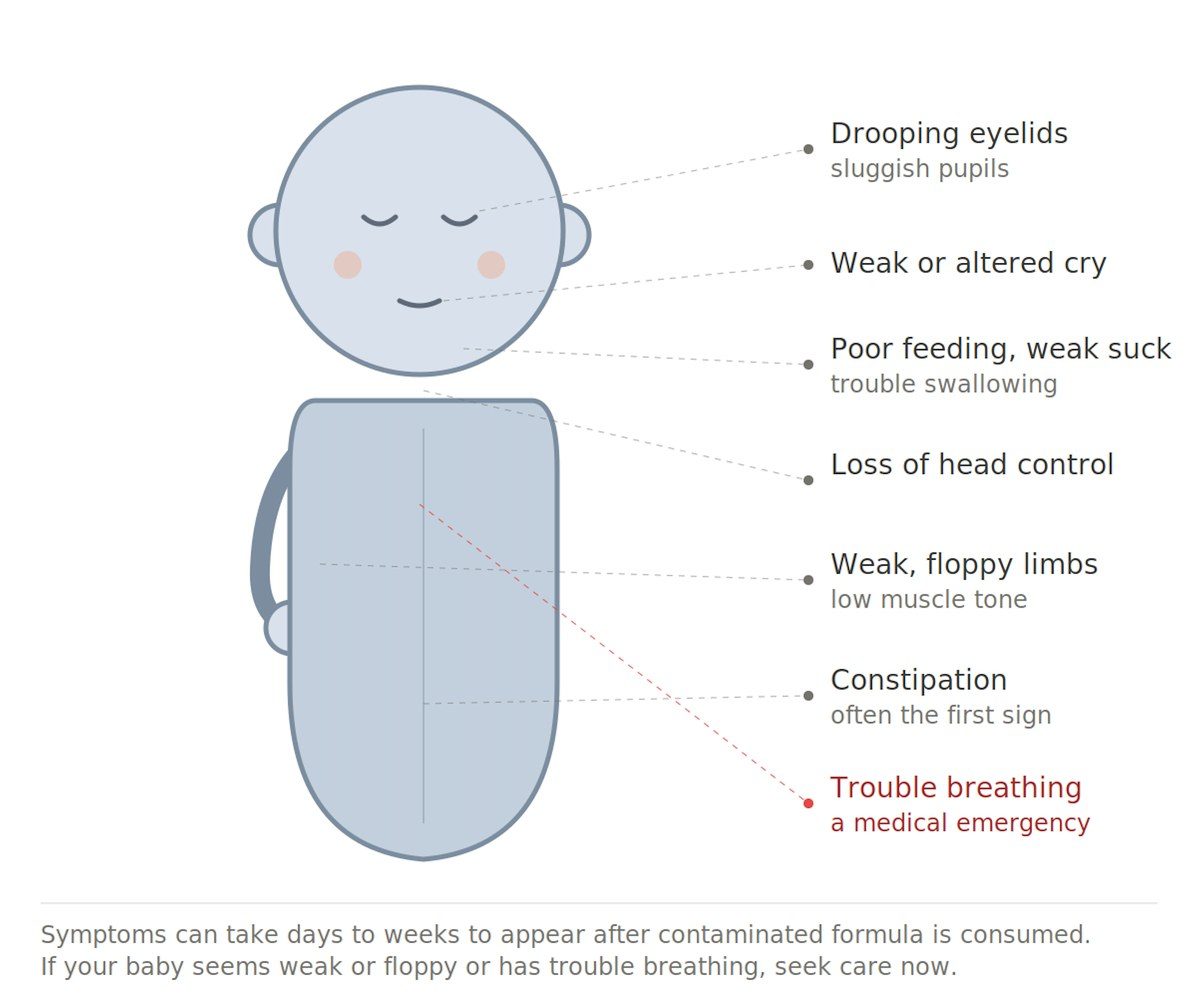
Nara Organics Infant Formula Recall, Second Botulism Outbreak in Seven Months
The FDA named Clostridium botulinum as a hazard in infant formula in writing in 2023. Three more babies are now hospitalized.
Within Law & Policyone topic · 3 sources
A second infant botulism outbreak in seven months, linked to the same ingredient type and the same retailer, after a written federal warning named the exact hazard three years earlier.
The takes: source by source
Law“Publisher's Platform: Two botulism outbreaks in seven months -- where are the FDA and the formula industry on the formula we feed our kids?”Food Safety News
"When a regulator hands an industry a roadmap of exactly how children will be hurt, and children are then hurt that exact way, twice in seven months, that is not bad luck," writes food safety attorney Bill Marler [265]. The piece cites the March 2023 FDA letter verbatim, documents that recalled ByHeart product remained on Target shelves weeks after the first outbreak, and argues that pre-shipment testing for botulism in finished formula (currently not required) is the specific policy change that would have prevented both outbreaks.
The news article provides the factual record: affected lot codes, retail channels, the symptom progression of infant botulism, and the FDA physician contact line at 510-231-7600 for suspected cases [266]. It notes Nara Organics represents less than 1% of U.S. infant formula sales, confirms state health departments in two states have collected leftover formula for testing, with results expected in coming weeks.
Law“Publisher's Platform: We're turning off the smoke detectors on America's food supply”Food Safety News
“The bacteria do not care about budget cuts”
"The bacteria do not care about budget cuts," Marler writes [273]. This broader piece situates the outbreak within a pattern of dismantling: 3,900 FDA positions eliminated, foreign inspections halved, a scientific advisory committee disbanded mid-review of Listeria in deli meat, and the FSIS Salmonella rule for raw poultry withdrawn after years of preparation [273].
On June 13, 2026, Nara Organics recalled all lots of its Whole Milk Organic Powdered Infant Formula after the FDA and CDC linked it to three infant botulism cases in California, Pennsylvania, and Washington, affecting babies aged 2 to 5 months [266]. All three were hospitalized and treated with BabyBIG; no deaths were reported as of this writing [266]. The formula was manufactured in Europe and distributed nationally through Target stores, Target.com, and Nara.com from July 2025 through June 2026 [266]. This is the second formula-linked botulism outbreak in under a year: the ByHeart outbreak of November 2025 sickened 48 infants across 17 states. In both outbreaks, the implicated ingredient is organic whole milk powder [265][266]. In March 2023, the FDA sent a written warning to the entire formula industry, naming Clostridium botulinum as a documented hazard and requiring manufacturers to control for it [265]. Separately, the FDA lost nearly 3,900 employees since early 2025, foreign food inspections fell by nearly half, and the CDC reduced its FoodNet surveillance network from eight tracked pathogens to two, no longer actively monitoring Listeria or Campylobacter [273].
Why it matters
The pattern is the story: same product type, same toxin, same retailer, within seven months, after a written federal warning had named the exact hazard [265][266]. Pre-shipment testing for botulism in finished formula is not currently required, and requiring it is the specific preventive measure the industry received in writing in 2023 and declined to adopt voluntarily. The specific product is animal-derived (organic whole milk powder), and the organic branding provided no protection against contamination. The broader FDA staffing collapse [273] adds systemic context: this outbreak would likely have been caught and recalled faster under previous inspection and surveillance staffing levels.
---
05Activism & AnimalsStory
USDA Cites Creekside Birds for Thousands of Violations; PETA Confronts Vital Farms at Annual Meeting
Two stories about the gap between what the animal industry says and what federal inspectors find.
Within Activism & Animalsone topic · 2 sources
Federal inspectors and a shareholder question, in the same week, challenge two different animal industry welfare claims.
The takes: source by source
Activism“BUSTED: Feds Slam Parakeet Breeding Hell With THOUSANDS of Violations After PETA Investigation”PETA
“In the pet trade, parakeets are reduced to inventory, not the individuals they are”
"In the pet trade, parakeets are reduced to inventory, not the individuals they are," PETA states [243]. This is a June 15, 2026 update to an earlier investigation report, leading with USDA inspection language verbatim and providing the regulatory order requiring license renewal or population reduction. It frames the enforcement outcome as direct validation of the undercover investigation.
Activism“PETA Confronts Vital Farms Over Its 'Happy Hen' Marketing”PETA
“There is no way to 'humanely' exploit someone else”
"There is no way to 'humanely' exploit someone else," PETA states, framing the shareholder challenge as targeting the gap between Vital Farms' pastoral marketing and industry-standard conditions [237]. The piece does not quote Vital Farms' response to specific claims (the company ended the meeting before answering). It correctly notes that "Certified Humane" certification permits beak-searing and extended shed confinement, practices that most consumers paying a premium for the label do not associate with the certification [237].
On June 15, 2026, the USDA published inspection findings against Creekside Birds, an Oklahoma facility housing approximately 10,000 parakeets in stacked wire cages supplying PetSmart, Petco, and Petland [243]. The findings follow a three-month PETA undercover investigation. Federal inspectors documented: killing methods that do "not reliably produce rapid unconsciousness and subsequent death without evidence of pain and distress"; heavy fecal accumulation declared detrimental to bird health; cages that staff acknowledged had never been sanitized in the facility's approximately four years of operation; no records of birds who died or were killed; and a population nearly 2,000 birds over its maximum allowable capacity [243]. The USDA ordered Creekside to obtain a new license or reduce its population. Separately, before Vital Farms' annual shareholder meeting, PETA submitted a written question challenging the company's "happy hens" and "Certified Humane" marketing, given documented beak-searing of days-old birds, first five months spent in windowless sheds, and temperature exposure that causes heat stress at 77°F and death above 91°F [237]. Vital Farms cut its shareholder meeting short after approximately ten minutes without answering [237].
Why it matters
The Creekside Birds enforcement is concrete: a federal regulator acted on an undercover investigation, on the same day as this brief, with a documented order [243]. The Vital Farms confrontation is softer but strategically aimed: the most commercially successful "ethical" egg brand in the U.S. refused a shareholder question about the distance between its marketing and documented practice [237]. The biggest open question on Creekside is whether required license renewal produces genuine improvement or procedural compliance. On Vital Farms, whether PETA's shareholder presence triggers any investor or regulatory review of the certification claims will determine whether the confrontation has lasting effect.
---
06InnovationStory
Whey Protein Shortage Sends Food Manufacturers Toward Plant and Fermentation Alternatives
Supply is structurally capped by how many cows exist. The replacements are all plants or microbes.
Within Innovationone topic · 2 sources
A global whey shortage driven by rising protein-enriched product demand is generating genuine market pull for plant and fermentation-based alternatives.
The takes: source by source
Innovation“No Whey: How Future Food Startups Are Plugging the Protein Shortage”Green Queen
“Whey protein used to be a co-product of the cheese industry. Now it tends to be the reverse”
"Whey protein used to be a co-product of the cheese industry. Now it tends to be the reverse," says Stéphane Mac Millan of Verley, meaning that whey demand now drives cheese production rather than following from it [193]. Green Queen frames the shortage as structural and profiles three distinct technical approaches with different scale readiness. None has yet reached the volume needed to displace whey across the market; the piece also notes that GLP-1 drug users are advised to maintain protein intake while losing weight, adding unexpected demand pressure [193].
Innovation“NS/TX Industries Raises $10.5M to Build Automated Plant-Based Meat Production System”Green Queen
“We have been very impressed with NS/TX's rapid progress in solving key scale-up challenges”
"We have been very impressed with NS/TX's rapid progress in solving key scale-up challenges," said Raffaele Govinazzi of Inter IKEA Group [194]. Green Queen reports the company's V1 assembly line, launched in 2024, lowered manufacturing costs by tenfold and validated scalability. The V2 line will automate production and expand capacity significantly, sourcing Canadian peas, fava beans, and soybeans [194].
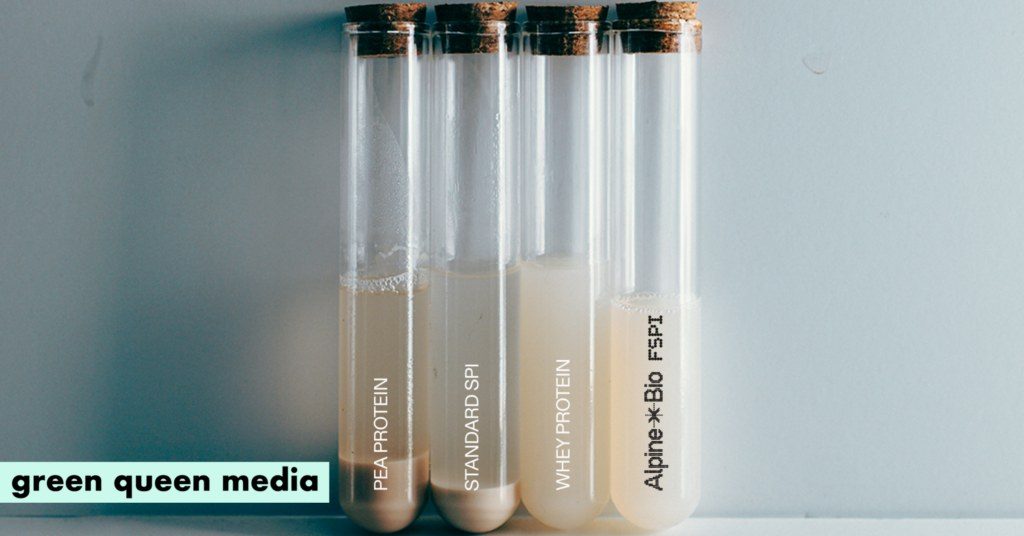
Whey protein concentrate prices rose 108% over two years; whey protein isolate has nearly doubled, with some U.S. supplies sold out through the end of 2026, Green Queen reports [193]. Supply cannot surge because whey is a byproduct of cheesemaking: increasing output requires more dairy infrastructure or more cows. Alpine Bio fractionates soy protein into an ultra-soluble, neutral-tasting complete protein engineered to function like whey isolate; Verley inserts dairy protein DNA sequences into microbes that ferment in tanks, producing beta-lactoglobulin; Leaft Foods extracts Rubisco from alfalfa leaves, claiming the protein exceeds WHO/FAO essential amino acid recommendations without blending and digests five to six times faster than whey in the gastric phase [193]. NS/TX Industries raised $10.5 million in Series A financing co-led by Inter IKEA Group and Lever VC, plus $4.9 million from Protein Industries Canada, to build a V2 commercial assembly line capable of 2,500 kg of whole-cut plant-based meat and seafood per day by 2027 [194]. The company uses directional freezing and a proprietary scaffolding technology to replicate muscle fiber structure and fat-to-muscle ratios in plant-based cuts without custom extrusion equipment [194].
Why it matters
The whey shortage is a rare case of market economics pulling alternative protein development rather than advocacy or policy pushing it [193]. If plant- and fermentation-derived proteins reach functional and cost parity, they remove the main performance argument for dairy-derived protein in food manufacturing. NS/TX's scaffolding technology addresses the texture criticism that has dogged most plant-based whole cuts, using off-the-shelf food manufacturing equipment rather than proprietary extrusion machinery [194]. The largest open question is timing: all three alt-protein platforms profiled by Green Queen remain pre-commercial at volume, and scale-up in food-grade fermentation has a consistent history of taking longer than projected [193].
---
Worth Knowing
Research & Nutrition
A UC Davis study found that adding banana to berry smoothies reduced flavanol absorption by 84%, because banana's high polyphenol oxidase enzyme activity degrades flavanols before absorption; low-PPO alternatives for flavanol-focused smoothies include pineapple, mango, and orange [24].
The PREDIMED-Plus randomized controlled trial (4,746 adults, six years) found that a calorie-reduced Mediterranean diet combined with exercise and professional coaching reduced type 2 diabetes incidence by 31% compared to a standard Mediterranean diet alone; published in the Annals of Internal Medicine [26].
UC Davis Health researchers found that people with anxiety disorders have approximately 8% lower brain choline levels than those without anxiety, particularly in the prefrontal cortex, in a meta-analysis of 25 prior neuroimaging studies published in Molecular Psychiatry; the authors caution that choline supplementation is not yet a proven treatment [28].
A Salk Institute mouse study found that supplementing methionine improved kidney filtration and dramatically reduced death from sepsis-like inflammation by helping the body clear excess cytokines, without suppressing the immune response; published in Cell Metabolism [55].
Purple-fleshed potatoes contain approximately 20 times the antioxidant content of white potatoes; a controlled human study found they reduced arterial stiffness and blood pressure beyond the effect of white potatoes, including in people already taking blood pressure medication [72].
Processed meat increases colorectal cancer risk by approximately 18% per 50-gram daily serving; cutting one daily serving could prevent roughly 25,000 U.S. colorectal cancer cases per year, yet U.S. dietary guidelines still carry no explicit statement on processed meat's carcinogenicity [58].
Innovation
China's NMPA released a draft proposal on March 31, 2026 to extend cosmetics animal testing exemptions to certain "special use" categories including semi-permanent hair dyes, perm treatments, and spot-whitening products, the first time special-use products have been included; a second April announcement committed to developing validated non-animal test methods [156].
Innovafeed raised 51 million euros ($59M) and reports producing 1,000 tons of black soldier fly larvae per week at commercial scale in Nesle, France, cutting unit costs by a factor of seven since 2022; it is reducing headcount by 60 as it shifts from scale-up to commercial operation and targeting profitability by end of 2027 [148].
A Nature Communications paper from Imperial College London argues that microbial protein's repeated commercial failures stem from consumer disgust psychology (47% neophobia toward fungal protein in UK/Germany/Romania surveys), fragmented intellectual property, and high greenfield construction costs, not the underlying technology; Quorn's mainstream success came from sustained retail presence rather than scientific credentials [201].
GERBER-RAUTH, a Milan-based investor with 50 years of dairy industry experience, sold its dairy commodities brokerage and is redirecting capital to precision fermentation, plant-based ingredients, and bio-manufactured dairy proteins, citing structurally capped dairy supply and surging whey prices [152].
Activism & Animals
Octopus farming ban legislation has advanced through key committees in New York; Washington State and California already have bans in force, and the federal OCTOPUS Act (S. 1947) would prohibit commercial octopus farming nationally and block imports of farmed octopus [232].
Nearly 20,000 U.S. horses were exported to Mexico for slaughter in 2024 and close to 3,000 to Canada, despite 83% of Americans opposing horse slaughter for food in a 2022 ASPCA poll; a bipartisan House amendment prohibiting horse transport to slaughter advanced through the House Transportation and Infrastructure Committee in May 2026 [256].
AI models matched or exceeded expert veterinarians at detecting pain in bulls from video footage in a small study (17 bulls), achieving 100% specificity and 94% sensitivity on video assessment; researchers suggest AI could scale farm pain monitoring, though the sample size limits generalization [216].
Wins & Culture
The Vegan Society met with UK food strategy minister Dame Angela Eagle, who extended a planned 30-minute briefing to nearly an hour; 46 campaigners simultaneously attended a lobby day at Parliament, with at least 18 meeting their MPs, all in support of the Ten Point Plan for Plant-Rich Diets, now endorsed by more than 60 organizations [339].
Food & Recipes
America's nearly 90 million dogs collectively consume the equivalent of approximately 1.17 billion farmed land animals per year, more per capita than the average human; plant-based dog food brands such as PawCo are targeting that footprint with vet-formulated, nutritionally complete meals [97].
One Good Thing
In the Buhigwe District of western Tanzania, Jacob Nuhu's volunteer organization VERITAS ran structured village education sessions combining discussion of animal sentience with practical cooking demonstrations using locally sourced beans, groundnuts, and leafy vegetables. Follow-up visits found that roughly one-third of participating households had reduced their meat consumption frequency, particularly on weekdays [341]. In a community where serving meat at ceremonies signals dignity and eating mainly vegetables carries a stigma of poverty, that shift is real movement. No startup funded it and no influencer endorsed it. A volunteer from the community taught neighbors what they could cook, and people chose differently.







 “New Dietary Guidelines Require Radical Change”
Center for Nutrition Studies
“New Dietary Guidelines Require Radical Change”
Center for Nutrition Studies


