
to 1789
Pythagoras to Bentham
The idea is far older than the word. For twenty-five centuries, in Greece, in India, in the Arab world, and in the European Enlightenment, people argued that eating animals was a moral choice and chose not to. None of them called it veganism. All of them were reaching for it.
- 5th-4th c. BCE
Composed 5th-4th c. BCE
Ahimsa in the Acharanga Sutra
In parallel, and independently, Jain scripture in India set out ahimsa, non-harm to all living things, as a way of life rather than a diet.
Source: Wikipedia, Acharanga Sutranothing which breathes, which exists, which lives, or which has essence or potential of life, should be destroyed or ruled over, or subjugated, or harmed, or denied of its essence or potential
Acharanga Sutra, a foundational Jain text - c. 100 CE
Written c. 100 CE
Plutarch Turns the Question Around
Plutarch flipped the usual framing: the burden of proof, he argued, belongs on the person who kills to eat, not the one who abstains.
Source: International Vegetarian Union (IVU), History (archived)But for the sake of some little mouthful of flesh we deprive a soul of the sun and light, and of that proportion of life and time it had been born into the world to enjoy.
Plutarch, 'Of Eating of Flesh' (Moralia) - c. 270
Written c. 268-271
Four Books Against Eating Animals
Plutarch turned the question around; a century and a half later Porphyry organized the answers. Writing to win back a friend who had returned to meat, the Neoplatonist produced antiquity's most systematic case for a meatless table, four books long.
Source: Wikipedia, On Abstinence from Eating AnimalsPorphyry argues that there is a moral obligation to extend justice to animals because they are rational beings
Porphyry of Tyre, On Abstinence from Eating Animals (De abstinentia) - c. 500s BCE
Written c. 8 CE
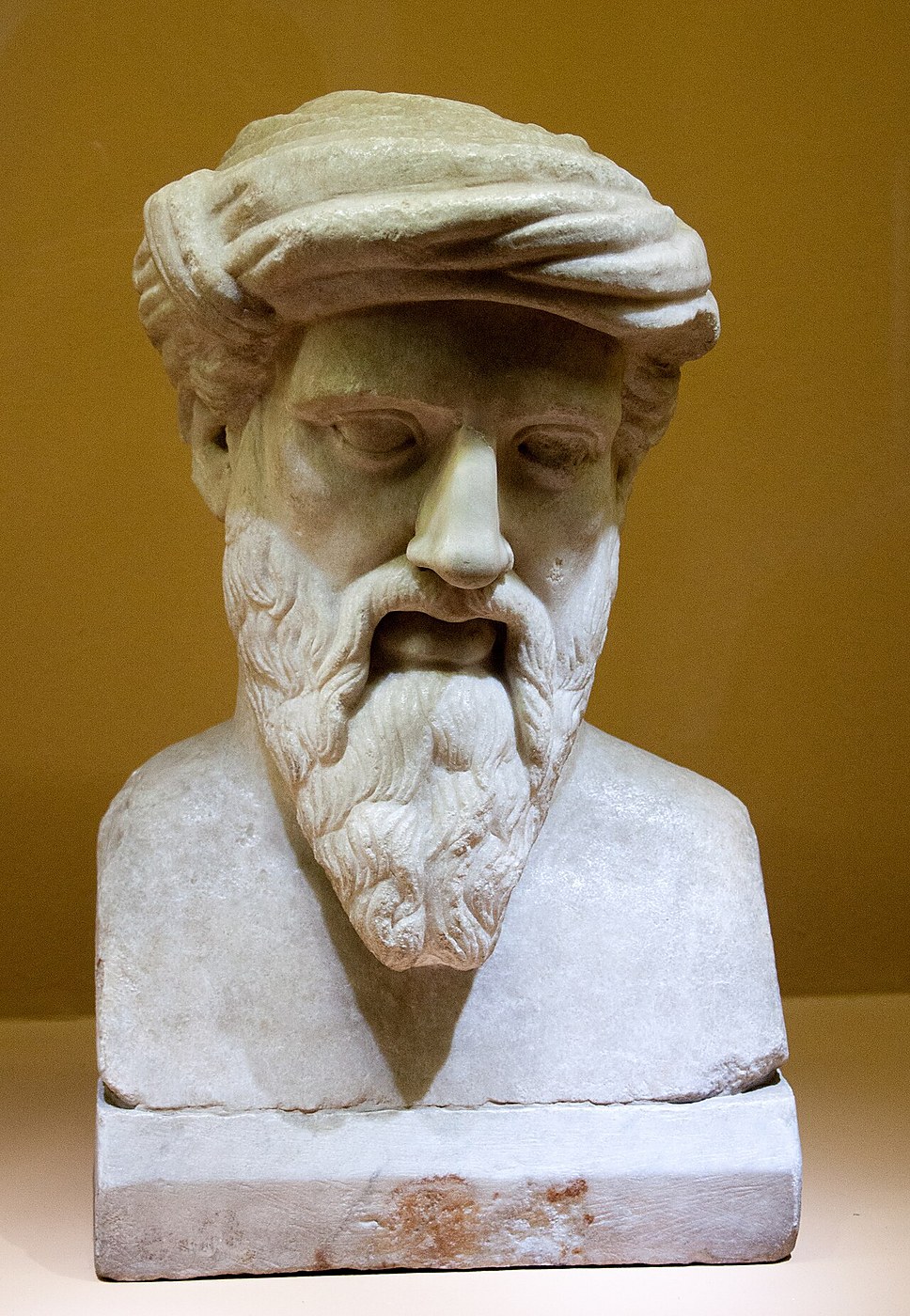
Pythagoras Refuses the Altar
The earliest named argument in the Western record against eating animals reaches us through Ovid's poem, putting the case in Pythagoras's mouth five centuries after he lived.
Alas, what wickedness to swallow flesh into our own flesh, to fatten our greedy bodies by cramming in other bodies, to have one living creature fed by the death of another!
Pythagoras, as rendered by Ovid, Metamorphoses XV (trans. from the Latin)We have no surviving words from Pythagoras himself; Ovid wrote these lines around 8 CE, centuries later.
Source: International Vegetarian Union (IVU), History (archived) - c. 1000
Written c. 1000
al-Ma'arri's Bloodless Table
A blind Syrian poet kept a plant-based table and defended it in verse, a thousand years before the word vegan existed.
Source: Wikipedia, Al-Ma'arriDo not unjustly eat what the water has given up, and do not desire as food the flesh of slaughtered animals
Abu al-Ala al-Ma'arri, Syrian poet and philosopher (973-1057) - 1789
Written 1780, published 1789
Bentham Asks the Only Question That Matters
The philosopher who founded utilitarianism reframed the whole debate about animals in a single footnote, moving the test from reason to suffering.
Source: Wikipedia, Jeremy BenthamThe question is not, Can they reason? nor, Can they talk? but, Can they suffer?
Jeremy Bentham, An Introduction to the Principles of Morals and Legislation
This history is still being written.
Every morning we read the movement and rate the evidence. When a fight resolves, it lands on this page and in your inbox. Free forever.
Free forever. No guilt. No preaching.