On this day in vegan history · August 4, 1792
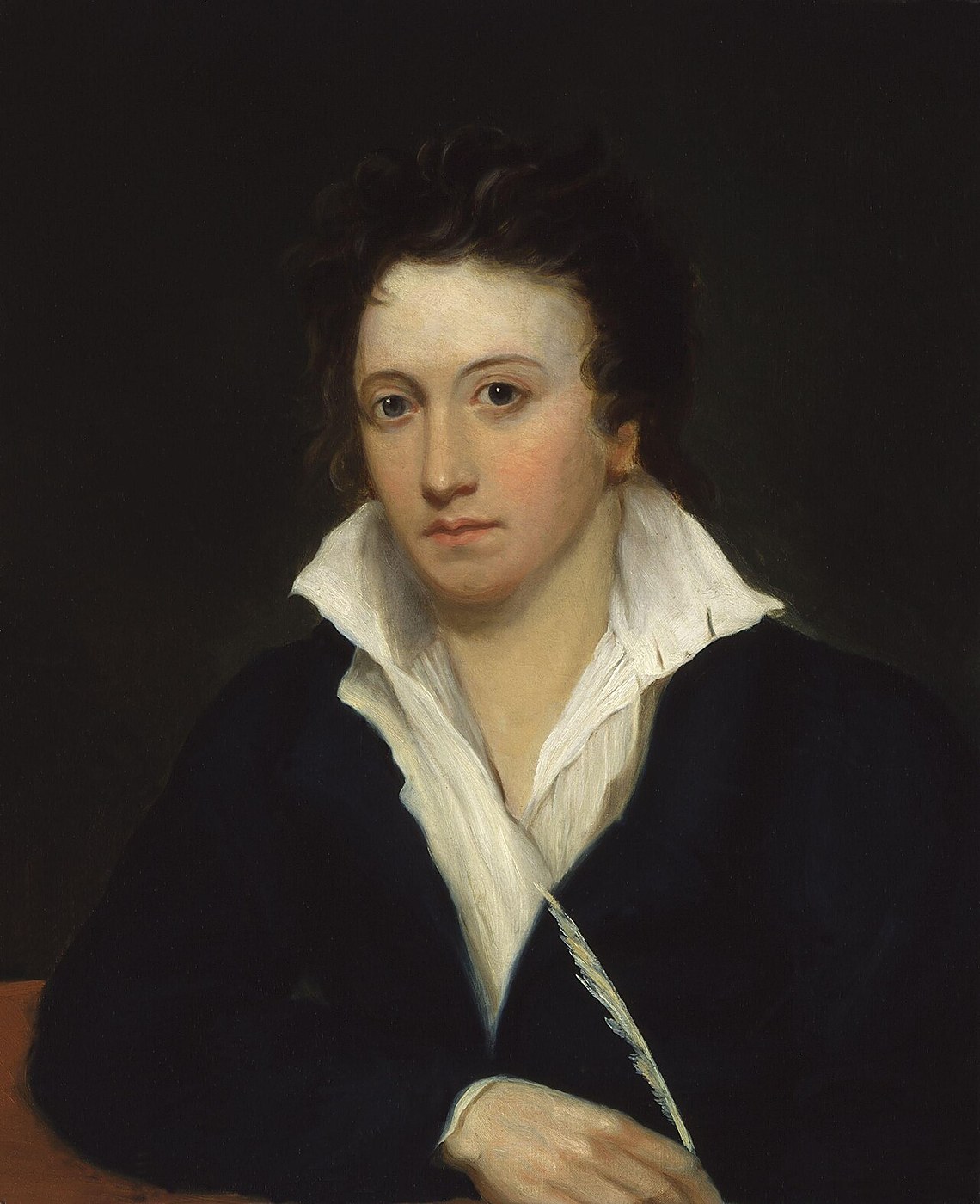
Percy Bysshe Shelley Is Born
The baronet's grandson who would give up meat at nineteen and argue in print that a plate of flesh and an empire built on conquest came from the same rotten root.
The facts
- Born
- August 4, 1792, at Field Place, Warnham, Sussex, England
- Family
- Eldest son of Sir Timothy Shelley, 2nd Baronet, a Whig MP
- Turned vegetarian
- March 1812, age nineteen, with his wife Harriet Westbrook
- Key text
- "A Vindication of Natural Diet," published 1813
Percy Bysshe Shelley was born on August 4, 1792, at Field Place in Warnham, Sussex, the eldest son of Sir Timothy Shelley, a Whig Member of Parliament and heir to a baronetcy. He spent the next three decades scandalizing that family, from his expulsion from Oxford for atheism to his elopements and radical politics. In March 1812, at nineteen, he adopted a vegetable diet alongside his first wife, Harriet Westbrook, and kept to it, with lapses, for the rest of his life. The following year he wrote "A Vindication of Natural Diet," arguing that killing animals for food required a kind of violence that coarsened everyone who ate the result, and that only the rich could afford the habit while the poor starved to sustain it. It was one of the first widely circulated English essays to connect what's on the plate to who suffers for it.
In their words
The day in the words of the people who were there. Every quote is verbatim, and every source links out so you can check it.
-
It is only by softening and disguising dead flesh by culinary preparation that it is rendered susceptible of mastication or digestion, and that the sight of its bloody juices and raw horror does not excite intolerable loathing and disgust.
Percy Bysshe Shelley, "A Vindication of Natural Diet," 1813
Source: Project Gutenberg -
It is only the wealthy that can, to any great degree, even now, indulge the unnatural craving for dead flesh, and they pay for the greater licence of the privilege, by subjection to supernumerary diseases.
Percy Bysshe Shelley, "A Vindication of Natural Diet," 1813
Source: Project Gutenberg
Why it still matters
Shelley's essay is one of the earliest widely read arguments in English tying meat-eating to both animal cruelty and economic inequality, a link that vegan advocacy still leans on two centuries later.
Sources
This history is still being written.
Every morning the brief covers what moved veganism forward, and every day one more verified piece of that story joins this almanac. Free, and tomorrow’s lands in your inbox.
Free, every morning. No guilt. No preaching.